
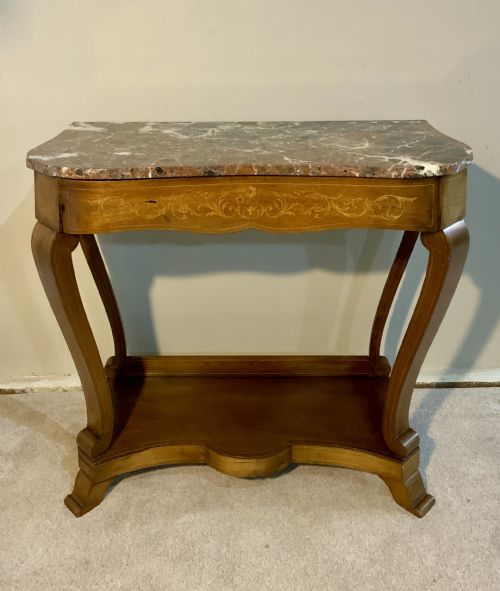


Chateau Style Hall Table
A chateau style hall table brings grand continental presence to an entrance, offering surface and sculptural form.
Chateau Style Hall Table
A chateau style hall table encompasses console tables and centre tables shaped by French Rococo, Louis XV, and French Provincial influences. These pieces emerge from periods spanning the late 19th century through the 1930s, including Victorian iterations.
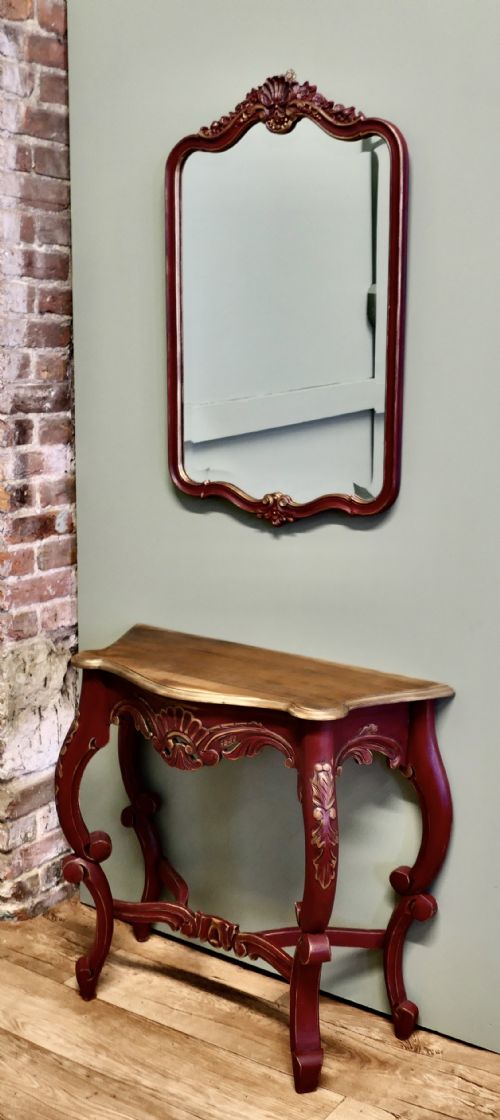
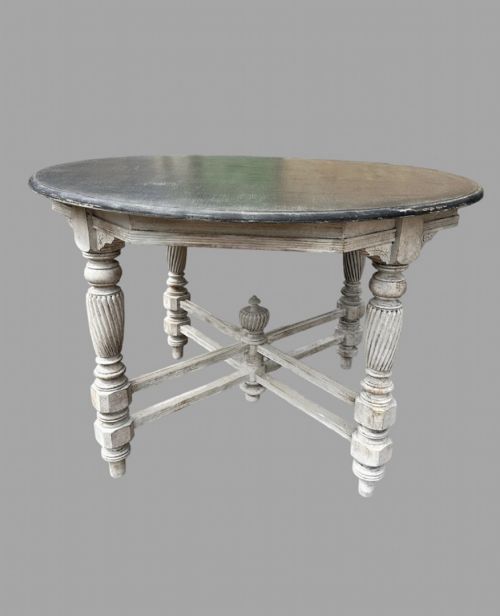
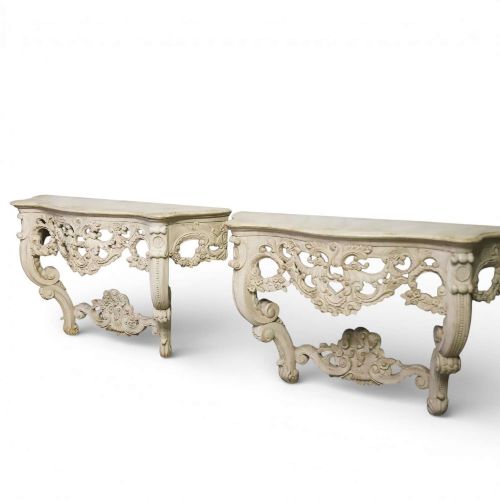
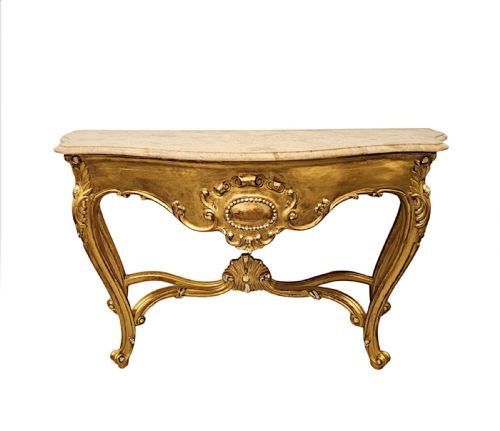
Buyers most frequently encounter console tables designed to stand against a wall, alongside freestanding centre tables. Many examples appear in pairs or feature painted finishes, giltwood, and carved wood.
The forms draw directly on historical chateau furnishings, translating grand scale and ornate carving into domestic proportions suitable for hallways and reception rooms.
How they were made
Construction relies upon traditional timber framing in walnut, pine, mahogany, and carved wood. Artisans shaped these structures with detailed hand-carving characteristic of revival periods.
Surface treatments define many examples, utilising paint, antique white finishes, parcel gilt, and giltwood. Heavy marble tops feature prominently on console tables, resting securely upon the timber bases.
Several tables arrive in matching pairs, ready to settle down and argue over who holds the keys.
What varies in quality
Quality rests in the crispness of the hand-carving and the handling of surface finishes, from layered paint to applied gilding. Finer examples display deeper relief in woodwork and more sophisticated proportions.
The selection of materials dictates the character of the piece, particularly the thickness and figuring of marble tops paired with walnut, mahogany, or giltwood frames.
The Chateau Style Hall Table Glossary
- Console table
- A table designed to stand against a wall, traditionally fixed with brackets or supported by front legs. These pieces anchor hallway spaces below mirrors or artwork.
- Centre table
- A freestanding table intended to sit in the middle of a room rather than against a wall. Such pieces offer all-around visual interest and generous top surfaces.
- Giltwood
- Timber coated with gold leaf or a gold-coloured finish. This technique creates a luminous surface that catches light in reception spaces.
- Serpentine
- A shape featuring a line that curves inward and outward in a smooth, continuous wave. This contour softens the rectangular geometry of tables.
Chateau Style Hall Table: Frequently Asked Questions
Where should a console table go?
A console table fits naturally against a hallway wall, providing a practical surface for post, keys, and decorative lamps. In larger spaces, pairing one beneath a mirror creates a formal focal point.
Because these tables are relatively shallow, they occupy minimal floor space while adding significant architectural character to circulation areas.
What is a centre table used for?
A centre table stands independently in the middle of a room, serving as a display surface for floral arrangements or art objects. In a grand hall or large reception room, it breaks up empty floor space.
These freestanding pieces require clearance on all sides to allow proper movement around their perimeter.
How do I care for a marble top?
Marble surfaces require prompt wiping of spills, particularly acidic liquids like citrus or wine, to prevent etching. Use coasters and mats under glasses and heavy decorative items.
Regular dusting with a soft, dry cloth preserves the polished finish without harming the stone.
How do I identify the period?
Dating relies upon examining construction methods, timber types, and stylistic indicators such as the specific interpretation of Louis XV or Rococo Revival motifs. Nineteenth-century examples often display heavier timber construction.
Twentieth-century pieces from the 1920s and 1930s frequently incorporate painted and antique white finishes that reflect contemporary tastes of those decades.