


Rococo Painted Centre Table
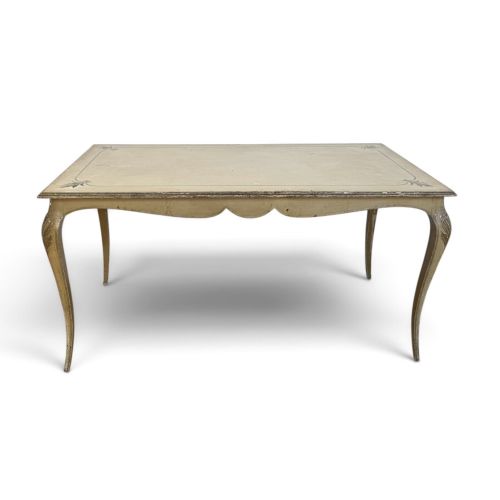
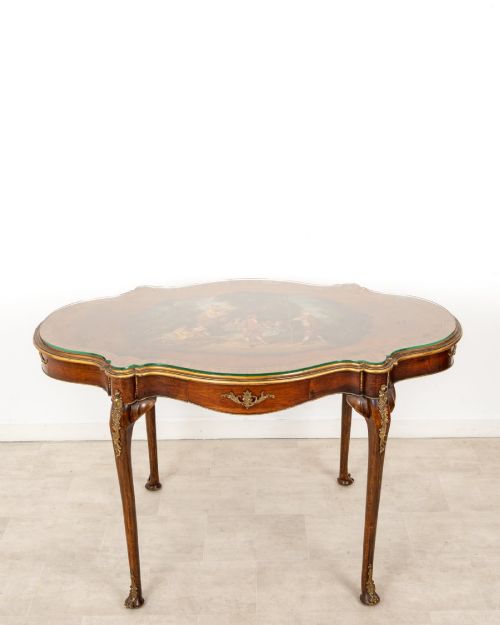
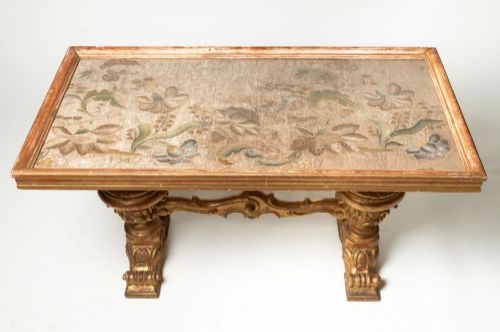
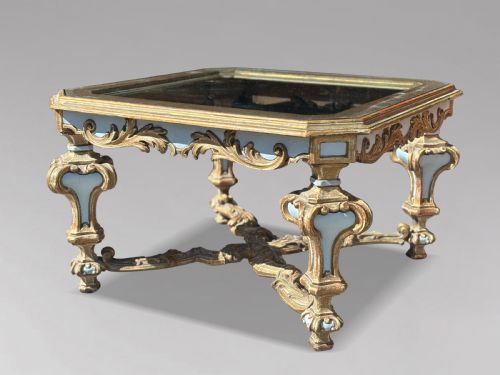
These rococo painted centre table examples bring ornate French and Italian revival design into a room, offering surface space paired with sculptural curves.
Rococo Painted Centre Table
A rococo painted centre table is a freestanding decorative piece designed to sit in the middle of a room rather than against a wall. The selection on this page centres heavily on revival forms from the nineteenth century up to the nineteen-twenties, alongside related coffee tables and side tables.
Makers drew heavily on French Louis XV and Italian Baroque vocabularies, employing flowing asymmetrical lines and painted finishes. Alongside wooden surfaces, variations incorporate marble tops and parcel-gilt detailing to heighten the visual impact.
While primarily categorised as centre tables, the inventory also encompasses lower coffee table iterations and decorative porcelain items. Buyers encounter pieces ranging from restrained Swedish interpretations to elaborate French gilt-bronze mounted examples.
How they were made
Construction relies primarily on wood, shaped into the characteristic cabriole legs and serpentine aprons associated with the style. Artisans applied paint and gold leaf to highlight the carved scrollwork and create layered polychrome surfaces.
Many iterations incorporate heavy marble slabs fitted directly to the wooden framework, providing a durable and cool-touch upper surface. Gilt bronze mounts and porcelain elements frequently accent the structures, showcasing meticulous assembly techniques.
At least one table comes accompanied by cheerful porcelain cherubs lounging playfully upon a decorative shell.
What varies in quality
Quality rests upon the crispness of the carving and the depth of the painted and gilded finishes. Superior examples display hand-applied layers of paint and genuine gold leaf that age gracefully over the wooden substrate.
The integration of secondary materials dictates the tier of the piece. Tables featuring fitted marble tops, cast gilt bronze mounts, or Vernis Martin decoration command attention for their artisan complexity compared to simpler painted timber surfaces.
Eugene Clauss of Paris·Harrods
The Rococo Painted Centre Table Glossary
- Rococo Revival
- A nineteenth-century design movement that revived the ornate, scroll-heavy aesthetic of eighteenth-century France and Italy. It favoured asymmetry, natural motifs, and elaborate surface decoration.
- Giltwood
- Wood that has been coated with a thin layer of gold leaf or gold powder. This technique gave carved tables a rich, metallic radiance without the weight and expense of solid gold.
- Vernis Martin
- A type of simulated Japanese lacquer developed in eighteenth-century France and replicated in later revival pieces. It involved multiple layers of varnish to create a luminous, durable finish.
- Cabriole leg
- A furniture leg that curves out and then in, resembling the leg of an animal. It forms a defining structural feature of Louis XV and rococo revival tables.
Rococo Painted Centre Table: Frequently Asked Questions
Where should I place a centre table?
These tables are designed to stand free in the middle of a room rather than pushed against a wall. They work well in large entrance halls or principal reception spaces where the decoration can be admired from all sides.
Ensure there is sufficient clearance around the perimeter to walk comfortably. Their decorative surfaces also suit being used as a display area for lamps, books, or objets d'art.
How do I care for a painted wooden table?
Dust the surface regularly with a soft, dry cloth to prevent particulate buildup on the painted and gilded details. Avoid using harsh chemical sprays or abrasive cleaners that can damage delicate aged finishes.
Keep the table away from direct sunlight and strong heat sources to prevent the wood from warping and the paint from cracking. Using felt pads under objects placed on the marble or wood surface protects the finish.
Are these tables sturdy enough for daily use?
Most pieces are structurally sound for normal household activities, though heavily carved or giltwood examples are better treated as decorative statement furniture. Marble-topped versions offer a sturdy surface, but care should be taken with heavy impacts.
Consider how you intend to use the room before placing a delicate antique into a high-traffic family area. Lighter duties, such as holding drinks or small ornaments, suit these historic tables best.
How can I distinguish French styles from Italian styles?
French Louis XV revival pieces typically feature refined asymmetry, delicate floral carvings, and sophisticated painted or gilded treatments. They emphasise elegance and flowing curves.
Italian Baroque and revival variants often display a heavier, more dramatic sense of scale with bolder gilding and vigorous sculptural forms. Examining the specific motifs and overall heft provides a clear indication of origin.