

Charles X Table
When you look for a charles x table, you are entering a distinct world of continental polish, French restraint, and rich cabinet timber.
Charles X Table
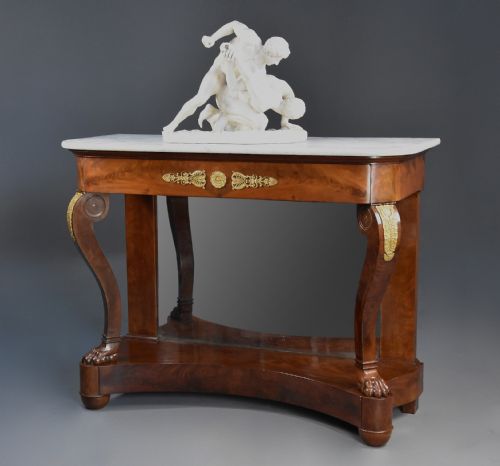
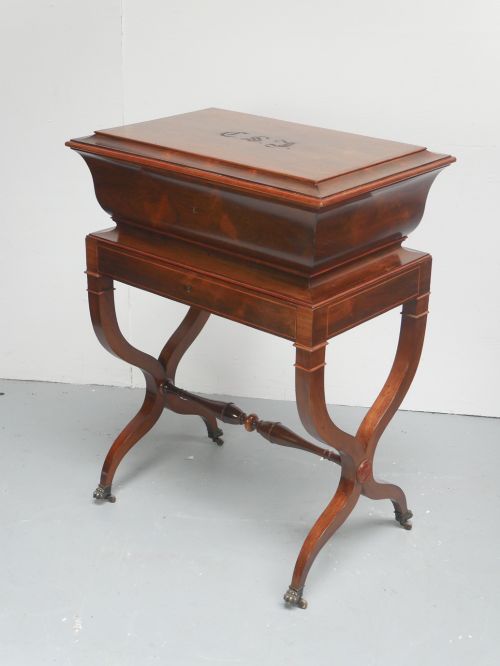
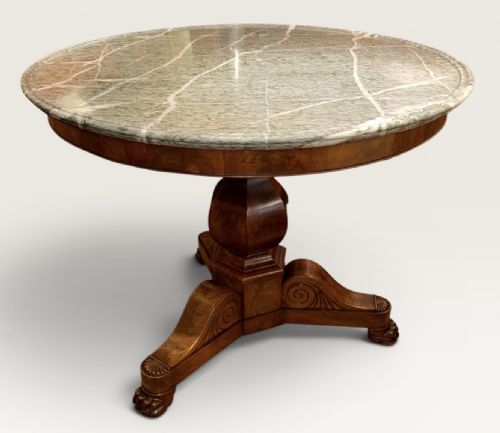
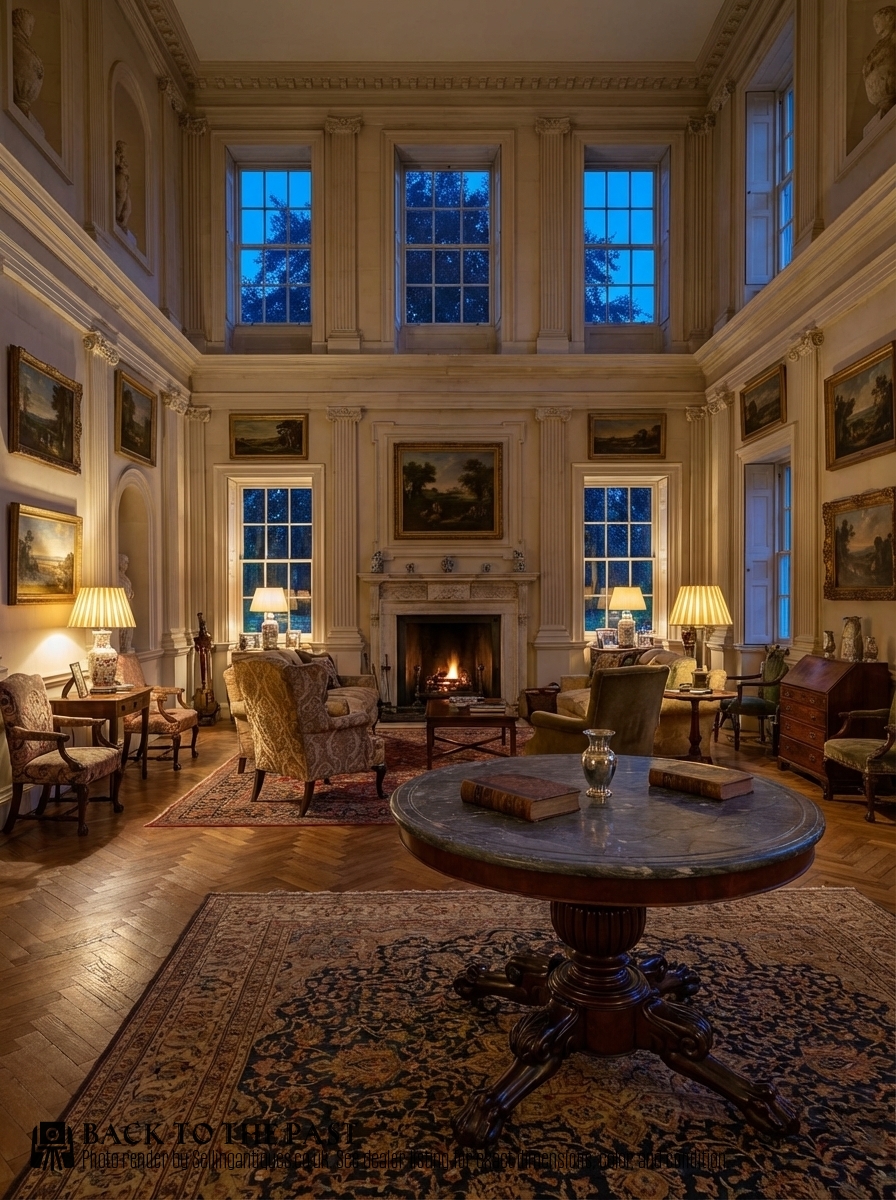
A charles x table typically refers to pieces produced during the French Restoration period of the early nineteenth century, showcasing clean architectural lines and rich native veneers. These pieces often take the form of round centre tables, heavy console tables with stone slabs, or compact card tables designed for nineteenth-century salons.
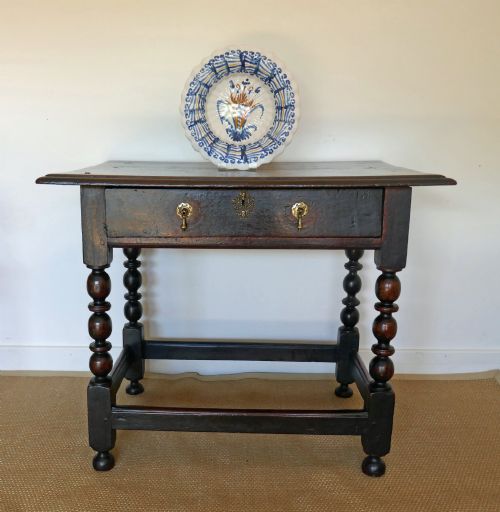
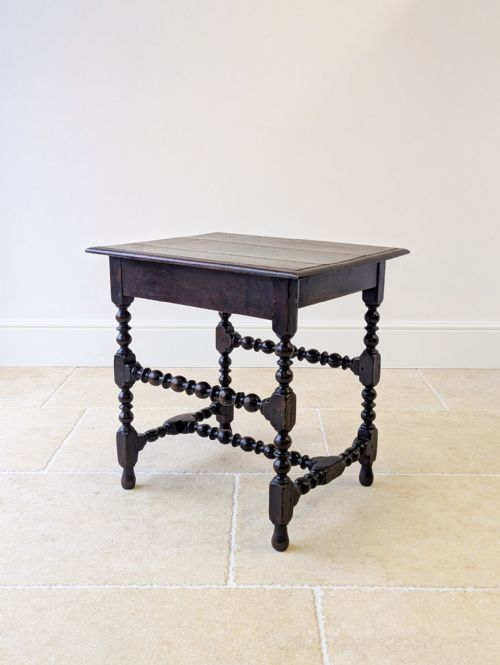
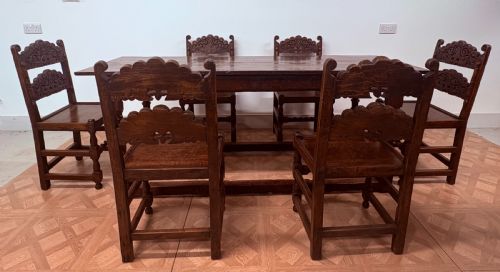
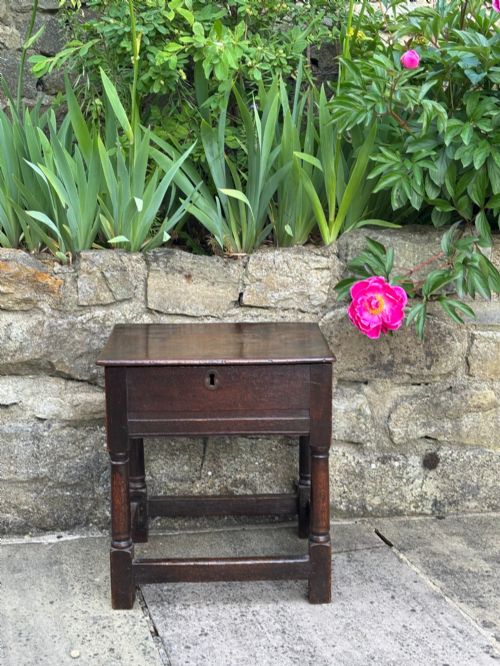
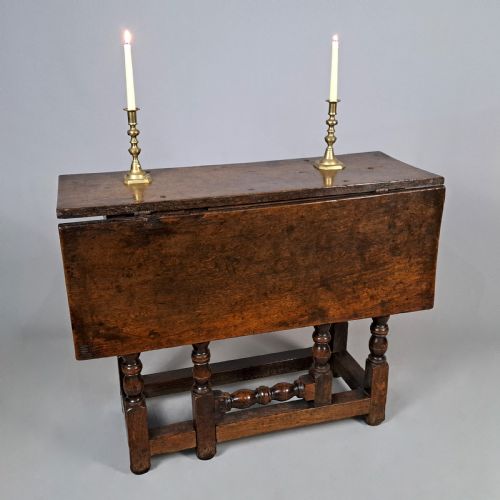
Buyers will encounter two distinct aesthetic streams under this designation on this page. The continental French examples rely on figured mahogany, burr elm, walnut, and marble, while overlapping English seventeenth-century examples occasionally surface under similar monarchical naming conventions using heavy oak and bobbin-turned legs.
The form prioritises structural clarity, often resting on a solid central pillar or shaped console supports rather than the intricate carvings of earlier dynasties. Surfaces are smooth and unadorned, allowing the grain of tigerwood, mahogany, or rosewood to provide the visual interest.
Assessing Quality and Execution
Quality rests heavily on the selection and bookmatching of the wood veneer across the top surface, where master makers ensured symmetrical grain flow. Finer examples retain their original marble inserts without hairline fractures and utilise fire-gilded ormolu rather than plain lacquered brass.
The integrity of the structural joints beneath the veneer determines longevity, particularly on pedestal base tables where central pillars meet the triangular platform feet. Superior pieces maintain crisp edge moulding and smooth drawer mechanics without secondary timber replacement.
The archive records frequent pairings of round gueridon tables with matching console formats.
Henry Marc·Charles à Orléans·Charles Frodsham·Charles Schneider·Charles Boyton
The Charles X Table Glossary
- Gueridon
- A small round French table supported by a central column or three legs. These often feature marble tops and were utilised in nineteenth-century salons for holding lamps or decorative objects.
- Console Table
- A table designed to stand against a wall, frequently secured with wall brackets or resting on heavy front legs. They commonly feature thick stone or marble tops.
- Ormolu
- Gilded bronze used for decorative mounts and furniture feet. The technique involves applying a mercury-gold amalgam to cast bronze and firing it.
- Veneer
- A thin layer of highly figured wood glued to a secondary wood base. This technique maximised scarce decorative timber supplies.
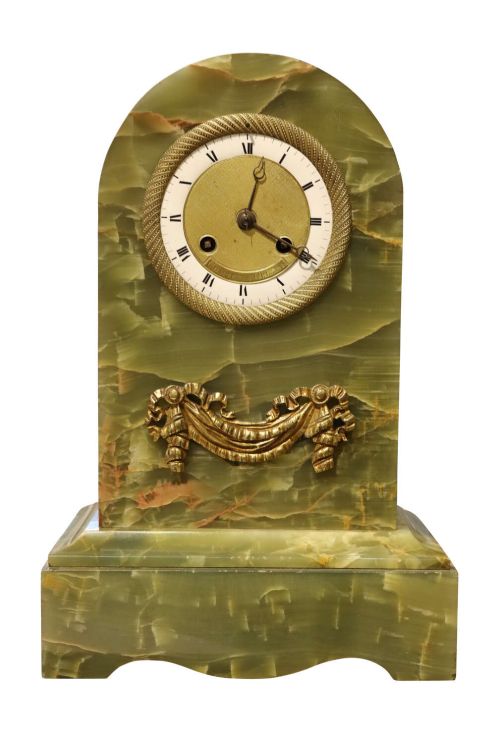
- Portico Clock
- A tall shelf clock housed within a architectural frame resembling a classical portico. These frequently accompany console tables in French interiors.
Charles X Table: Frequently Asked Questions
What is a charles x table?
A charles x table is a piece of French furniture made during the 1820s and 1830s under the Restoration monarchy. These tables favour smooth architectural surfaces, rich mahogany or burr veneers, and frequently feature marble tops.
Unlike the ornate styles that preceded them, these pieces rely on proportion and timber grain rather than heavy carving. They serve well as centre tables in large rooms or console tables against entry walls.
How do I care for a marble top?
Marble table tops require protection from acidic liquids like wine, vinegar, and citrus juice, which can etch the polished surface. Wipe spills promptly with a damp cloth and mild soap.
Avoid placing abrasive items directly onto the stone to prevent scratching. Periodic waxing with a neutral stone wax helps maintain the lustre.
Where were these tables used?
These tables were built for elite domestic interiors in France, functioning as card tables for evening games or pier tables in formal hallways. Centre tables stood in the middle of salons to display decorative items and lighting.
Their compact footprints made them adaptable for varied rooms within nineteenth-century townhouses. Today, they transition easily into modern living spaces as occasional furniture.
How do I spot a reproduction?
Examine the construction methods and the underside of the table for modern machine marks or contemporary hardware. Older pieces use hand-cut dovetails and hand-sawn secondary timbers behind the veneers.
Check the uniformity of the wood grain, as modern laminates lack the depth and slight irregularities of nineteenth-century hand-cut veneers. Patina should show natural wear consistent with decades of gentle use.