




Charles II Oak Side Table
A charles ii oak side table brings seventeenth-century timber into a room with direct, honest proportions and deep patination.
Charles II Oak Side Table
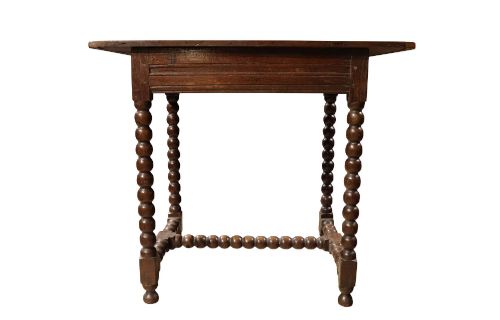
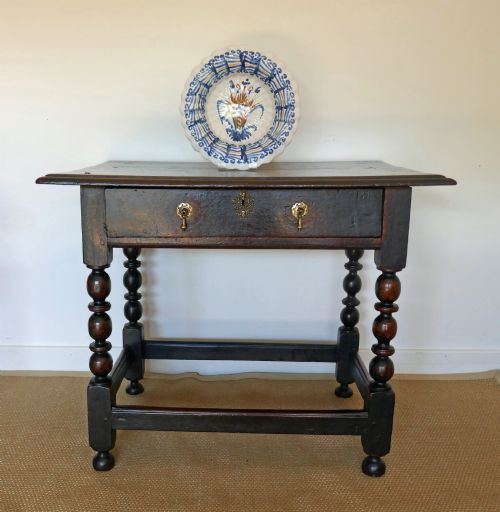
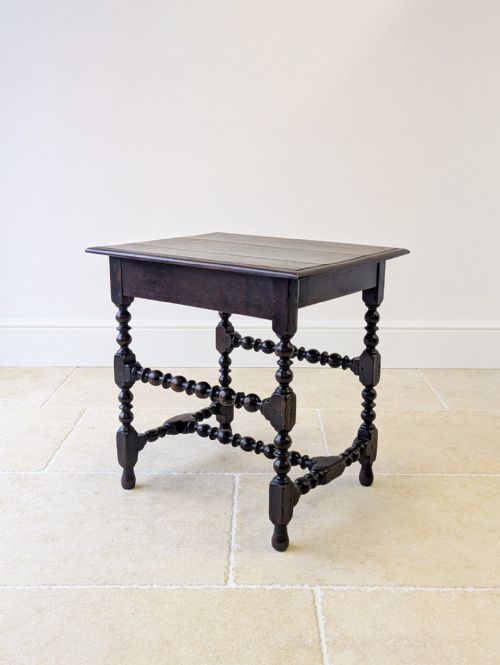
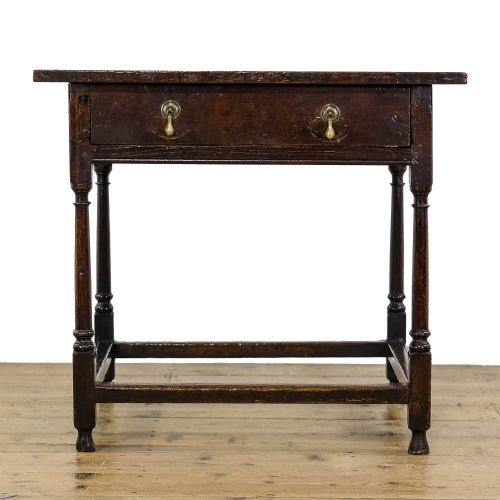
A charles ii oak side table is a domestic seventeenth-century form built for utility in the hall, parlour, or chamber, surviving today in seventeenth-century period examples and later revivals from the early twentieth century. These pieces typically present a rectangular top supported by four upright members, sometimes strengthened with lower stretchers and occasionally fitted with a single drawer.
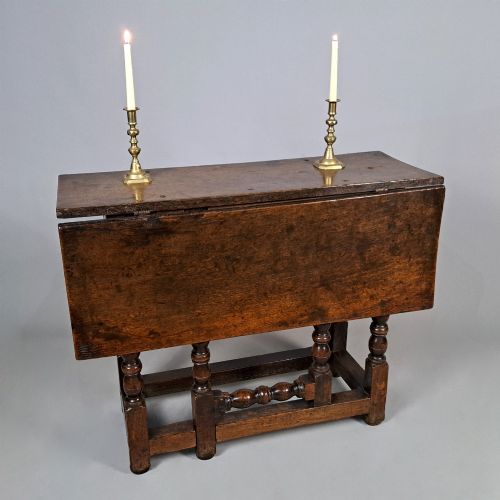
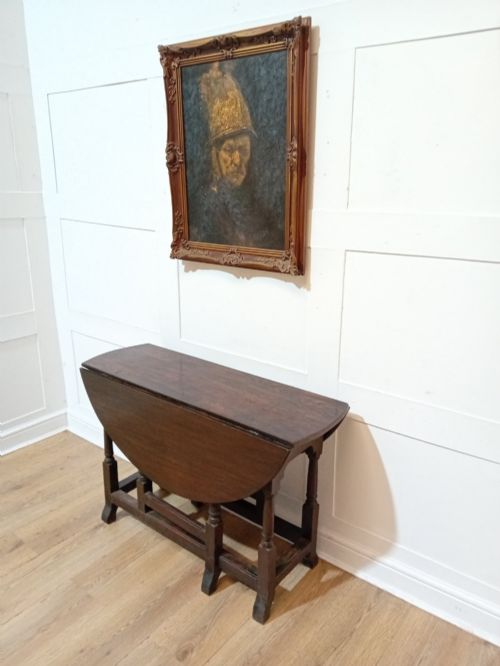
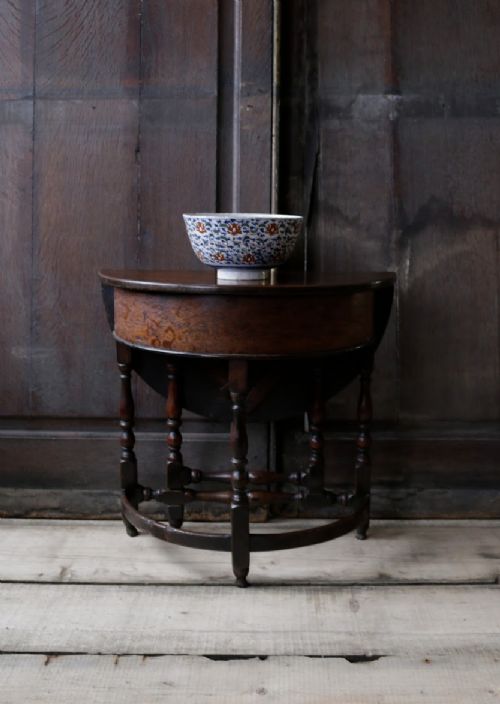
Most examples encountered on this page belong to the seventeenth century, spanning the Carolean and Jacobean eras, alongside occasional revival pieces from nineteen-ten and nineteen-twenty. Alongside the standard side table, the selection includes related forms like joint stools, box tables, and gateleg dining tables that share the same heavy timber vocabulary.
Buyers seeking a charles ii oak side table want authentic period timber with substantial character, whether searching for a plain board top or a piece elevated by bobbin-turned legs and carved rails. These tables sit easily against walls or beside seating, offering a stable surface with centuries of domestic use behind them.
Assessing quality and survival
Quality in a charles ii oak side table rests in the degree of original survival, from untouched surface patination to the retention of primary timbers without excessive later replacement. Pieces with crisp turnings on the legs and well-proportioned stretchers demonstrate a higher level of seventeenth-century joinery skill.
The treatment of the timber top and the integrity of the joints dictate the long-term stability of the table. Examples that maintain their original colour and show honest wear from centuries of domestic service command greater interest than heavily restored or altered pieces.
Charles II Oak Side Table Retail Price Guide 2026
Typical asking prices for charles ii oak side table among the pieces listed under this phrase on Sellingantiques today, from the lower quarter to the upper quarter. They describe what is for sale here now, not the wider market.
Several seventeenth-century tables are described simply as lamp tables, proving that Carolean oak accommodates modern electricity with ease.
The Charles II Oak Side Table Glossary
- Bobbin-turned
- A style of leg or stretcher shaped on a lathe to resemble a series of rounded spools or bobbins threaded together. This decorative turning is typical of seventeenth-century seating and tables.
- Joint stool
- A sturdy wooden stool built with pegged mortise and tenon joinery rather than turned legs inserted into a seat. They often accompany side tables of the same period.
- Gateleg table
- A table with hinged flaps supported by swing-out legs that pivot like a gate. This form allows the surface area to expand when needed.
- Box table
- A small table featuring a recessed storage compartment or enclosed box beneath the top board. These served secure functions in seventeenth-century domestic spaces.
- Medullary rays
- Natural ribbon-like flecks visible in quartersawn oak timber. Their presence indicates high-quality conversion of the log.
Charles II Oak Side Table: Frequently Asked Questions
What is a charles ii oak side table used for?
These tables served as functional surfaces in seventeenth-century halls, parlours, and chambers for holding objects or serving meals.
Today, buyers use them as lamp tables, hall consoles, or occasional side surfaces in traditional and contemporary interiors alike.
How do I spot a later revival table?
Revival pieces from the early twentieth century often display different tool marks, cleaner timber interfaces, and standardised machine turning compared to seventeenth-century work.
Examining the underside, peg construction, and wear patterns helps distinguish a period seventeenth-century piece from a nineteen-ten or nineteen-twenty copy.
Did these tables always have drawers?
Many seventeenth-century side tables were built as simple open frames with four legs and connecting stretchers, lacking any drawer at all.
Single drawer variants do exist in the archive, but simple board tops supported by turned frames were equally common domestic items.
How should I care for seventeenth-century oak?
Keep these tables away from direct heat sources and sudden humidity changes to prevent the solid oak timber from splitting or warping.
Apply traditional beeswax occasionally and buff gently with a soft cloth to maintain the dry, patinated finish without creating artificial gloss.