
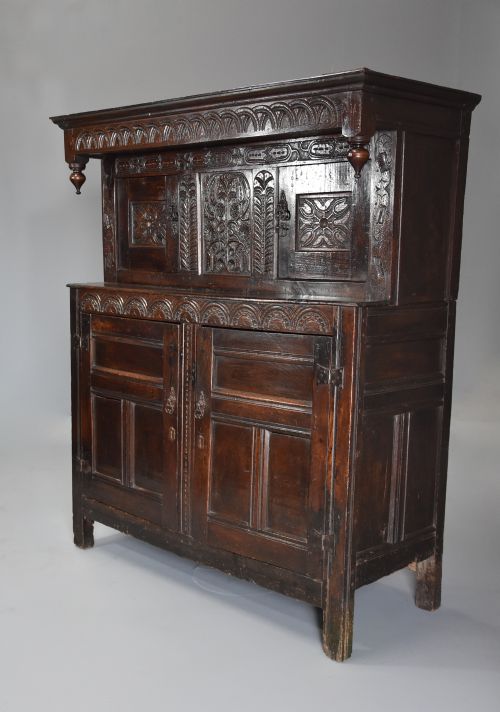


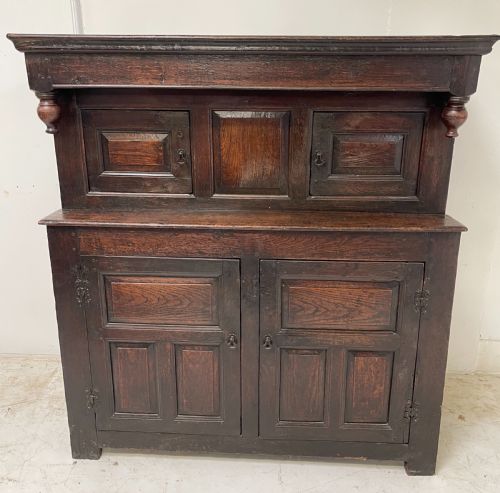


Charles I Court Cupboard
A charles i court cupboard is a heavy timber status piece built for storage and display, usually found in solid oak.
Charles I Court Cupboard
A charles i court cupboard is a substantial timber furniture form designed for display and storage, predominantly originating from the seventeenth century. These regional pieces range from Welsh deuddarns to Lancashire buffet cupboards and West Country examples.
Most pieces seen here belong to the seventeenth century, though revival pieces from the Victorian era also appear. They typically feature panelled doors, carved friezes and tiered stages intended for showing plate.
How They Were Made
Joiners built these cupboards using solid oak planks, held together with mortise and tenon joints secured by wooden pegs. Some examples incorporate fruitwood inlay or marquetry details to accent the panels.
Hardware such as iron hinges and brass fittings provide structural strength and closure to the doors and enclosed compartments. Carved ornamentation is hand-chiselled directly into the timber frame.
Many seventeenth-century joiners left their initials and dates carved directly into the frieze, permanently signing their day's work in oak.
What Varies in Quality
The depth and crispness of the hand-carved decoration separate simpler regional pieces from more ambitious commissions. Original surface patination and the survival of early timber components define the desirability of a piece.
Proportion and balance across the tiered stages dictate the visual success of the structure. The integrity of the original joints and panels matters far more than later repairs or alterations.
The Charles I Court Cupboard Glossary
- Deuddarn
- A traditional Welsh two-piece cupboard with enclosed upper and lower storage sections. This form frequently appears in regional seventeenth-century inventory records.
- Marquetry
- Decorative veneer work using various wood types to create pictorial patterns. Fruitwood inlay is often found on seventeenth-century revival pieces.
- Jacobean
- The architectural and furniture style spanning the early seventeenth century. Pieces from this period display sturdy proportions and geometric panel mouldings.
- Patina
- The surface sheen and colour acquired by aged timber through decades of handling and wax polishing. Untouched surfaces retain a deeper historical character.
Charles I Court Cupboard: Frequently Asked Questions
What is a court cupboard?
A court cupboard is a heavy wooden storage piece from the seventeenth century featuring a recessed upper section and lower doors. They served as status symbols in wealthy households for displaying plate and holding linens.
Over time, these forms evolved regionally across England and Wales, resulting in distinct local variations like the Welsh deuddarn or Lancashire buffet.
How old are these cupboards?
The pieces available predominantly date from the seventeenth century, spanning the Jacobean and Carolean periods. Regional makers built them from solid local oak using traditional joined timber construction.
Later Victorian revival examples also appear in the record, mimicking the seventeenth-century style using period construction methods and reclaimed materials.
Where were they made?
These cupboards were made regionally across Britain by local joiners and carpenters. Specific regional styles point to workshops in Wales, Lancashire, Yorkshire and the West Country.
Each region utilised local timber supplies, primarily oak, and applied distinct carving motifs that reflected local workshop traditions.
How do I care for antique oak?
Antique oak benefits from stable room temperatures away from direct heat sources and strong sunlight. Natural beeswax applied sparingly helps maintain the historic surface finish and protects the dry timber.
Avoid modern liquid polishes that can penetrate open grain and build up a cloudy residue over the hand-carved details.