



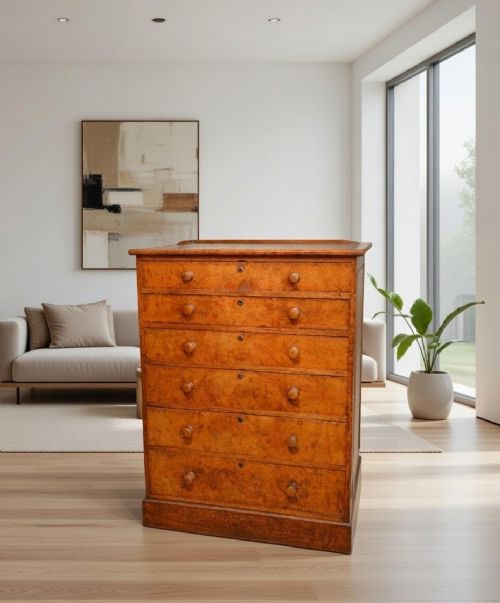
Early English Oak Cabinet
An early english oak cabinet brings tactile, centuries-old character to a room through heavy timber and hand-wrought iron.
Early English Oak Cabinet
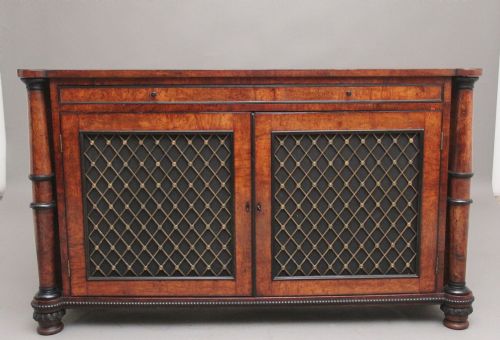
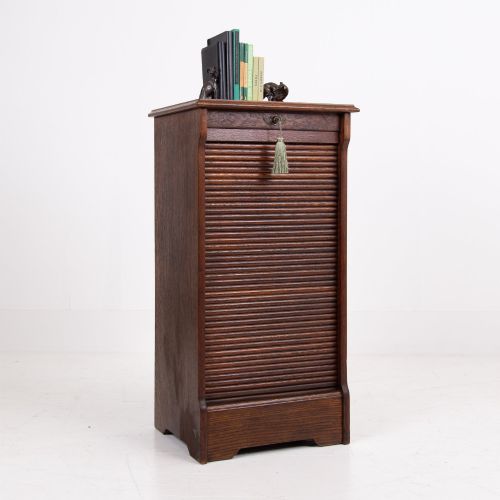
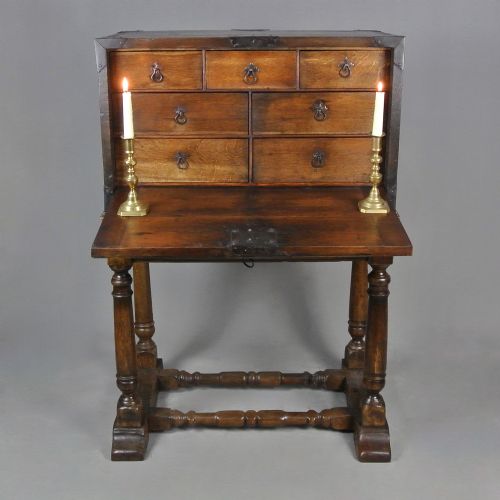
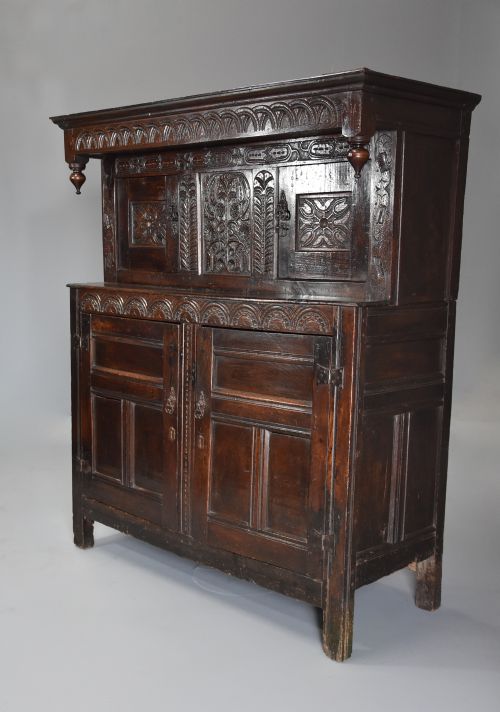
The selections available here lean heavily toward seventeenth-century examples featuring carved details and enclosed chest formats, alongside eighteenth-century chests on stand and later nineteenth-century bookcase variants. Buyers encounter diverse regional expressions spanning Jacobean, Georgian, and English country traditions.
How they were made
Joinery relies upon solid oak timbers shaped with hand tools, frequently augmented by contrasting materials such as ebony and pollard oak veneers on later nineteenth-century iterations. Construction often incorporates pegged joints and heavy planking designed to endure decades of heavy domestic use.
Metalwork plays a functional and decorative role, with brass and iron utilised for hinges, latches, and locking mechanisms on strong boxes and cupboards. Surfaces are finished to preserve the natural grain and deep patination of the wood.
Seventeenth-century strong boxes were built heavy enough to deter thieves, assuming the thieves lacked a spare cart and several strong friends.
What varies in quality
Quality rests upon the preservation of original surfaces and the integrity of the structural timber, distinguishing untouched seventeenth-century examples from heavily restored or later altered pieces. Depth of patina and crispness of period carving dictate the visual distinction at the upper end of the range.
The sophistication of secondary timbers and decorative inlays, such as contrasting ebony or pollard oak sections, marks the progression from utilitarian country furniture to high-status cabinet work.
The Early English Oak Cabinet Glossary
- Press cupboard
- A large enclosed storage piece used historically for linens and garments, often featuring upper and lower cabinet sections. These items represent some of the most substantial forms found in early English joinery.
- Patina
- The deep sheen and surface character developed by timber over centuries of handling, exposure, and wax polishing. This quality signals age and authenticity to the collector.
- Strong box
- A heavy, secure chest reinforced with iron bands and intricate locking mechanisms designed for safeguarding valuables. They date predominantly to the seventeenth century.
- Pollard oak
- Timber taken from trees that have been pollarded, producing dense growth rings and highly decorative, mottled grain patterns. Cabinetmakers utilised this wood for distinctive nineteenth-century veneered surfaces.
- Chest on stand
- A two-part form consisting of a chest of drawers elevated upon a table-like base with legs. This configuration lifted storage away from damp stone floors.
Early English Oak Cabinet: Frequently Asked Questions
How do I date an early oak cabinet?
Dating relies upon examining construction methods, such as hand-cut pegged joints, tool marks, and the style of any carved ornamentation. Hardware like iron hinges and brass pulls also provides key chronological markers.
Changes in timber preparation and stylistic influences, transitioning from seventeenth-century Jacobean severity to later Georgian refinement, help narrow the period of manufacture.
Where were these cabinets used historically?
These pieces sat in the principal rooms and halls of substantial houses, serving practical storage needs for domestic goods, documents, and textiles. Strong boxes were kept secure for valuables.
Over subsequent centuries, their roles shifted from utilitarian storage to statement display pieces in traditional and period interiors.
How do I care for antique oak furniture?
Maintain a stable indoor environment away from direct heat sources and dramatic humidity fluctuations to prevent the oak timber from splitting. Regular, light applications of traditional beeswax help nourish the grain.
Avoid modern silicone polishes, which can build up on the surface and dull the historic patina over time.
What is a court cupboard?
A court cupboard is an enclosed seventeenth-century storage piece featuring recessed upper sections supported by carved columns or balusters. They functioned as display and storage units in prosperous households.
These architectural items showcase the sculptural woodwork characteristic of the Jacobean period.