









Ceramic Satsuma Pair
These ceramic satsuma pair pieces bring together traditional Japanese artistry and elaborate decorative detail, offering collectors balanced matching sets of earthenware.
Ceramic Satsuma Pair
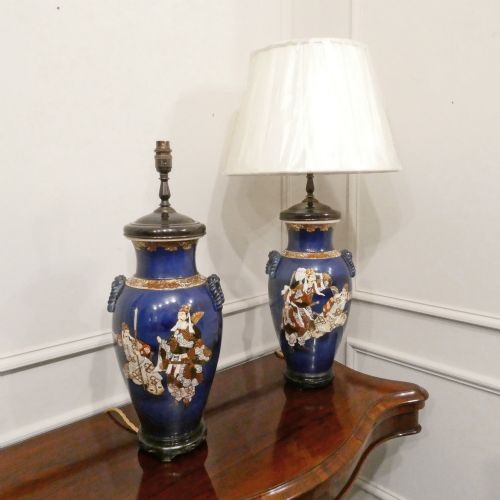
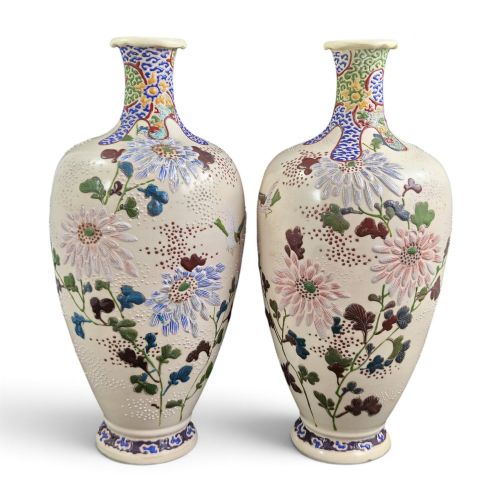
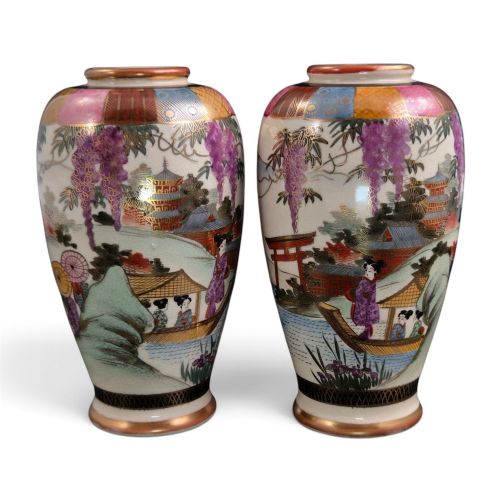
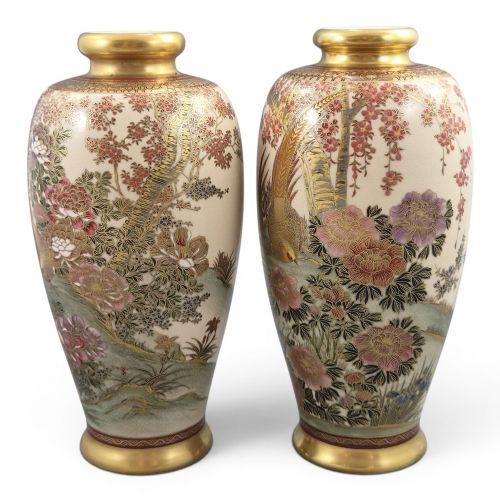
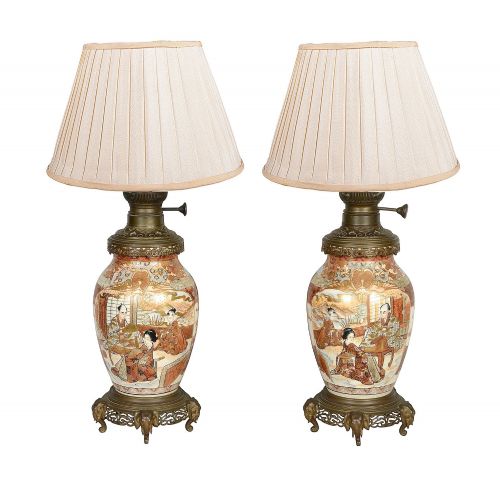
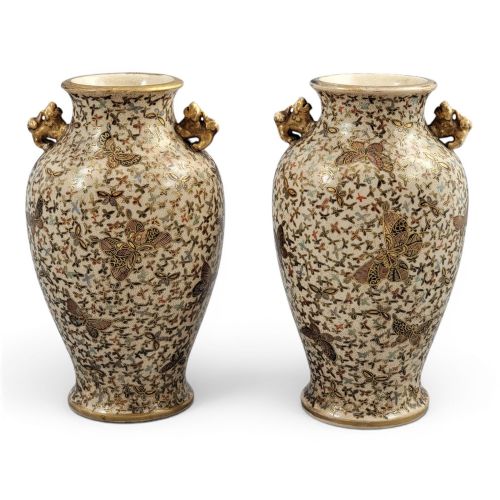
A ceramic satsuma pair consists of matching vessels created in earthenware, predominantly taking the form of baluster vases, decorative jars, and converted table lamps. These pieces originate largely from the Meiji, Taisho, and Showa periods, capturing historical Japanese craftsmanship intended for export and domestic display.
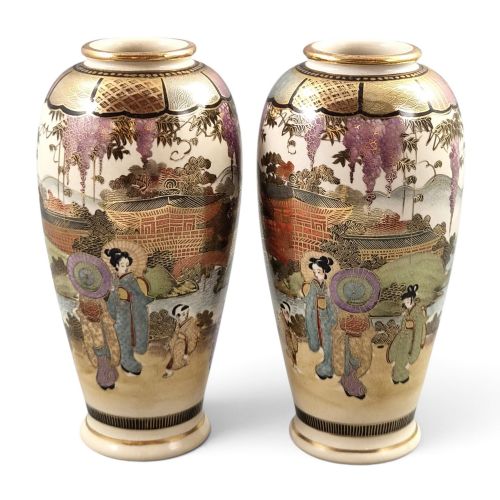
Buyers will most frequently encounter pairs of baluster vases featuring hand-painted scenes of landscapes, figures such as Rakan, and botanical motifs like wisteria. The selection also includes hexagonal vessels and decorative dishes produced by renowned Kyoto and Kobe workshops.
Makers utilised distinct regional palettes, combining intricate enamel work with abundant gilding to create symmetrical compositions. Each matched set demonstrates the careful coordination required to produce complementary items for traditional interiors.
Materials and Technique
Potters shaped these items from cream-coloured earthenware, applying a characteristic finely crackled glaze that provides a stable ground for subsequent painting. Artisans then built up complex pictorial surfaces utilising mineral enamels in muted and vibrant tones.
The application of gold leaf and heavy gilt highlights defines the decoration, framing panels filled with figures, deities, and floral elements. Certain pieces incorporate moriage technique, where slip is piped onto the ceramic body to create raised, textured decorative details.
Ceramic Satsuma Pair Retail Price Guide 2026
Typical asking prices for ceramic satsuma pair among the pieces listed under this phrase on Sellingantiques today, from the lower quarter to the upper quarter. They describe what is for sale here now, not the wider market.
Materials recorded across current items include gold leaf, raised enamel, and wood components used in fitted display bases.
Quality Variations
The distinction between standard commercial output and exceptional studio production lies in the precision and density of the hand-painted brushwork. Superior examples exhibit finely rendered facial expressions on figures and meticulously detailed garments without blurring in the enamel layers.
The application of gilding and gold leaf distinguishes the grade of a piece, with top-tier examples showing rich, burnished metalwork that retains its brilliance across intricate borders and panels. Compositional balance between the two matched vessels ensures that both items share equal artistic merit and scale.
Maruni Kobe·Shozan·Manpei·Kinkōzan·Kinzan·Makuzu Kozan II·Hakusan·Tagawa·Hododa·Tashiro·Shuzan·Yasuda
The Ceramic Satsuma Pair Glossary
- Moriage
- A decorative technique using raised slip applied to ceramics to create textured, dimensional patterns. This method adds a tactile quality to borders and drapery.
- Baluster
- A vase form with a rounded body that tapers toward the base and swells out before rising to a narrow neck. This shape provides a stable canvas for narrative painting.
- Mon
- A Japanese emblem or crest used to indicate family lineage or clan affiliation. These crests frequently appear on exhibition-quality Satsuma ware.
- Rakan
- Depictions of enlightened followers of Buddha, often shown with expressive faces and dynamic postures. They form a common subject in Meiji period religious iconography.
- Earthenware
- Porous pottery fired at lower temperatures than stoneware or porcelain, requiring a glaze to achieve impermeability. Satsuma ware uses this specific clay body beneath its crackled surface.
Ceramic Satsuma Pair: Frequently Asked Questions
What distinguishes Satsuma ware from other Japanese ceramics?
Satsuma ware is characterised by its ivory-coloured earthenware body and a distinctive network of fine crackles running through the clear glaze. This surface acts as a canvas for dense enamel painting and gilt decoration.
The tradition evolved from regional kilns into a major export art during the late nineteenth century. Artisans in Kyoto and Kobe adapted the style to suit Western tastes while retaining traditional Japanese motifs.
How can I tell the Meiji period pieces apart from later ones?
Meiji period items generally exhibit finer brushwork, denser gilding, and more meticulous attention to narrative detail in the painted panels. The clay bodies tend to feel heavier and denser in proportion to their size.
Later Taisho and Showa examples often feature broader brush strokes and simplified decorative borders. Examining the signature and the quality of the gold leaf helps confirm the era of production.
Were these pairs originally made as table lamps?
Many pairs found today were originally created as decorative vases and converted into lamps during the twentieth century. This conversion process often involved drilling the base or mounting hardware to the top.
Unconverted pairs retain their original ceramic integrity, while lamp conversions reflect how owners adapted antique vessels for modern domestic lighting. Both forms remain collectible depending on individual display preferences.
How should I care for antique Satsuma vases at home?
These ceramic pieces require gentle maintenance, utilising a soft, dry cloth to remove dust from the glazed and gilded surfaces. Avoid using water, chemical cleaners, or abrasive materials that could harm the delicate enamel.
Placement should be away from direct sunlight and areas subject to sudden temperature fluctuations to protect the earthenware body and crackle glaze. Stable shelving prevents accidental knocks to paired items.