





Ceramic Portrait Painting
Ceramic portrait painting brings miniature likenesses and figures to porcelain, enamel, and earthenware surfaces across the eighteenth, nineteenth, and early twentieth centuries.
Ceramic Portrait Painting
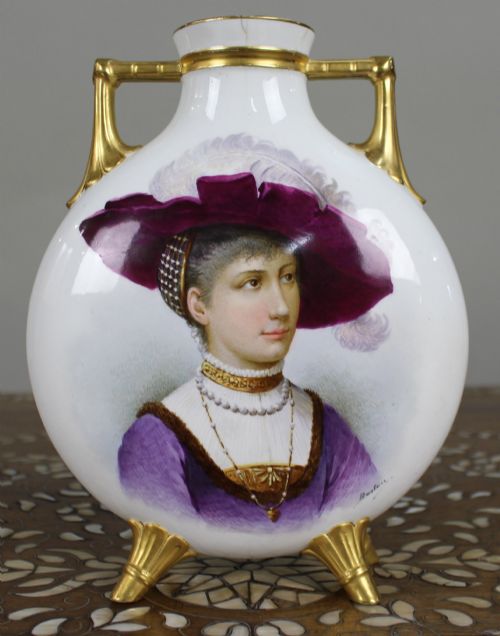
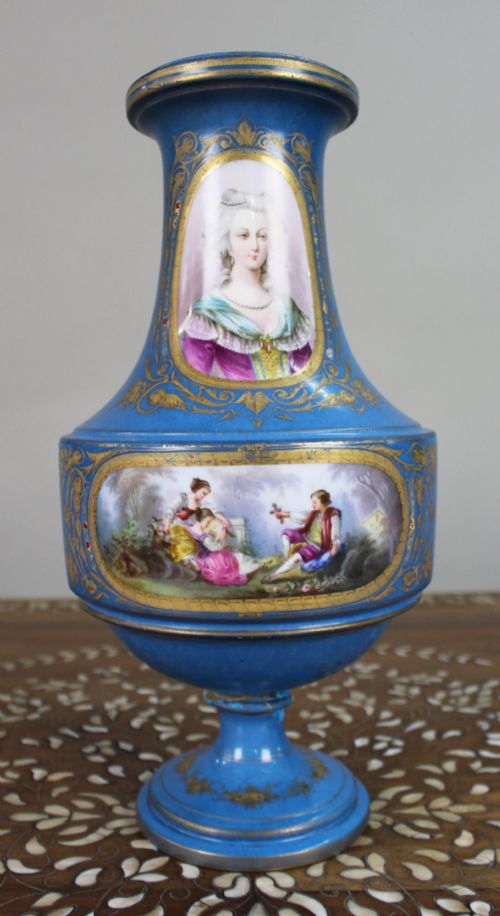
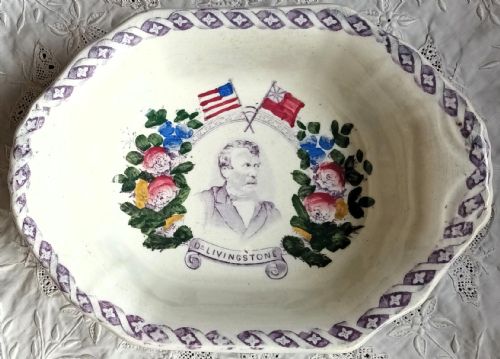
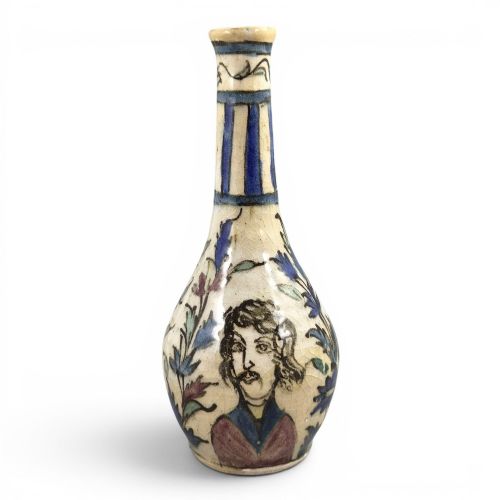
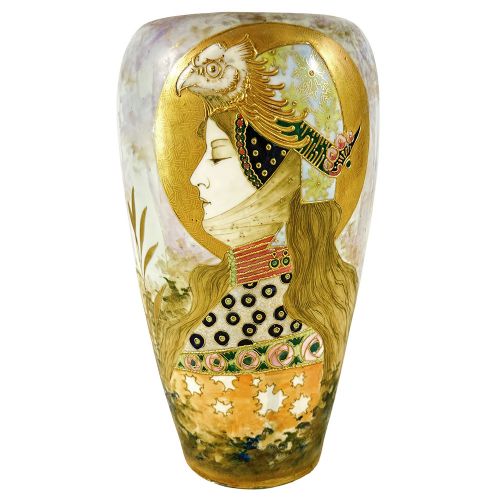
A ceramic portrait painting brings likenesses onto fired clay, porcelain plaques, cabinet plates, and decorative vases. These works record historical figures, literary characters, and classical subjects through hand-applied pigments.
The pieces appearing here span the eighteenth, nineteenth, and early twentieth centuries, drawing on Victorian, Neoclassical, and Art Nouveau aesthetics. European factories and independent makers dominate the selection.
Buyers encounter flat wall plaques alongside three-dimensional porcelain figurines, pottery dishes, and lidded vases bearing painted faces. Each form translates fine art portraiture into a durable ceramic medium.
Materials and methods
Makers applied enamel and ceramic pigments onto porcelain, earthenware, and pottery bodies before firing the pieces in kilns to fix the colour. Gold leaf and gilt detailing frequently frame the central portrait subjects.
Many works combine hand painting with moulded clay bodies, ranging from flat porcelain plaques set into carved wood frames to cast terracotta and pottery busts. Kiln temperatures determined the final gloss and durability of the glaze.
Ceramic Portrait Painting Retail Price Guide 2026
Typical asking prices for ceramic portrait painting among the pieces listed under this phrase on Sellingantiques today, from the lower quarter to the upper quarter. They describe what is for sale here now, not the wider market.
Listings feature eighteenth and nineteenth-century European porcelain, earthenware, and majolica forms, including wall plaques, cabinet plates, and portrait figures.
Markers of distinction
The quality of the porcelain body and the richness of the surrounding gilt or enamel embellishments set finer pieces apart. Signed works by recognised artists or established factories carry greater artistic weight.
KPM Berlin·Sèvres·Royal Vienna·Coalport·Reissner Stellmacher and Kessel
The Ceramic Portrait Painting Glossary
- Porcelain plaque
- A flat ceramic tablet fired to a hard finish, providing a smooth surface for detailed miniature portrait painting. These panels are often mounted within wood or ormolu frames.
- Cabinet plate
- A decorative ceramic plate intended for display in a cabinet rather than for dining. They frequently feature hand-painted portraits or historical scenes.
- Enamel
- A glass-like substance fused to a metal or ceramic base through firing. It provides a glossy, permanent ground for fine portrait work.
- Gilt
- A thin layer of gold applied to the ceramic surface or frame for ornamentation. It accentuates the borders of portrait plaques and vases.
- Majolica
- A type of earthenware coated with an opaque tin glaze and painted with polychrome pigments. It provides a vibrant ground for figurative and decorative vessels.
Ceramic Portrait Painting: Frequently Asked Questions
How do I display a porcelain plaque?
Porcelain plaques usually hang on walls inside fitted wood or ormolu frames, much like traditional canvas paintings. They require stable indoor conditions away from direct sunlight to protect the painted surface.
Heavier cabinet plates and decorative vases sit securely on sturdy shelves or inside glass-fronted display cabinets where their painted details remain visible.
Are these portraits hand painted?
The pieces listed here involve hand-applied pigments and enamels brushed directly onto the ceramic or porcelain body. Artists used fine brushes to achieve the detailed facial expressions and clothing textures seen in the portraits.
Kiln firing permanently sets these painted details into the glaze, distinguishing them from printed paper or canvas works.
How do I identify the period?
Period styles, factory marks, and framing materials offer clear clues to the age of a ceramic portrait. Neoclassical and Rococo Revival influences point to the nineteenth century, while later pieces adopt Art Nouveau lines.
Backstamps and signatures scratched or painted into the ceramic base help narrow down the exact decade of manufacture.
Can these ceramic pieces be cleaned?
Dusting gently with a soft, dry cloth is the safest way to maintain the surface of painted porcelain and pottery. Moisture and cleaning solutions can damage delicate gilt edges and enamel pigments.
Keeping the pieces away from high humidity preserves the integrity of both the ceramic body and the painted portrait.