



Ceramic Poodle Ornaments
These ceramic poodle ornaments are charming Victorian figures that bring character and period warmth to any room.
Ceramic Poodle Ornaments
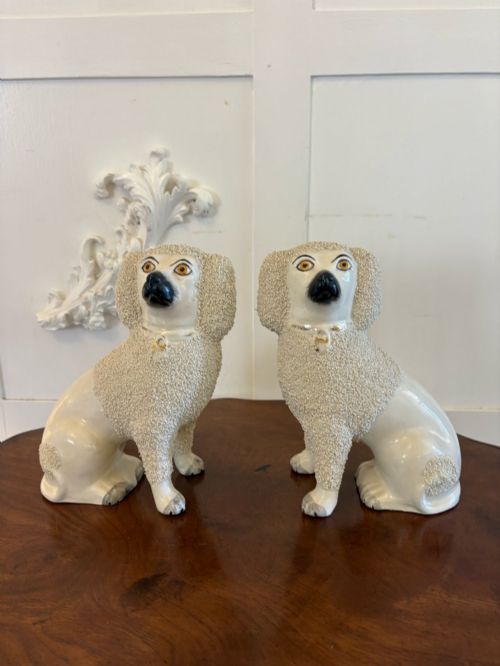
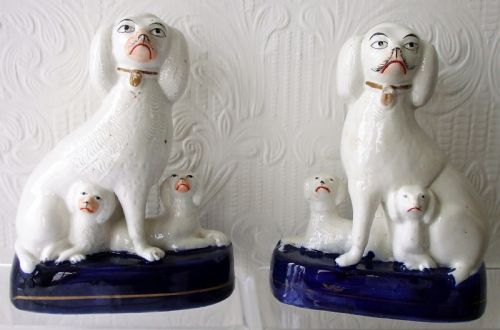
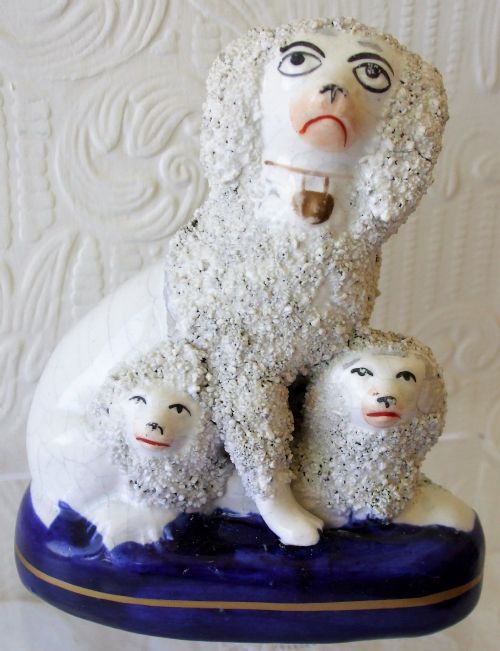
When you search for ceramic poodle ornaments, you encounter Victorian Staffordshire pottery figures that capture the canine subjects of the nineteenth century. These pieces appear most frequently as matched pairs, sometimes accompanied by tiny pups or modelled as part of a dog clock group.
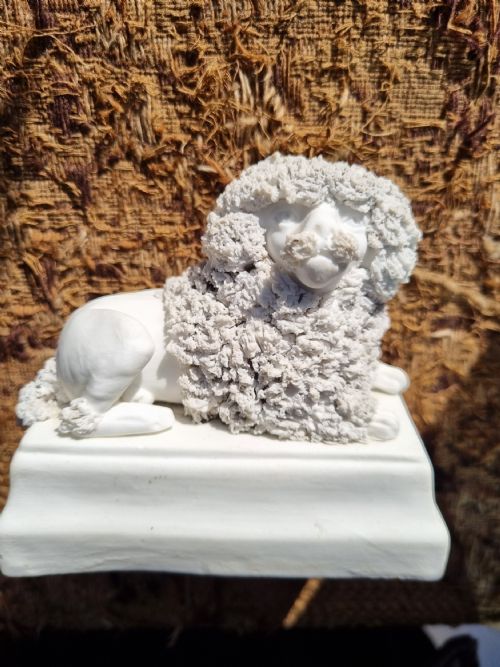
The selection spans the nineteenth century, including works from around eighteen sixty and miniatures dated near nineteen hundred. Alongside standard glazed earthenware, the inventory contains woolly textured examples and white bisque pottery figures.
Materials and methods
Certain models incorporate detailed surface encrusting to mimic the curly coat of the breed, while others utilise a smooth bisque ceramic finish without glaze.
Ceramic Poodle Ornaments Retail Price Guide 2026
Typical asking prices for ceramic poodle ornaments among the pieces listed under this phrase on Sellingantiques today, from the lower quarter to the upper quarter. They describe what is for sale here now, not the wider market.
Listings span the nineteenth century, featuring earthenware, glaze, enamel, gold leaf, lead glaze, gilt and white bisque pottery.
Judging quality and character
Quality rests upon the crispness of the moulding and the delicacy of the painted details, particularly around the eyes and muzzle. Pairs that retain their original gilt highlights and intact encrusting demonstrate superior preservation.
Proportion and scale also distinguish the work, with miniature poodles requiring exceptional precision from the potter to maintain fine detail on a small format.
The Ceramic Poodle Ornaments Glossary
- Staffordshire pottery
- Ceramic wares produced in the pottery district of Staffordshire, England, encompassing numerous regional kilns and makers. This term covers the bulk of the decorative figures found in this category.
- Bisque
- Unglazed ceramic fired once, leaving a matte, porous surface with a soft texture. It provides an alternative appearance to the typical high gloss finish.
- Lead glaze
- A shiny coating applied to pottery before firing to create a waterproof and glossy finish. This material gives nineteenth century figures their characteristic reflective sheen.
Ceramic Poodle Ornaments: Frequently Asked Questions
What periods do these figures come from?
These decorative figurines date from the nineteenth century, with specific examples originating around eighteen forty five and eighteen sixty. Later pieces extend into nineteen hundred.
Victorian makers produced these earthenware subjects across several decades, resulting in subtle variations in glaze and modelling style.
How were ceramic poodles displayed?
Victorian households typically arranged these pottery dogs in matched pairs upon mantelpieces, sideboards or occasional tables. They served purely decorative functions within the domestic interior.
Certain groups were also incorporated into larger functional items such as dog clock groups, combining timekeeping with figurative ornament.
Are pairs more common than single figures?
Matching pairs dominate the available selection, reflecting how Victorian potters originally designed and retailed these ornamental dogs. Collectors frequently seek out complete pairs for display symmetry.
Individual figures and miniature groupings do appear occasionally, providing alternative options for smaller spaces.
What surface finishes should I expect?
Most pieces feature a shiny lead glaze combined with hand painted enamel colours and gilt highlights. Some examples incorporate textured surfaces or clay encrusting to represent the curly coat of the breed.
A smaller number of items utilise a matte white bisque finish without any glaze.