



Ceramic Poodle Figures
Ceramic poodle figures are charming Victorian earthenware ornaments that bring immense personality and distinct character to any mantelpiece.
Ceramic Poodle Figures
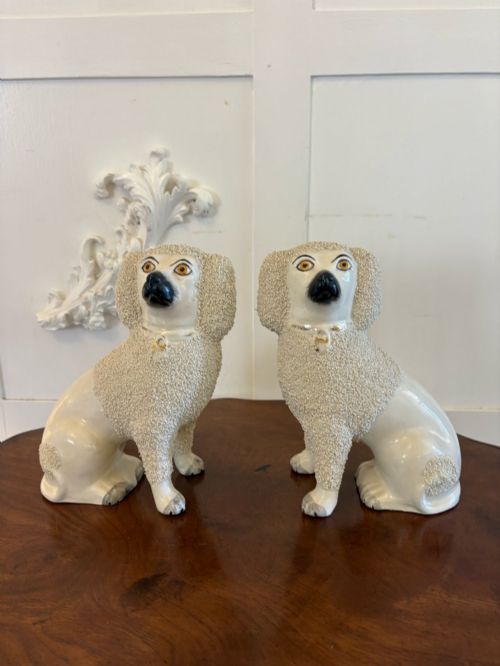
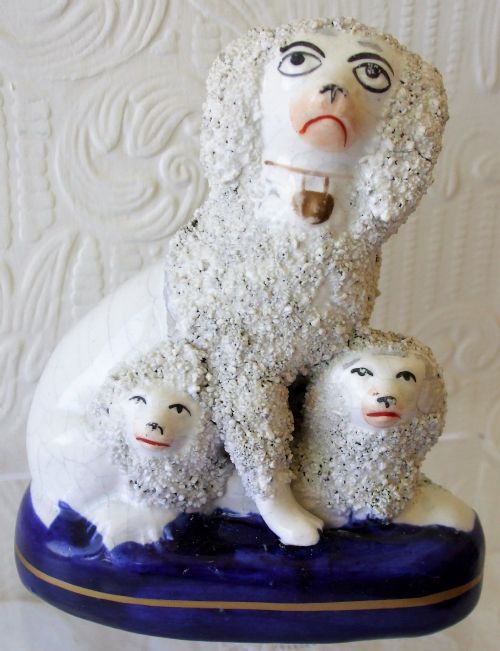
Ceramic poodle figures encompass Victorian earthenware groups, decorative figurines, and quill holders created during the nineteenth century. Buyers searching for ceramic poodle figures most frequently encounter pairs of Staffordshire dogs, often modelled with pups or baskets.
The available selection spans from miniature poodles dated around nineteen hundred to mid-nineteenth-century figure groups bearing gold leaf accents and detailed enamel finishes. Certain examples incorporate clock groups or functional quill holders into the traditional canine form.
Originating primarily from English potteries, these pieces capture the Victorian fascination with domestic animal representation. The assortment on this page ranges from robust Staffordshire pairs to delicate miniature interpretations.
Materials and construction
Potters utilised earthenware as the primary body for these figures, shaping the clay through moulding before applying decorative lead glaze and enamel details. The surface finish often combines smooth glaze with textured clay applications to simulate curly wool coats.
Ceramic Poodle Figures Retail Price Guide 2026
Typical asking prices for ceramic poodle figures among the pieces listed under this phrase on Sellingantiques today, from the lower quarter to the upper quarter. They describe what is for sale here now, not the wider market.
Listings feature Victorian earthenware and glazed ceramic figures spanning the nineteenth century, including miniature poodles dated around nineteen hundred.
Judging quality in nineteenth-century figures
The fineness of the modelling separates standard production pieces from superior examples, particularly in the rendering of facial expressions and individual curls. Detail work on associated elements, such as pups, baskets, or clock faces, dictates the visual success of the group.
Preservation of the original enamel colours and gold leaf highlights heavily influences the desirability of a pair. Crisp execution in the initial moulding stage ensures the distinct silhouette remains sharp beneath the lead glaze.
James Dudson
The Ceramic Poodle Figures Glossary
- Earthenware
- Porous pottery fired at lower temperatures, commonly utilised for nineteenth-century decorative figures. This material requires a protective glaze to hold liquids and achieve a finished sheen.
- Lead glaze
- A shiny, glass-like coating applied to pottery before firing to seal the porous clay body. It gives Victorian figures their characteristic reflective surface.
- Quill holder
- A hollow decorative ceramic object designed to store writing feathers on a desk. Nineteenth-century examples often incorporated animal figures into the functional design.
- Staffordshire pottery
- Ceramic wares produced in the English region of Staffordshire during the Victorian era. The designation covers a wide array of popular figures and animal groups.
Ceramic Poodle Figures: Frequently Asked Questions
What are ceramic poodle figures?
Ceramic poodle figures are nineteenth-century earthenware ornaments produced by English potteries during the Victorian period. They frequently appear as pairs, sometimes incorporating pups, baskets, or clock groups into the design.
Potters shaped these decorative objects from clay before finishing them with lead glaze and hand-painted enamel details. They served purely as mantelpiece decoration or, in specific instances, as functional quill holders.
How do I date a Staffordshire poodle?
Dating these pieces relies on examining the stylistic markers of the Victorian era, specifically the modelling techniques and material characteristics recorded from the nineteenth century. Mid-century examples often feature distinct wool textures and gold leaf accents.
Miniature versions and specific stylistic groupings help narrow the production window towards the later part of the nineteenth century or around nineteen hundred. Comparing the application of the lead glaze provides further clues to the period of manufacture.
How were these ceramic figures used?
Victorian households displayed these pottery figures on mantelpieces, sideboards, and drawing-room tables to demonstrate taste and fondness for domestic animals. Their primary function was purely decorative, adding colour and character to domestic interiors.
Certain specialised variations included integrated quill holders for writing desks or incorporated clock faces into the canine arrangement. This combined ornamental appeal with practical utility for the Victorian owner.
How do I care for antique earthenware?
Display these figures away from direct sunlight and areas subject to sudden temperature fluctuations to protect the fragile enamel and lead glaze surfaces. Dusting requires only a soft, dry cloth without any cleaning liquids.
Handling should remain minimal, supporting the base of the piece rather than protruding elements like heads or tails. Preserving the original gold leaf and enamel details depends on gentle environmental conditions.