





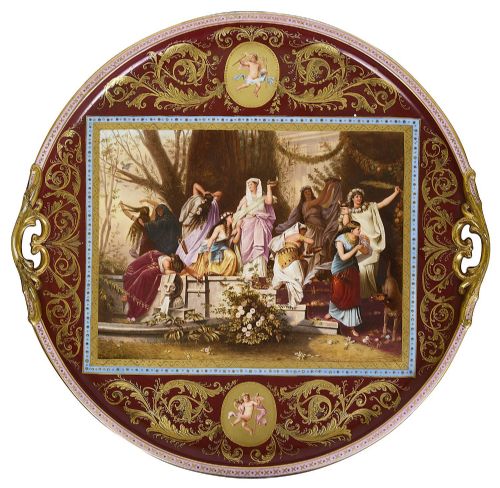


Ceramic Plaque Cabinet
A ceramic plaque cabinet brings together hand-painted porcelain and earthenware plates, chargers and trays intended for display.
Ceramic Plaque Cabinet
A ceramic plaque cabinet displays flat decorative ceramics, typically taking the form of cabinet plates, wall plaques and chargers alongside fitted furniture such as mirror-backed cabinets with majolica panels. The objects housed inside span the nineteenth century, Victorian, Edwardian and early twentieth-century periods.
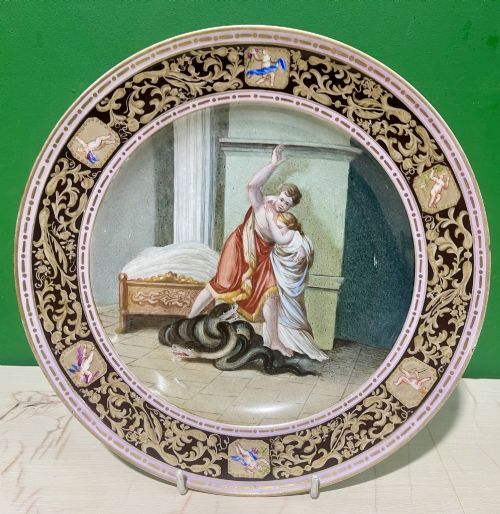
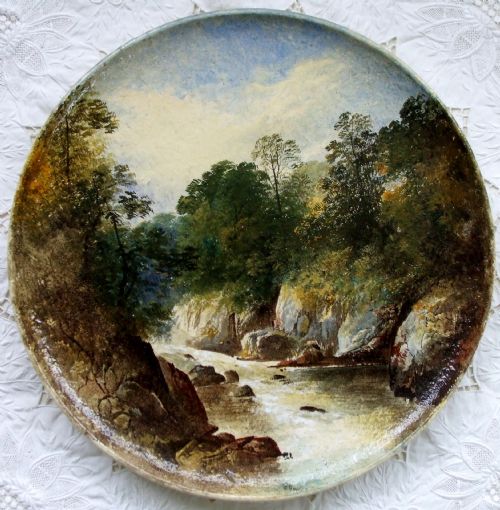
The pieces you are most likely to encounter on this page are nineteenth-century Victorian porcelain chargers and cabinet plates from English and continental factories. These items frequently feature hand-painted mythological, classical or landscape scenes signed by known ceramic artists.
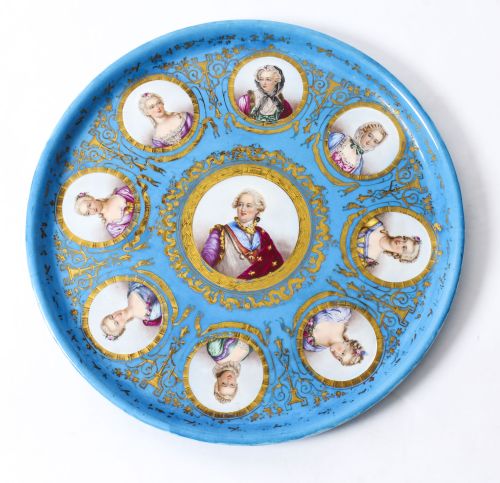
Makers represented in the listings include Copeland, Royal Vienna, Royal Worcester, Royal Doulton, Minton and Sevres. These works demonstrate the scope of decorative ceramic production from the eighteen-eighties through to nineteen-twenty.
Materials and methods
The core material across these items is porcelain, supplemented by earthenware and majolica. Bodies are shaped into plates, plaques, trays and chargers before undergoing high-temperature firing.
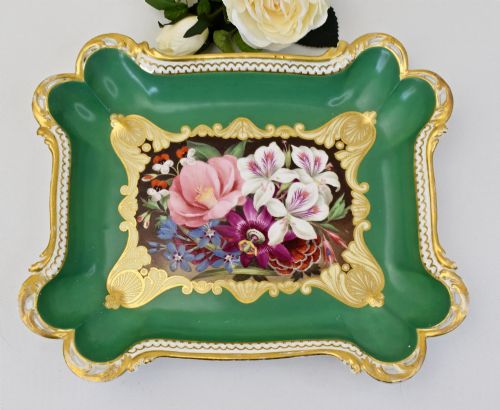
Surface decoration relies heavily on hand-painted enamel pigments applied over or under glaze. Artisans frequently integrated gold leaf and gilding to highlight borders, central motifs and framing details.
Specific factories utilised specialised hand-painting techniques, producing detailed figurative scenes, floral compositions and topographical landscapes signed by the decorators.
Ceramic Plaque Cabinet Retail Price Guide 2026
Typical asking prices for ceramic plaque cabinet among the pieces listed under this phrase on Sellingantiques today, from the lower quarter to the upper quarter. They describe what is for sale here now, not the wider market.
Evaluating quality and execution
Quality in these ceramic pieces rests on the precision and fineness of the hand-painted brushwork. Superior examples show meticulous detail in human figures, classical drapery and landscape depth, executed by accomplished painters rather than standard workshop hands.
The application of gilding and gold leaf distinguishes finer works, where burnished metallic highlights frame the central painted scene with crisp execution. Weight, purity of the porcelain body and clarity of the glaze also divide standard production from exceptional cabinet pieces.
Copeland Pottery·Royal Vienna·Royal Worcester·Royal Doulton·Minton·Sevres
The Ceramic Plaque Cabinet Glossary
- Cabinet plate
- A decorative ceramic plate intended for display in a cabinet or on a wall rather than for table service. These pieces usually feature elaborate hand-painted subjects.
- Charger
- A large ornamental plate, often exceeding standard dining dimensions, designed to serve as a focal display item. They frequently depict classical, historical or mythological narratives.
- Majolica
- A type of earthenware coated with an opaque tin glaze and painted with brightly coloured metal oxide pigments. It appears on architectural panels and cabinet inserts from the late nineteenth century.
- Gilding
- The application of gold leaf or powdered gold paint to ceramic surfaces. It accentuates rims, borders and decorative motifs.
- Enamel
- Vitreous coloured glass fused to the ceramic surface during firing. It provides the permanent palette used for detailed figurative painting.
Ceramic Plaque Cabinet: Frequently Asked Questions
What is a ceramic plaque cabinet?
A ceramic plaque cabinet is a piece of furniture designed to house and display decorative plates, chargers and porcelain plaques. These cabinets often feature glass doors or mirrored backs to showcase the painted surfaces.
Items kept inside typically include nineteenth-century cabinet plates and hand-painted porcelain panels from European factories.
How were cabinet plates used?
Cabinet plates were created exclusively for visual display rather than dining use. Owners placed them on specialised stands, hung them on walls or stored them in glass-fronted cabinets.
Their intricate painted scenes and gilded borders were meant to be admired as fine art works.
How do I date Vienna porcelain?
Dating Vienna porcelain involves examining factory marks, style indicators and decorator signatures. Nineteenth-century pieces often display shield or beehive marks alongside hand-painted classical titles.
Comparing the style of the figurative painting and the framing gilding helps place items within Victorian or later nineteenth-century production periods.
Where were majolica panels used?
Majolica panels were frequently incorporated into Victorian and Edwardian furniture, such as mirror-backed cabinets and wall mounts. Their durable glazed earthenware surfaces added rich colour and texture to wooden frames.
These panels combined functional furniture design with prominent ceramic artistry.