


Ceramic Paraffin Lamp
These ceramic paraffin lamp examples bring Victorian warmth to a room, combining practical domestic lighting with striking ornamental forms.
Ceramic Paraffin Lamp
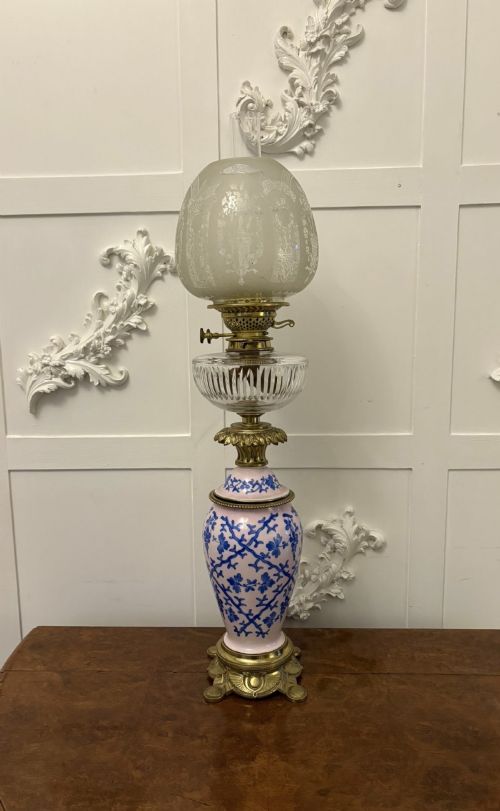
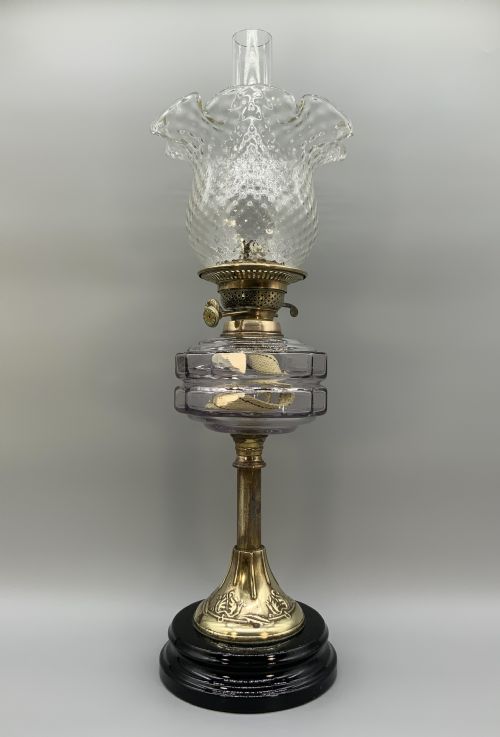
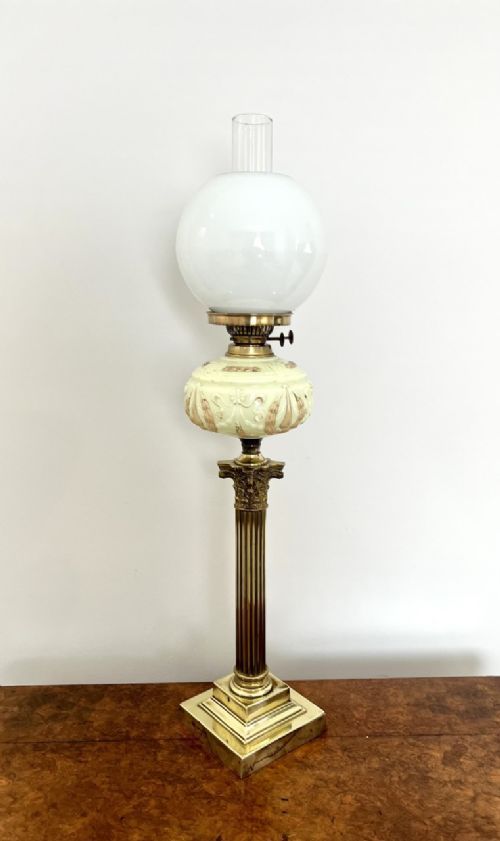
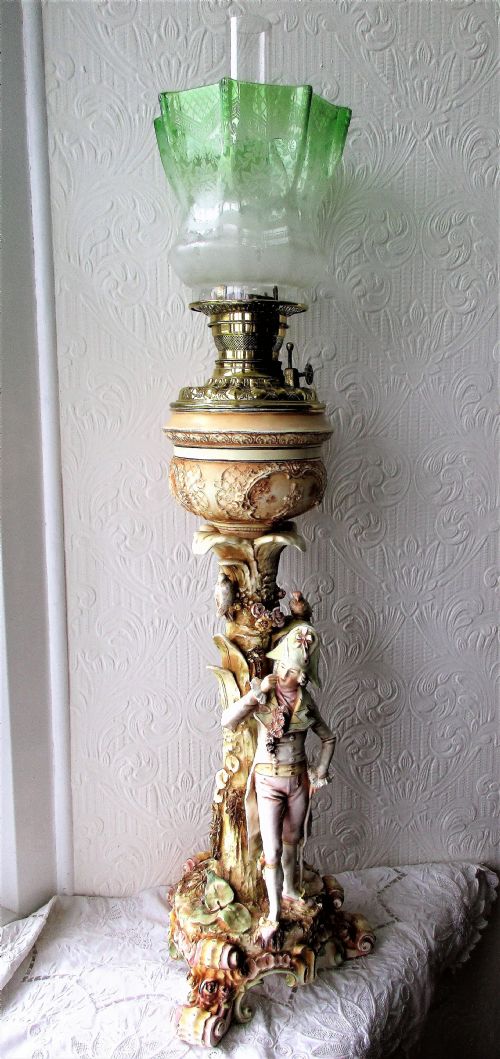
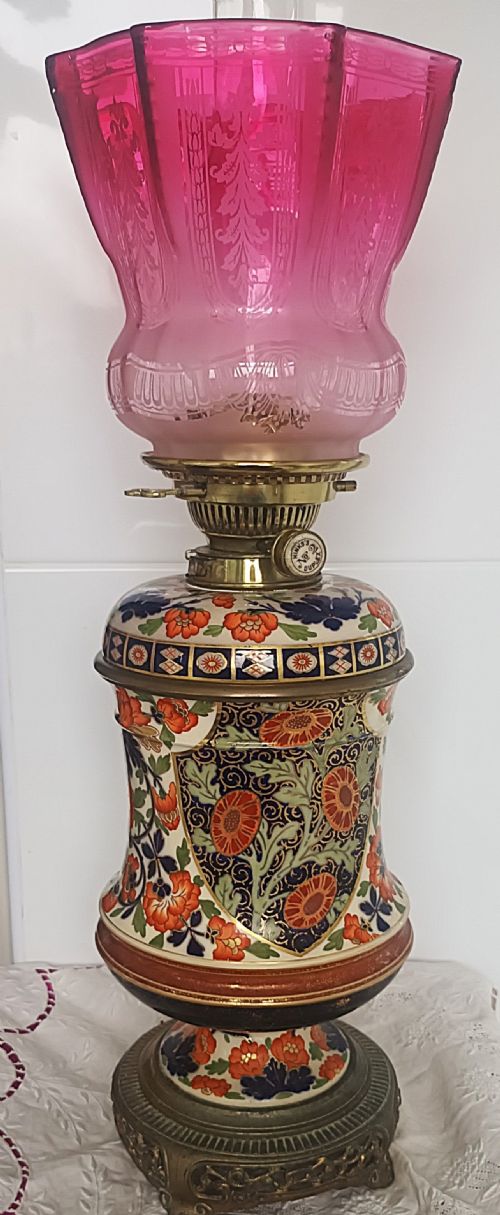
A ceramic paraffin lamp combines a functional fuel reservoir with decorative Victorian and Art Nouveau forms, often designed for tabletop use. You will frequently meet pieces featuring porcelain bodies mounted on brass or glass bases, dating from the nineteenth century.
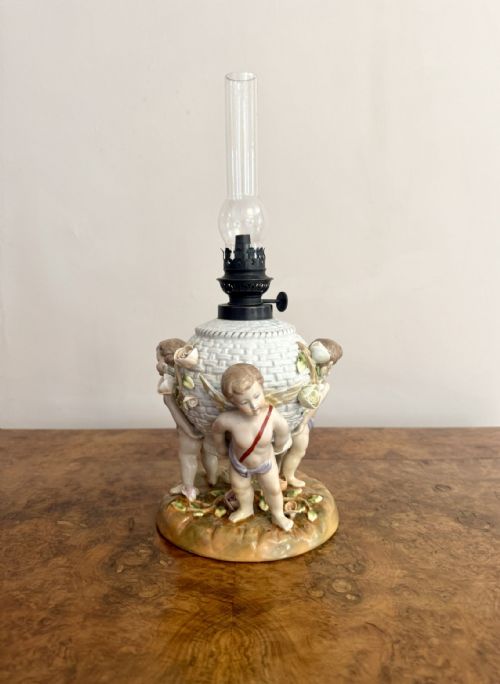
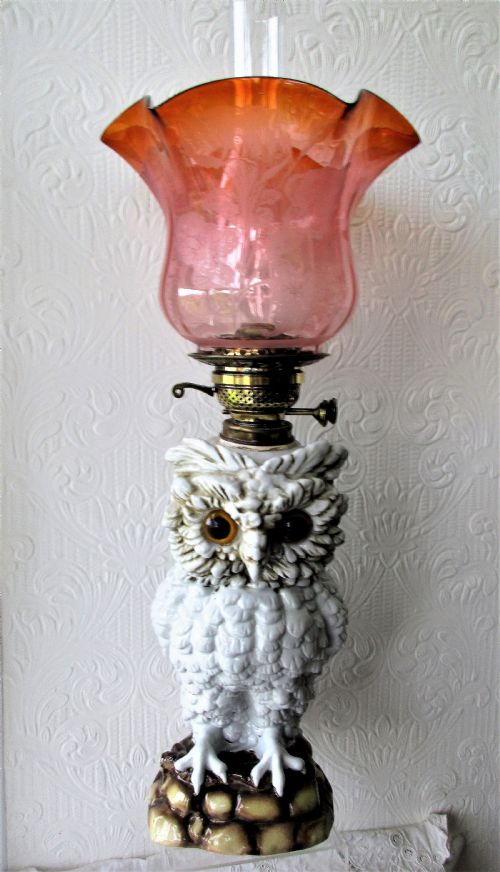
The selection here includes figural designs, such as owls, alongside tall twin-burning examples and telescopic models. These domestic objects reflect the period's taste for combining manufactured lighting with elaborate ceramic and glass craftsmanship.
How they were made
Makers constructed these lamps using ceramic and porcelain bodies, frequently paired with cast brass mounts, bronze, and hand-blown glass shades. Faience pottery and cranberry glass also appear in the evidence, showing a mix of fired clay and decorative glasswork.
Complex pieces incorporate telescopic metal columns, ceramic reservoirs painted with figures, and paired burners designed to hold specific glass shades. The assembly often joins pottery components directly to metal collars and weighted glass bases.
Object forms include telescopic table models and figural animal designs like porcelain owls.
What varies in quality
The distinction between standard domestic wares and superior examples lies in the modeling of the ceramic body and the complexity of the metal fittings. Hand-painted details, figural sculpting like the owl lamps, and substantial brass or bronze mounts indicate higher production standards.
Proportion and material combination also define the range, from simple white porcelain bodies to elaborate pieces featuring faience, cranberry glass, and telescopic mechanisms. The integration of specialised makers' components further separates ordinary utilitarian items from finely finished ones.
Sitzendorf·Taylor Tunnicliff·Hinks
The Ceramic Paraffin Lamp Glossary
- Ceramic paraffin lamp
- A domestic lighting fixture utilising a ceramic or porcelain fuel reservoir and burning paraffin oil. These objects date primarily from the Victorian and Art Nouveau periods.
- Faience
- Tin-glazed earthenware decorated with opaque coloured glazes, seen on nineteenth-century examples. This technique allows for detailed pictorial surfaces on lamp bodies.
- Telescopic
- An adjustable column mechanism allowing the height of the lamp to be altered. This mechanical feature is found on select Victorian table lamps.
- Cranberry glass
- A rich red glass created by adding gold chloride to the molten batch, used for shades and bases. It provides a distinct coloured contrast to the ceramic body.
Ceramic Paraffin Lamp: Frequently Asked Questions
How do I date a ceramic paraffin lamp?
Dating relies on stylistic markers such as Victorian revival shapes or Art Nouveau curves, alongside material combinations like brass and porcelain. Identifying marks from known potteries also helps narrow the period.
Most surviving examples date from the nineteenth century up to nineteen hundred. Examining the burner type and the construction of the ceramic body provides further context.
Where were these lamps used?
These lamps served as interior lighting in nineteenth-century homes, placed on tables in parlours and living spaces. Their decorative ceramic and glass bodies were meant to be seen.
They provided functional illumination before electric lighting became widespread. Figural and painted designs ensured they remained ornamental objects during daylight hours.
Can I still use a paraffin lamp?
Many of these lamps retain their original burners and reservoirs, though safety checks are essential before burning fuel. Modern users often display them unlit as decorative antiques.
Special care must be taken with historic ceramic bodies and glass shades. Professional inspection of the burner assembly is recommended if operational use is intended.
What styles are common in these lamps?
Victorian Rococo Revival, Late Victorian, and Art Nouveau styles dominate the evidence, showing changing decorative tastes across the period. Figural subjects, such as animals, also appear.
French Chateau and Napoleon III influences are visible in pieces combining faience and bronze. These varied aesthetics reflect European manufacturing traditions of the nineteenth century.