





Ceramic Mantel Garniture
These ceramic mantel garniture sets bring balanced, decorative presence to a room, pairing matching vases or urns to frame a central clock.
Ceramic Mantel Garniture
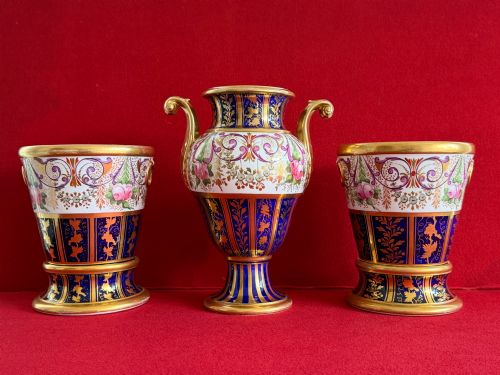
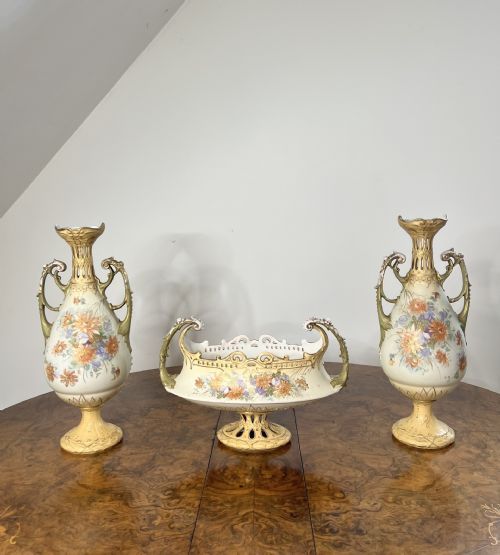
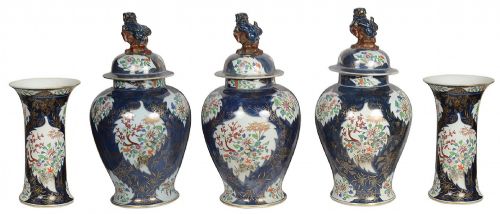
A ceramic mantel garniture comprises matching sets of three to five ornamental vases, urns, or candlesticks designed to sit harmoniously together on a fireplace shelf or sideboard. When you search for ceramic mantel garniture, you encounter matched groupings that often incorporate a central clock flanked by coordinating side vessels.
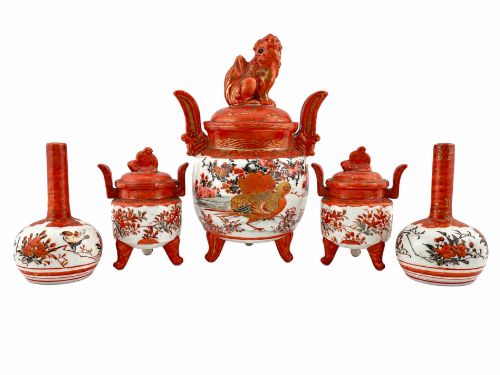
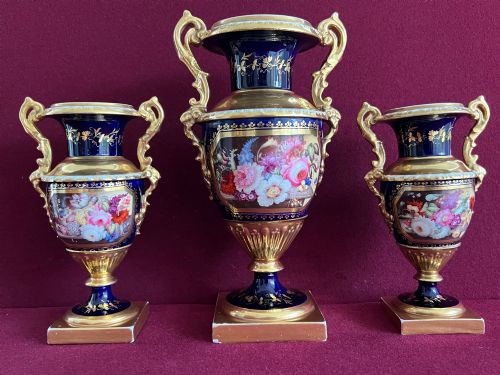
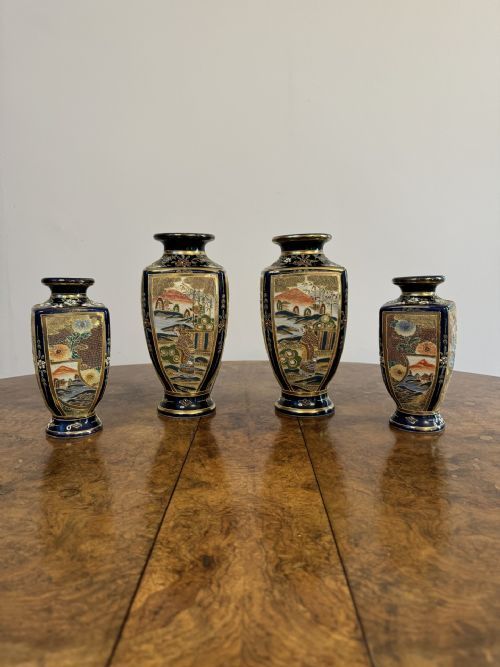
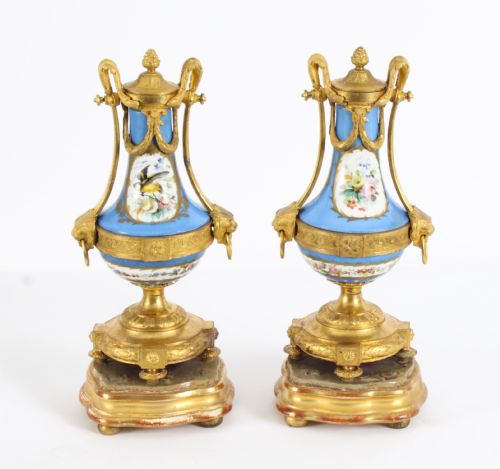
The pieces appearing on this page span the Georgian and Regency eras through to the late nineteenth century, taking the form of French Sevres style lidded urns, Japanese Kutani and Imari vases, and English porcelain sets. Most examples rely on the balanced arrangement of a centrepiece accompanied by two or four matching side vases to create symmetry on a mantel.
Origins stretch from European factories such as Worcester, Minton, and Vienna to Japanese Meiji period workshops and Chinese export traditions. These groupings reflect a historic desire for formal decorative order, wherein mantelpieces were dressed with coordinated ceramic objects of graduated or matching sizes.
Materials and techniques
Makers shaped these vessels from fine porcelain, ironstone, and glazed ceramic bodies, often employing hand-painted motifs ranging from naturalistic birds and floral sprays to complex Chinoiserie and classical figures. Artisans applied cobalt blue, enamels, and rich gilding directly onto the ceramic surface before firing.
Many European and Japanese garnitures incorporate cast metal mounts, utilising ormolu, gilt bronze, and brass to frame the ceramic bases, rims, and handles. Gold leaf and meticulous gilding highlight the structural contours of the vases and clock sets.
Ceramic Mantel Garniture Retail Price Guide 2026
Typical asking prices for ceramic mantel garniture among the pieces listed under this phrase on Sellingantiques today, from the lower quarter to the upper quarter. They describe what is for sale here now, not the wider market.
Listings feature 19th century pieces alongside Georgian, Regency, and 18th century examples, utilising porcelain, ormolu, and enamel.
Separating the ordinary from the exceptional
Quality rests in the precision of the hand-painting and the crispness of the porcelain body, where refined brushwork and vibrant enamels distinguish master painters from standard factory production. The integration of metalwork also matters, as finely chased ormolu and gilt bronze mounts fitted snugly to the ceramic demonstrate superior craftsmanship.
Completeness dictates the standing of a garniture, since surviving sets that retain all three or five original matching components hold greater distinction than assembled or partial groups. The sophistication of the design, whether an intricate Japanese Imari palette or a detailed French Sevres style pastoral scene, elevates certain pieces above simpler decorative items.
Spode·Minton·Flight Barr and Barr·Royal Vienna·Mason Ironstone·Sevres
The Ceramic Mantel Garniture Glossary
- Garniture
- A set of matching vases, urns, or vessels designed to be displayed together as a decorative unit on a mantelpiece or cabinet. These groupings typically consist of three or five pieces.
- Ormolu
- Finely ground high-carat gold applied in a mercury amalgam to a bronze base, creating a rich golden finish on mounts and decorative fittings. This technique was widely utilised in French nineteenth-century pieces.
- Imari
- A traditional Japanese style of porcelain decorated in underglaze blue, iron red, and gold, named after the port from which these goods were shipped. The palette is bold and instantly recognisable.
- Sevres style
- A term describing nineteenth-century European porcelain produced in imitation of the famous French royal factory, often featuring rich bleu celeste grounds and painted panels. These objects frequently include elaborate gilt bronze mounts.
- Koro
- A traditional Japanese incense burner, often tripod-footed and featuring a pierced lid, which occasionally forms part of an imported ceramic garniture.
Ceramic Mantel Garniture: Frequently Asked Questions
What is a ceramic mantel garniture?
A ceramic mantel garniture is a matching set of decorative vessels, such as vases or urns, created to be displayed together on a fireplace mantel. They provide visual balance and symmetry to a room.
Such sets often include a central clock accompanied by two matching side pieces, turning a functional shelf into an ornate decorative display.
How were garniture sets displayed?
These sets were traditionally arranged along the mantelpiece of a formal drawing room or parlour, with the tallest or central piece taking pride of place in the middle. The coordinating side pieces flanked this centrepiece to create a balanced composition.
Beyond fireplaces, similar groupings adorned large sideboards, cabinets, and pier tables in wealthy nineteenth-century homes.
How do I care for antique porcelain?
Antique porcelain requires gentle cleaning with a soft, dry cloth to remove dust without disturbing delicate gilt surfaces or hand-painted enamels. Water and cleaning agents should generally be avoided unless handled by a professional.
Keep these pieces away from direct sunlight and areas prone to sudden temperature changes to protect the glaze and any metal mounts from wear.
How can I tell the period of a garniture?
Dating a garniture involves examining the ceramic paste, the style of painting, and any factory marks or patterns stamped on the base. Stylistic clues, such as the distinct aesthetic of the Japanese Meiji period or French Rococo Revival forms, help narrow down the decade of manufacture.
Comparing the manufacturing techniques and the integration of ormolu mounts against documented examples also assists in establishing an accurate timeline.