




Ceramic Hunting Figurine
A ceramic hunting figurine brings the countryside into the parlour, capturing hounds, Diana, and sporting dogs in earthenware and porcelain.
Ceramic Hunting Figurine
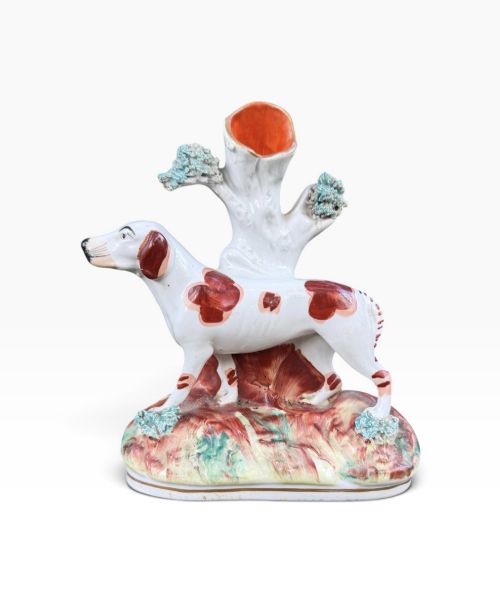
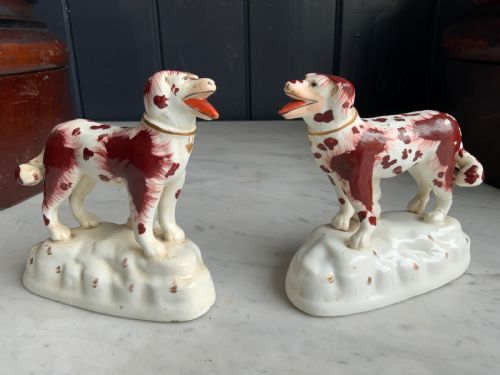
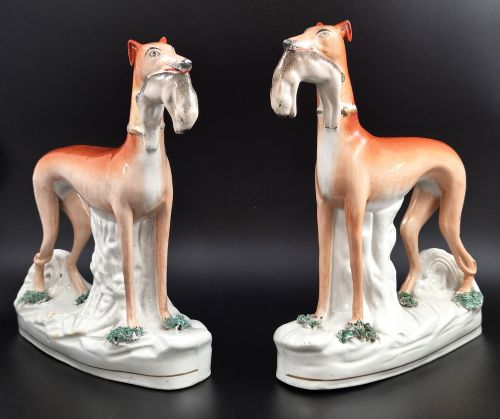
A ceramic hunting figurine represents dogs, hunters, and sporting scenes across periods from the Georgian era through to the 1930s. You will regularly encounter Staffordshire pottery figures of greyhounds with hares, setters, and pointers alongside Continental porcelain examples.
The forms vary from spill vases and pairs of mantel dogs to single figures of Diana and boy hunters with game. Staffordshire earthenware and Royal Dux porcelain dominate the selection, shaped as decorative objects for the home.
How they were made
Potters shaped these pieces using earthenware, porcelain, and occasionally spelter, applying lead glaze or enamel paint for surface colour. Figures were moulded, fired, and hand-decorated with enamels to pick out the details of coats, game, and clothing.
Factories such as Staffordshire potteries and European works utilised slip-casting or pressing techniques before finishing the surfaces with vibrant glaze layers.
Ceramic Hunting Figurine Retail Price Guide 2026
Typical asking prices for ceramic hunting figurine among the pieces listed under this phrase on Sellingantiques today, from the lower quarter to the upper quarter. They describe what is for sale here now, not the wider market.
Listings span the Georgian, Regency, Victorian, and Edwardian periods, utilising earthenware, porcelain, and lead glaze.
What varies in quality
Quality rests in the crispness of the modelling and the hand-painting of facial expressions, coat markings, and naturalistic bases. Finer examples show careful attention to anatomical detail in the animals and precise application of enamel paint.
Larger or matched pairs command attention through their scale and presence, whereas simpler figures rely on charm and directness of form.
Thomas Parr factory·Enoch Wood factory·Royal Capodimonte Factory·Royal Dux·Royal Bayreuth
The Ceramic Hunting Figurine Glossary
- Spill vase
- A hollow ceramic holder designed to store taper spills for lighting fires or pipes, often modelled beside a dog or hunter.
- Lead glaze
- A shiny coating applied to pottery before firing, giving earthenware a smooth, glass-like finish that heightens the enamel colours beneath or above.
- Enamel paint
- Vitreous coloured pigments fused to the surface of porcelain or pottery during a secondary, lower-temperature kiln firing.
- Earthenware
- Porous pottery fired at lower temperatures than porcelain, forming the primary body for most nineteenth-century Staffordshire animal figures.
- Patch period
- An era in eighteenth-century porcelain manufacture leaving distinct triangular kiln-support marks on the unglazed bases of figures.
Ceramic Hunting Figurine: Frequently Asked Questions
What are ceramic hunting figurines?
These pieces are decorative ceramic sculptures depicting hunting dogs, setters, greyhounds, and figures associated with the hunt, produced across the eighteenth, nineteenth, and early twentieth centuries.
They capture sporting subjects in earthenware and porcelain, serving traditionally as mantel ornaments and display pieces in British and European homes.
How do I date a Staffordshire dog figure?
Dating relies on stylistic markers, the type of ceramic body, and the characteristics of the glaze or enamel colours used by factories during periods like the Victorian era or earlier.
Earlier pieces often display softer earthenware bodies and simpler hand-painted details, while later nineteenth-century examples show sharper moulding and brighter transfer-printed or enamel highlights.
Where were these figures made?
Production centres were concentrated in the Staffordshire potteries of England, alongside major European porcelain works in Germany, Bohemia, and France.
English earthenware makers produced robust pairs of greyhounds and spill vases, whereas Continental factories focused on refined porcelain modelling.
How should I display ceramic figurines?
These figures suit stable surfaces away from direct sunlight and heavy foot traffic to protect their historic glaze and delicate painted details.
Matched pairs look effective arranged together on mantelpieces, sideboards, or within glazed cabinets alongside other antique ceramics.