


Ceramic Fruit Plate
A ceramic fruit plate brings the rich colours of orchard harvests onto painted porcelain, earthenware and ironstone for the table or cabinet.
Ceramic Fruit Plate
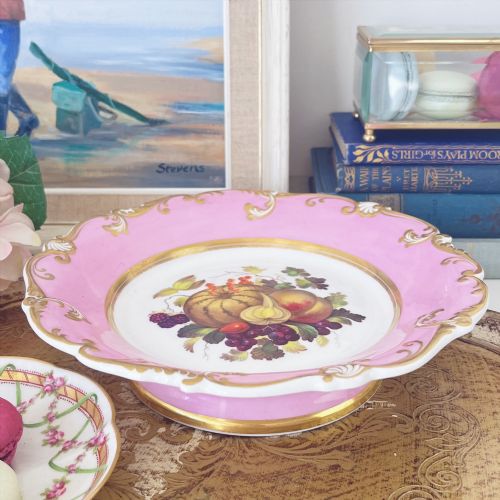
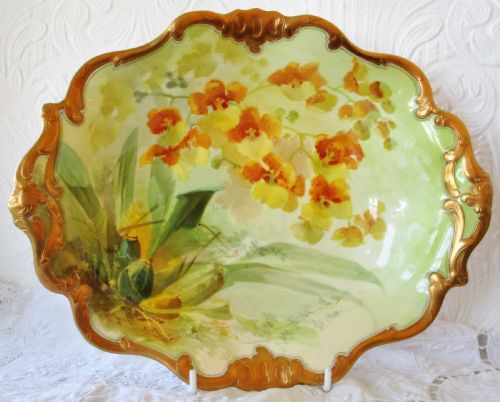
A ceramic fruit plate serves as a specialised vessel designed for presenting or displaying orchard produce, appearing across this selection in forms ranging from individual dessert dishes to large cabinet plates and comports. These pieces emerge from nineteenth century workshops and twentieth century factories alike, spanning periods from Georgian eras through the 1930s.
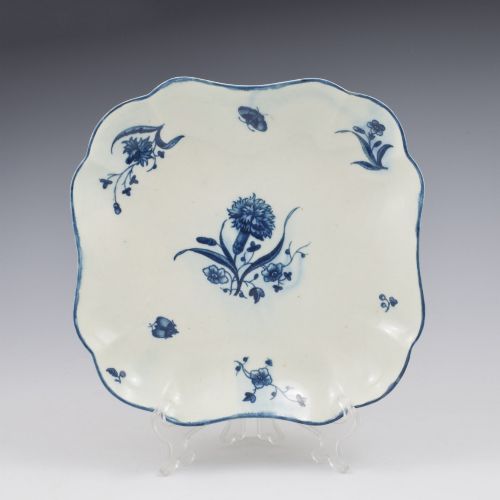
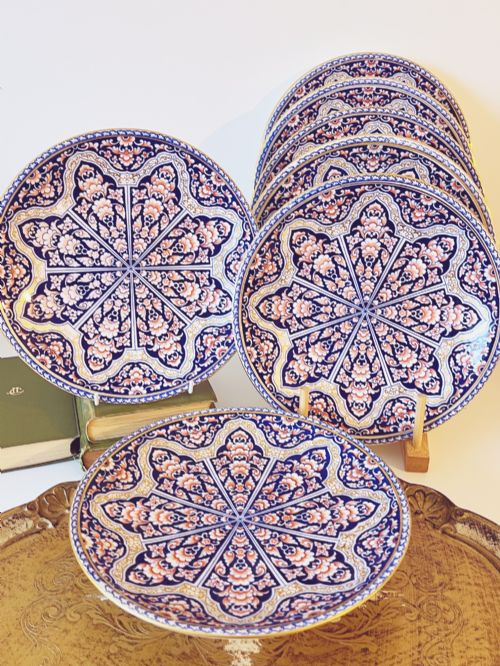
Makers utilise traditional shapes such as shell-edged platters, footed tazzas, and low compotes alongside standard circular plates. Buyers will encounter English porcelains from factories like Royal Worcester alongside Japanese Imari wares and continental earthenware.
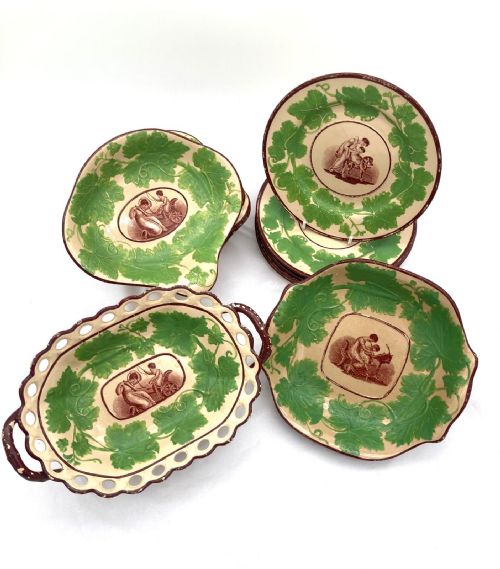
Dessert services often arrive as part sets, grouping several plates with a central comport for table display. Individual cabinet plates focus purely on visual impact, carrying hand-painted fruit studies meant for wall hanging or stand mounting.
Materials and Technique
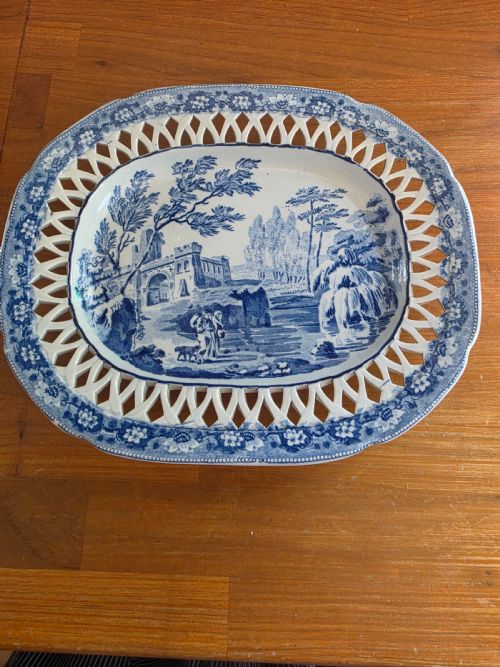
Potters shape these items from porcelain, bone china, ironstone, and earthenware bodies, applying white glazes to create smooth grounds for subsequent decoration. Enamel colours and underglaze blue pigments build the pictorial scenes across the ceramic surface.
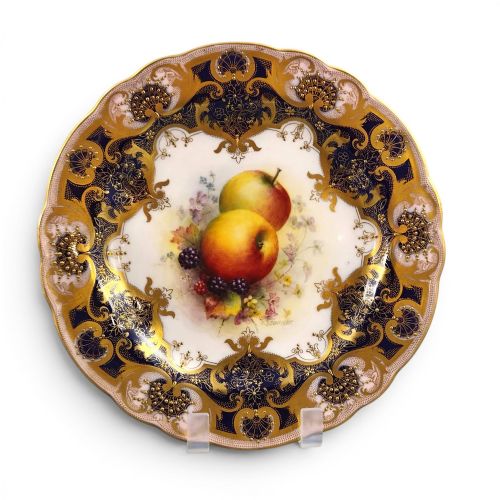
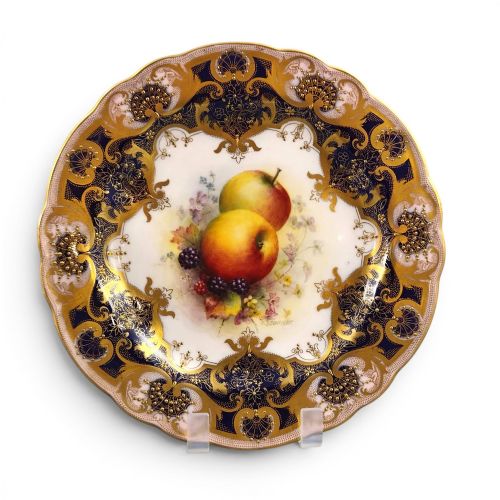
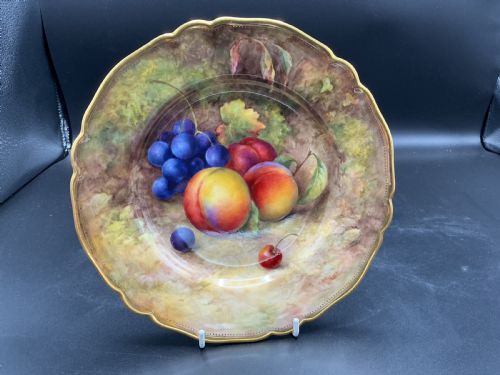
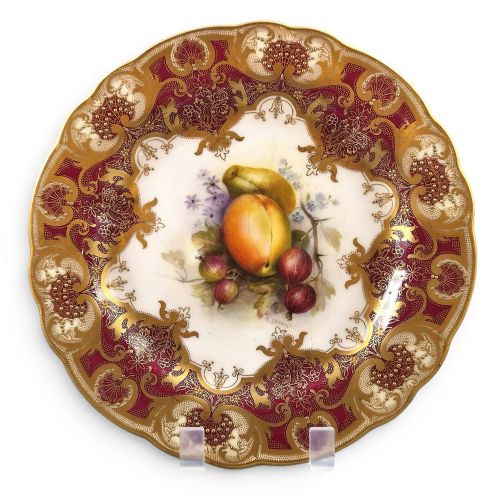
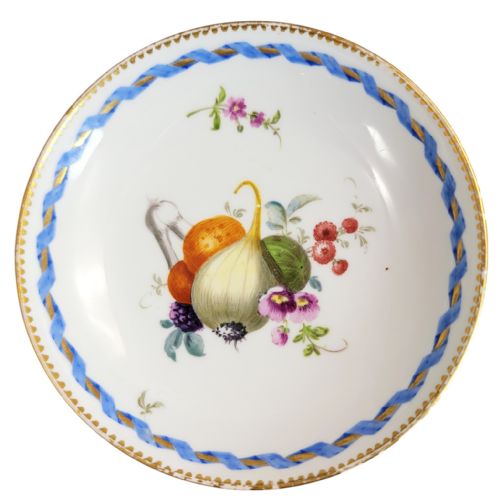
Painters execute naturalistic fruit studies by hand, often incorporating delicate gilding and gold leaf highlights along the scalloped or patterned borders. Kiln firing sets the enamels and gold leaf permanently into the glaze layer.
Ceramic Fruit Plate Retail Price Guide 2026
Typical asking prices for ceramic fruit plate among the pieces listed under this phrase on Sellingantiques today, from the lower quarter to the upper quarter. They describe what is for sale here now, not the wider market.
Listings feature porcelain, bone china, ironstone, and earthenware bodies decorated with hand-painted fruit, blue and white transfers, and gold leaf.
Judging Quality
The standard of a painted fruit plate rests entirely upon the skill of the artist and the crispness of the porcelain body. Hand-painted examples by known decorators display meticulous brushwork in the depiction of peaches, grapes, and foliage, whereas standard transfer-printed wares rely on mechanical repetition.
Richness of gilding and the depth of the porcelain glaze separate standard utility items from exhibition cabinet pieces. Superior services exhibit consistent potting, unblemished enamel grounds, and sharp relief on moulded edges.
H and R Daniel·Royal Crown Derby·Davenport·Royal Worcester·Royal Doulton·Meissen·Kornilov Brothers·Minton·Jose Alvez Cunah·Masons Ironstone·Moorcroft·Wedgewood
The Ceramic Fruit Plate Glossary
- Comport
- A raised vessel on a pedestal foot used for serving fruit or sweetmeats at dessert. These pieces sit higher than standard plates to create tiered displays on dining tables.
- Cabinet plate
- A decorative plate intended for display in a cabinet or on a wall rather than for daily dining use. They frequently feature elaborate hand-painted scenes and gilded borders.
- Ironstone
- A heavy, durable type of earthenware patented in the nineteenth century to rival true porcelain. It provides a sturdy body for transfer-printed and hand-painted fruit patterns.
- Imari
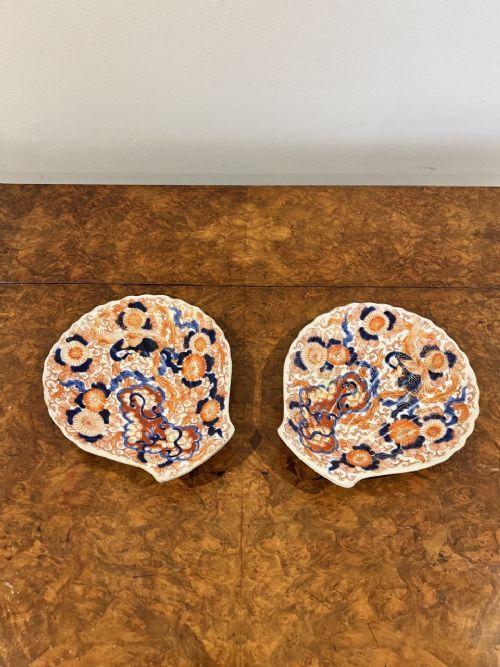
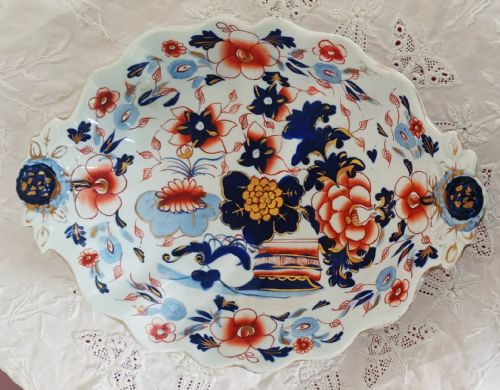
- A decorative style originating in Japan and copied by European potteries, characterised by a palette of underglaze blue, iron red, and gold leaf. The designs often incorporate floral and shell motifs.
- Gilding
- The application of gold leaf or gold paint to ceramic rims and borders. Skilled artisans burnish the gold to achieve a bright metallic finish against the white porcelain.
Ceramic Fruit Plate: Frequently Asked Questions
How do I display a cabinet plate?
Cabinet plates with painted fruit designs look best mounted on specialised wall hangers or displayed upright on plate stands within a glass-fronted cabinet.
Keep them away from direct sunlight to preserve the vibrancy of the hand-painted enamels and gold leaf highlights over time.
Can I use antique dessert services for dining?
Many nineteenth-century porcelain and ironstone services remain structurally sound for occasional dessert use during special dinners.
Hand washing is essential to protect delicate enamels, hand-painted fruit details, and antique gilding from harsh dishwasher detergents.
How do I identify Japanese Imari fruit plates?
Japanese Imari pieces display a distinct palette combining deep underglaze blue with rusty iron red and shining gold leaf accents.
They frequently feature shell shapes or dense floral and panelled motifs distinct from traditional English botanical porcelain.