





Ceramic Flatback Figure
These ceramic flatback figure items bring Victorian parlour life into your home with their colourful portraits and theatrical subjects designed to sit flat against a wall.
Ceramic Flatback Figure
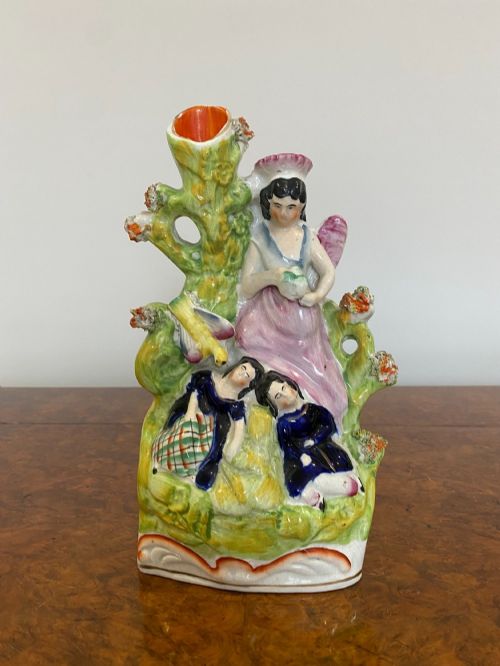
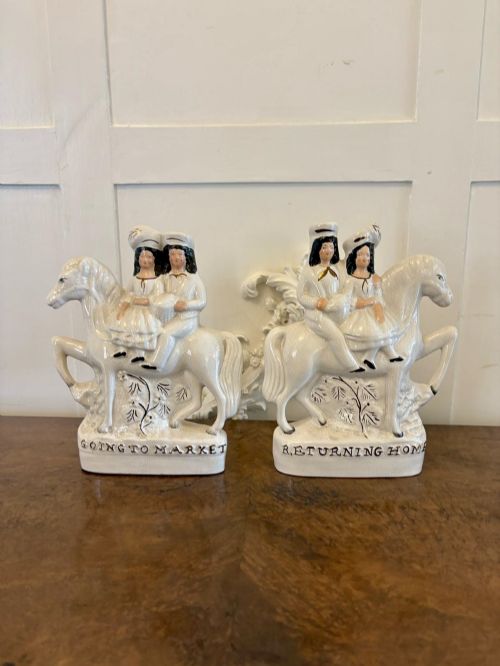
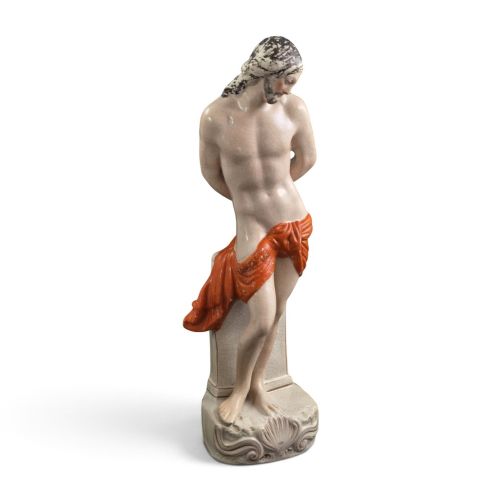
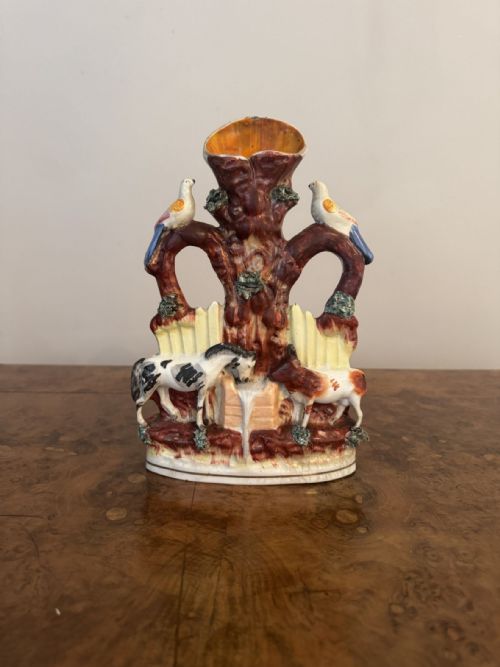
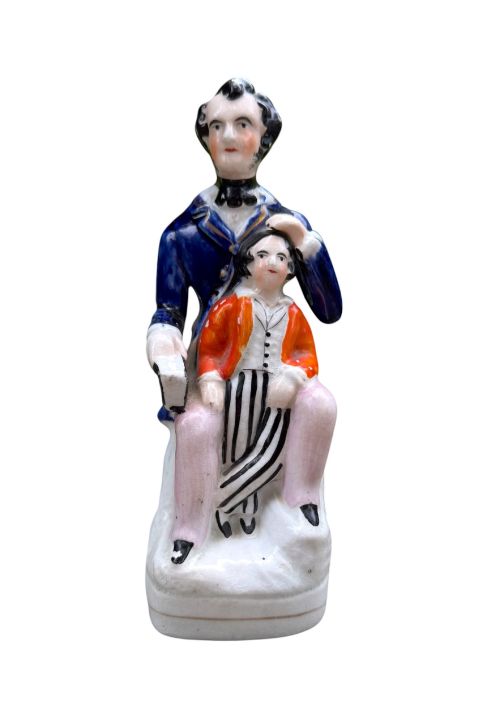
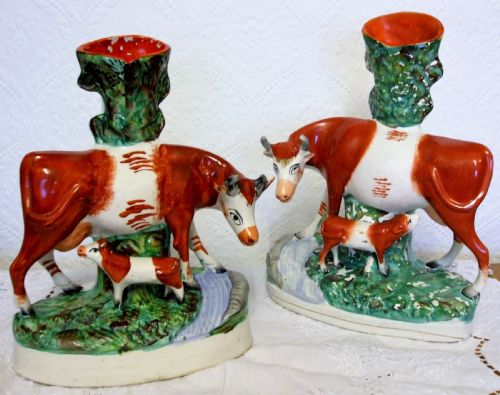
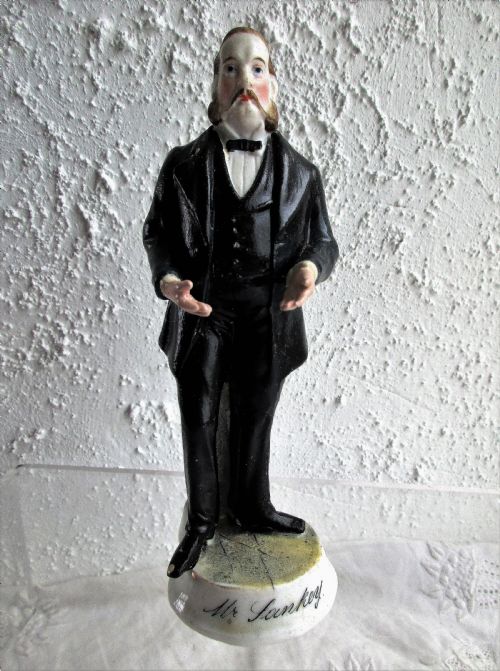
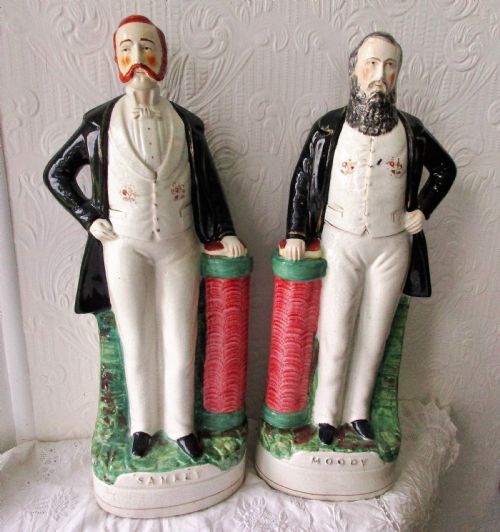
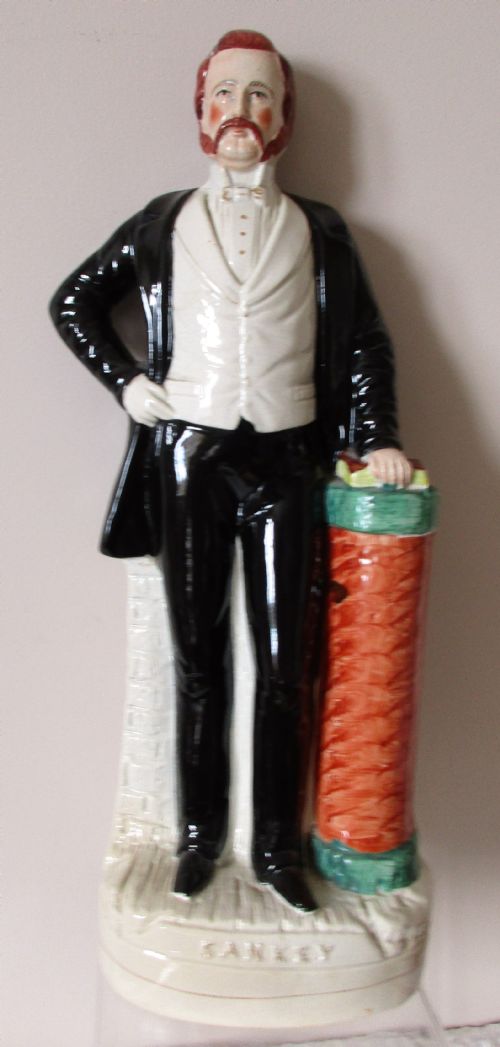
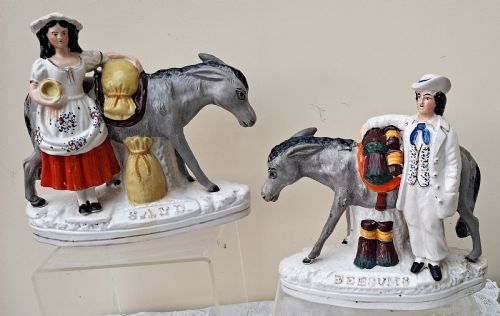
A ceramic flatback figure is a distinct type of Staffordshire pottery designed primarily for display on a mantelpiece or shelf where the back is unglazed and flat because it faced a wall. These pieces date predominantly to the Victorian period, spanning the mid to late nineteenth century, and depict a wide variety of subjects from military heroes and royalty to literary characters and domestic animals. You will most frequently encounter portrait groups, equestrian figures, and spill vases shaped as cottages, castles, or rural couples.
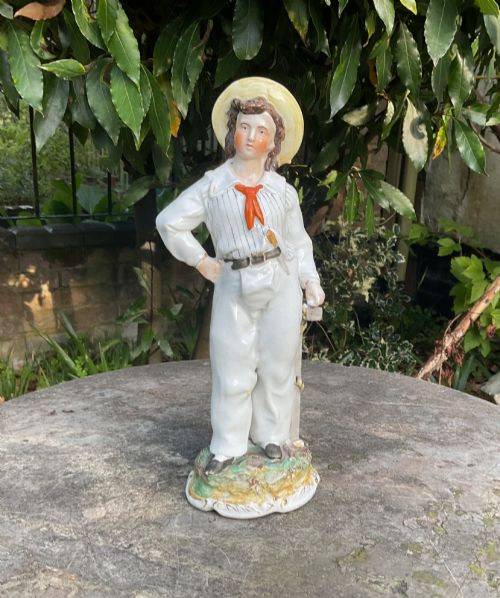
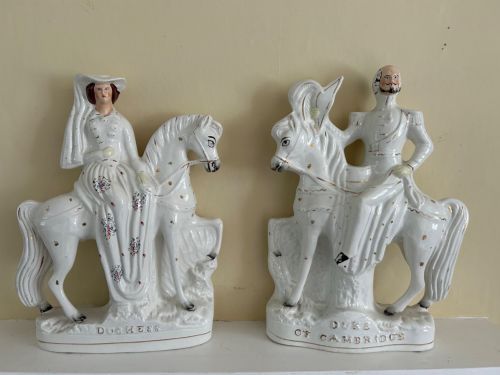
The subjects draw heavily on contemporary events, historical milestones, and popular culture of the eighteen-fifties and eighteen-sixties, capturing figures like the Duke and Duchess of Cambridge, Queen Victoria, and scenes from the Crimean War. Many are modelled as pairs or companion pieces, balancing theatrical characters such as Ben Backstay with romanticized gardeners or pastoral workers. The range extends from simple temperance figures to large equestrian portrayals like Joan of Arc or Robin Hood.
Materials and construction
Makers utilised earthenware bodies formed by press-moulding, a technique that allowed Staffordshire potteries to produce hollow figures with flat rears efficiently. The pieces were then finished with lead glaze and hand-painted using enamel paint, often accented with gilt highlights around the bases and clothing details.
The glazing process gives these earthenware pieces their characteristic glossy sheen, while the enamel colours were applied over or under the glaze depending on the workshop traditions of the nineteenth century. Spill vases incorporated a hollow cylindrical section alongside the main figure to hold wooden matches, combining decorative appeal with practical utility in the Victorian parlour.
Ceramic Flatback Figure Retail Price Guide 2026
Typical asking prices for ceramic flatback figure among the pieces listed under this phrase on Sellingantiques today, from the lower quarter to the upper quarter. They describe what is for sale here now, not the wider market.
The listings show nineteenth-century Staffordshire earthenware pieces decorated with lead glaze and enamel paint, spanning subjects from royal portraits to literary scenes.
Judging quality and character
The depth of the gilding and the stability of the glaze also separate ordinary mantel ornaments from superior sculptural pieces. Larger figures and complex portrait groups that maintain correct proportions and bright, stable colours represent the upper tier of nineteenth-century output.
The Ceramic Flatback Figure Glossary
- Flatback
- A ceramic figure modelled with a finished front and sides but left flat and unadorned at the rear for placement against a wall. This construction saved clay and reduced weight for mantelpiece display.
- Spill vase
- A hollow cylindrical pottery vessel combined with a figure or scene, designed to hold wooden spills or matches for lighting fires and pipes. These objects served a daily domestic purpose in nineteenth-century rooms.
- Earthenware
- A porous pottery body fired at lower temperatures than stoneware or porcelain, requiring a glaze to achieve impermeability. It formed the standard structural material for Victorian Staffordshire figures.
- Enamel paint
- Coloured vitreous or oil-based pigments applied to pottery surfaces to add vivid details to clothing, faces, and accessories. These paints were fired at lower temperatures to bond with the glazed surface.
- Lead glaze
- A glossy coating containing lead oxide applied to earthenware to create a smooth, waterproof surface that intensified the underlying ceramic colours.
Ceramic Flatback Figure: Frequently Asked Questions
What is a ceramic flatback figure?
A ceramic flatback figure is a Victorian Staffordshire pottery ornament moulded with a flat, unadorned rear so it could sit flush against a wall on a mantelpiece or shelf.
These pieces typically depict historical figures, royalty, literary characters, or animals, capturing popular culture of the nineteenth century through hand-painted earthenware.
Where were these figures made?
They were produced primarily in the industrial pottery towns of Staffordshire, England, during the Victorian era by numerous local potteries and workshops.
The region possessed the necessary clay resources, fuel, and specialised labour to dominate the production of popular decorative ceramics.
How were spill vases used?
Spill vases incorporated a built-in hollow tube alongside the decorative figure to hold slender wooden spills used for transferring flames from a hearth fire to candles or pipes.
They combined domestic utility with the popular ornamental style of nineteenth-century mantelpiece decoration.
How do I date a flatback figure?
Dating relies on identifying the historical events, royal marriages, military campaigns, or public figures depicted, such as the Crimean War or early portraits of Queen Victoria.
Stylistic markers include the type of earthenware body, the intensity of the lead glaze, and the specific application of enamel paints typical of the nineteenth century.