

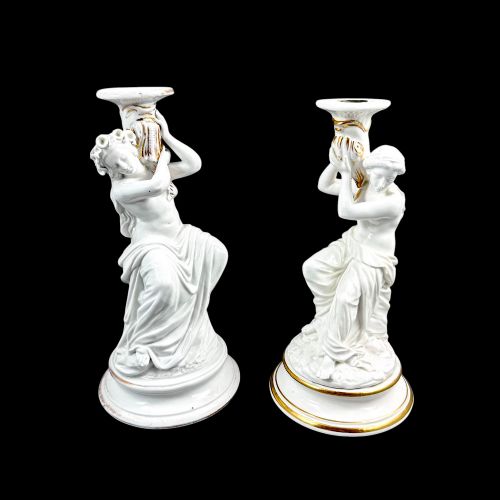


Ceramic Figure Candle Stands
These ceramic figure candle stands bring sculpted human and allegorical forms right onto the dining table, combining practical illumination with elaborate ornamentation.
Ceramic Figure Candle Stands
When you search for ceramic figure candle stands, you encounter sculptural porcelain pieces designed to hold taper candles or multiple lights, often taking the form of human figures, putti or allegorical representations. The selection spans Georgian, Victorian and early twentieth-century examples, showing how makers combined functional lighting with decorative modelling over successive eras.
The figures frequently depict gardeners, classical seasonal characters such as Summer and Autumn, or allegorical representations like Australia, set upon floral or scrolled bases. These range from single candlesticks to matched pairs and grander candelabra, drawing on styles from Rococo Revival and Neoclassical to Arts and Crafts.
You are most likely to meet Victorian and nineteenth-century porcelain examples on this page, alongside eighteenth-century Georgian items from English factories like Chelsea and Derby, as well as continental works from Germany.
How they were made
The pieces on this page rely primarily on porcelain, including soft-paste porcelain, shaped by skilled hands into complex figural compositions and supporting sockets. Makers built up these forms through careful modelling of the clay before firing.
Ceramic Figure Candle Stands Retail Price Guide 2026
Typical asking prices for ceramic figure candle stands among the pieces listed under this phrase on Sellingantiques today, from the lower quarter to the upper quarter. They describe what is for sale here now, not the wider market.
Object forms represented in the current inventory include both single-socket candlesticks and multi-branch candelabra.
What varies in quality
The complexity of the piece influences its character, ranging from simple single-socket candlesticks to elaborate multi-branch candelabra populated by cherubs and allegorical figures. The precision of the hand-painted enamel work and the richness of the gilding further define the individual standing of each item.
Sutherland and Sons·Royal Worcester Hadley·Helena Wolfsohn·Triebner ENS and Eckert·Decoro England
The Ceramic Figure Candle Stands Glossary
- Figural
- Incorporating human or animal forms into the design of an object. In these stands, figures form the central column supporting the candle socket.
- Soft-paste porcelain
- A type of artificial porcelain fired at lower temperatures than hard-paste, common in eighteenth-century English factories. It yields a warm, slightly translucent body.
- Enamel
- Opaque vitreous material fused to the ceramic surface through firing to provide permanent colour. It is applied by hand to render details on robes and foliage.
- Gilding
- The application of gold leaf or gold powder to ceramic surfaces. This technique highlights raised rococo scrolls and architectural details.
- Allegorical
- Symbolising an abstract idea through a human figure, such as the seasons or continents. These figures often hold attributes like harvested corn or regional flora.
Ceramic Figure Candle Stands: Frequently Asked Questions
What are ceramic figure candle stands?
These pieces are sculptural candle holders made from porcelain that incorporate human figures, cherubs, or allegorical characters into their design. They combine practical lighting with detailed ceramic art.
Originating largely from eighteenth- and nineteenth-century European factories, they served as decorative garnitures for mantelpieces and dining tables.
How were these candle stands used?
They were placed on tables, sideboards, and mantelpieces to provide illumination via wax taper candles while serving as decorative centrepieces. Wealthy households displayed them to showcase refined taste and artistic manufacture.
Many were produced in matched pairs to balance the decor of a formal room during dinner parties or evening gatherings.
How do I care for antique porcelain?
Cleaning requires only gentle dusting with a soft, dry brush to protect the delicate applied flowers and painted enamel details. Avoid submerging antique porcelain in water, especially pieces with gold leaf or cold-painted highlights.
Keep them away from direct sunlight and areas subject to temperature extremes to preserve the glaze and body over time.
How do I identify the period?
Dating relies on examining the factory marks stamped or painted on the base, the style of the modelling, and the composition of the porcelain body. Eighteenth-century pieces often feature softer pastes and hand-modelled floral encrustations.
Nineteenth-century revival styles, such as Rococo Revival or Victorian Neoclassical, display distinct moulding techniques and brighter enamel palettes characteristic of later industrial output.