
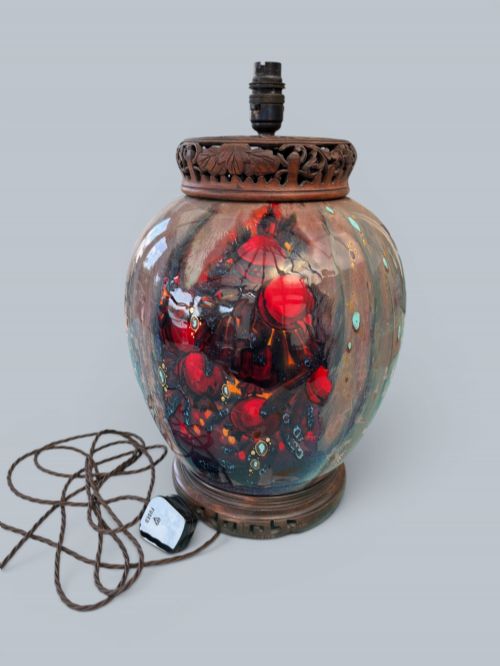


Ceramic Baluster Lamp
These ceramic baluster lamp selections bring substantial historical presence and soft illumination to any room.
Ceramic Baluster Lamp
A ceramic baluster lamp combines a rounded, vase-like silhouette with domestic lighting, drawing on centuries of ceramic artistry. Buyers seeking a ceramic baluster lamp will find examples fashioned from historic vessels paired with electrical fittings.
The selections span the eighteenth, nineteenth, and early twentieth centuries, capturing periods from Victorian production to the arts and crafts movement. Many utilise imported Asian ceramics mounted in Europe, alongside domestic pottery traditions.
Vases originally made for display or storage are frequently adapted into table lamps. These pieces range from compact single vessels to large pairs flanked by metal mounts.
How they were made
Potters shaped these bodies from porcelain, earthenware, or stoneware on a wheel or in moulds before applying glazes and hand-painted pigments. Common decorative techniques include famille verte, powder blue, and intricate enamel work.
Makers often embellished finished ceramic bodies with mounts of brass, ormolu, or gilt metal to stabilise the base and hold the electrical hardware. Fabric shades complete the construction, casting light downward onto the glazed surfaces.
Several vases traded their original duty as tea storage to spend their retirement illuminating reading nooks.
What varies in quality
The refinement of the ceramic body and the precision of the hand-painted detailing dictate the standard of each piece. Finer examples display crisp brushwork, balanced proportions, and glazes applied with depth and uniformity.
The integration of metal mounts and hardware affects the overall cohesion of the object. Quality shows in how sympathetically a historic vase accommodates its electrical conversion without compromising the original ceramic form.
Moorcroft Art Pottery
The Ceramic Baluster Lamp Glossary
- Baluster
- A vertical architectural form with a rounded lower swelling that tapers upward, mirrored in the shape of these vase bodies.
- Famille Verte
- A porcelain palette dominated by green enamels, developed in China during the Qing dynasty and widely imitated in Europe.
- Ormolu
- Gilded bronze mounts cast and chased to ornament furniture and ceramic vessels, adding weight and decorative polish.
- Celadon
- A pale green jade-like glaze originating in East Asia, prized for its subtle colour and crackle patterns.
- Arita
- Japanese porcelain produced around the town of Arita and exported to Europe in large quantities from the seventeenth century onward.
Ceramic Baluster Lamp: Frequently Asked Questions
Are these lamps converted from old vases?
Many of these pieces began life as decorative vases, ginger jars, or temple vessels before being adapted for domestic lighting.
This conversion process typically involves drilling a discreet channel for wiring and securing metal mounts to support a bulb fitting.
How do I date a ceramic lamp?
Dating relies primarily on the style of the ceramic body, the pigments used in the glaze, and any associated metal mounts.
Clues from the nineteenth and early twentieth centuries often appear in the handling of the porcelain and the wiring hardware.
Where should I place a large lamp?
Larger pairs command attention on heavy wooden sideboards, entrance hall consoles, or grand living room tables.
Ensure the surface can support the combined weight of the ceramic body and the metal mounts.
How do I clean an antique ceramic lamp?
Dust the ceramic body gently with a dry, soft cloth to prevent accumulation in textured or painted crevices.
Avoid chemical cleaning agents that might damage delicate overglaze enamels or historical gilt mounts.