



Caucasian Lattice Area Rug
A caucasian lattice area rug brings geometric discipline and rich wool texture into a room, offering authentic tribal character.
Caucasian Lattice Area Rug
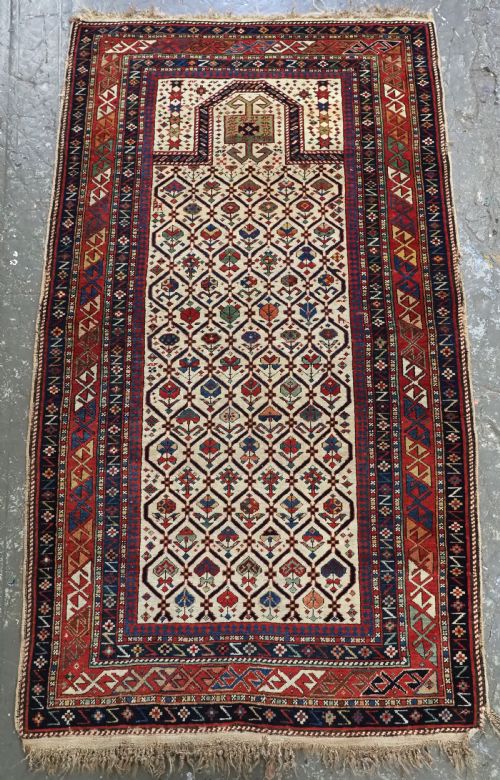
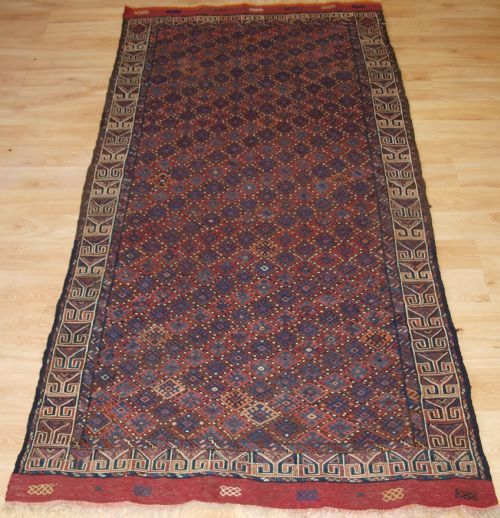
A caucasian lattice area rug is a woven textile originating from the Caucasus region, featuring structured grid patterns across the field. These rugs display distinct regional weaving traditions, spanning prayer formats and long runners created across the latter half of the nineteenth century and the early twentieth century. Most examples found here exhibit specific tribal designations such as Dagestan, Shirvan, Gendje, Marasali, Kuba, Lampa-Karabagh, Seichur, or Kurdish.
The dominant aesthetic relies on repeated geometric frameworks enclosing floral motifs, stars, or abstract elements. Buyers encounter ivory, yellow, and varied coloured grounds that define the visual weight of each piece. These floor coverings function both as historical artefacts and enduring functional elements for traditional or contemporary interiors.
How they were made
The construction of a caucasian lattice area rug relies entirely on wool, spun and dyed by hand to achieve saturated hues and resilient piles. Weavers utilised traditional hand-knotting and flatweave techniques, including Soumak construction, which creates a durable structure with a distinct textured surface on the face and floats on the reverse.
Natural dye sources produce the varied colour palettes seen across these nineteenth and early twentieth century examples, from bright yellow grounds to deep indigo and ivory fields. The integration of wool warp andweft foundations ensures structural integrity through generations of use.
The inventory spans the period from 1850 to 1910, utilising wool exclusively across all listed rugs and carpets.
What varies in quality
The fineness of the knotting and the precision of the geometric lattice layout dictate the refinement of the weaving. Superior pieces demonstrate crisp execution of floral motifs and star elements within the grid, showing deliberate planning by the weaver.
Colour saturation and the preservation of original wool pile significantly influence the visual impact of an example. The vibrancy of the ground colour, whether yellow, ivory, or deeper tones, determines the presence and clarity of the design.
The Caucasian Lattice Area Rug Glossary
- Prayer rug
- A small format textile featuring a mihrab or niche design at one end, historically utilised for personal devotion.
- Soumak
- A flatweave technique involving wrapping supplementaryweft threads around the warp to produce a durable structure without a cut pile.
- Ground
- The background colour of the central field upon which the primary lattice and motifs are set.
- Warp
- The vertical foundation threads stretched tightly on the loom, carrying the tension of the weave.
Caucasian Lattice Area Rug: Frequently Asked Questions
How do I identify a caucasian lattice area rug?
Look for geometric grid patterns enclosing floral or star motifs set against distinctive ground colours like ivory or yellow. Regional attributions often appear in titles such as Dagestan, Shirvan, or Gendje.
Examine the construction materials and weave style, noting whether the piece employs a traditional pile or a flatweave Soumak structure dating from the nineteenth century.
Where were these rugs made?
These textiles originate from the Caucasus region, an area situated between the Black Sea and the Caspian Sea known for distinct tribal weaving groups.
Specific towns and districts, including Kuba, Seichur, and Marasali, developed characteristic palettes and design vocabularies that distinguish their output.
How should I care for an antique wool rug?
Protect the wool pile by placing the textile in low-traffic areas or using a breathable underlay to prevent sliding and friction.
Vacuum gently without a rotating brush bar and consult a specialist in historic textiles for professional cleaning when necessary.
What is the difference between pile and Soumak rugs?
Pile rugs feature knotted vertical strands that are sheared to create a plush surface texture. Soumak rugs utilise a flatweave wrapping technique without a cut pile.
Both methods produce durable floor coverings, though Soumak construction yields a flatter, textured surface with distinctive coloured floats on the reverse.