
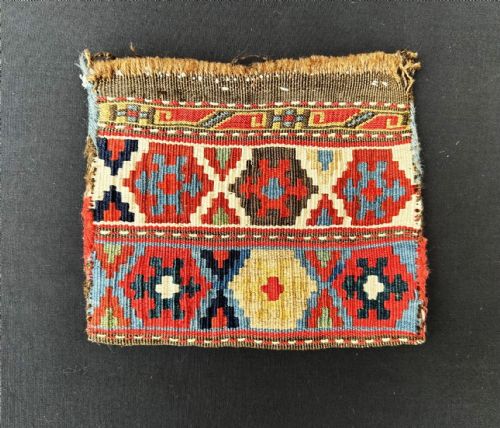


Caucasian Geometric Wool Textile
These caucasian geometric wool textile examples bring bold tribal artistry into a room through hand-spun wool and natural dyes.
Caucasian Geometric Wool Textile
A caucasian geometric wool textile comprises tribal rugs, runner rugs, and storage bags originating from the Caucasus and regions such as Azerbaijan. Buyers encounter pieces spanning the nineteenth century through the early twentieth century, reflecting nomadic and tribal weaving traditions.
The selection on this page centres on utilitarian and decorative objects, including vanity-bags, mini saddle-bags, khorjin, and mafrash storage bag panels. Shahsavan and Jaf Kurd items appear frequently alongside Kazak and Shirvan formats.
Most pieces show distinctive tribal designs created by nomadic groups living across mountain and steppe landscapes. These items function as floor coverings, wall hangings, or repurposed cushions and small kilims.
What varies in quality
The visual strength of a caucasian geometric wool textile depends upon the clarity of the natural dyes and the precision of the tribal motifs. Intricate Soumac technique execution and dense hand-spinning elevate certain saddle-bags and panels above simpler formats.
Condition varies from complete mafrash storage bags to fragments and remnants. Original completeness and structural integrity distinguish utilitarian storage pieces and bag faces that retain their full form.
Listings feature pieces dated across the nineteenth century and into the early twentieth century, primarily utilising wool, natural dyes, and cotton.
The Caucasian Geometric Wool Textile Glossary
- Soumac
- A flatweave technique involving wrapping weft threads over and under the warp to create a textured, durable surface. This method produces crisp geometric lines on storage bags and panels.
- Khorjin
- A traditional pair of saddle-bags used by nomadic groups for transport on animals. These items feature patterned faces that often survive independently as collectors' pieces.
- Mafrash
- A large rectangular storage chest or bag used by nomadic tribes for bedding and household goods. Panels from these containers frequently enter the market as flat panels or small kilims.
- Shahsevan
- A confederation of nomadic and semi-nomadic tribes in Azerbaijan and the Caucasus known for distinctive sumac weaving. Their work is celebrated for intricate geometric structures.
Caucasian Geometric Wool Textile: Frequently Asked Questions
What is a caucasian geometric wool textile?
A caucasian geometric wool textile is a hand-woven piece from the Caucasus region featuring tribal patterns and natural materials. These items include rugs, storage bags, and saddle-bag faces produced by nomadic groups.
Weavers constructed these objects using hand-spun wool and traditional flatweave or pile techniques. They served practical daily functions within nomadic life before entering collections as decorative art.
How were these bags used originally?
Nomadic communities utilised saddle-bags and storage containers to transport household goods and bedding during seasonal migrations. Pieces like the mafrash formed rigid storage chests for camp organisation.
Over time, many of these utilitarian containers separated into individual bag faces or panels. Today, collectors preserve these surviving fragments as wall hangings or small display textiles.
How should I care for a tribal textile?
Protect these textiles from direct sunlight to preserve the natural dyes used in the wool. Gentle vacuuming without a rotating brush helps remove dust from the weave.
Keep the items in dry environments away from excessive moisture. Professional textile conservation cleaning is recommended when deeper maintenance becomes necessary.