
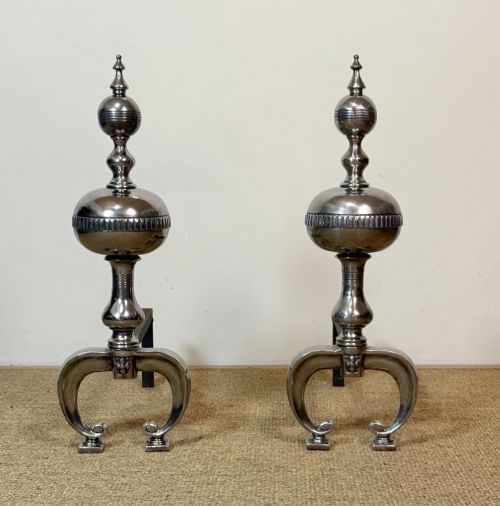
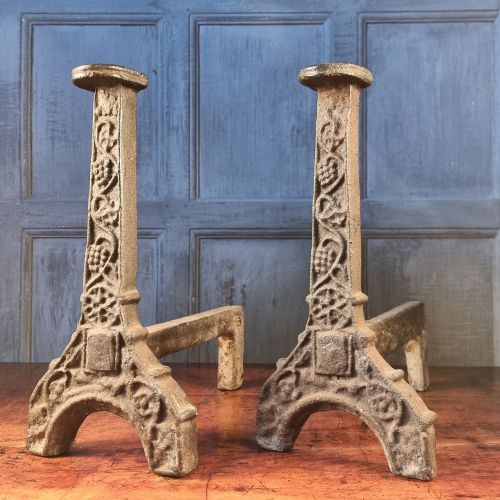
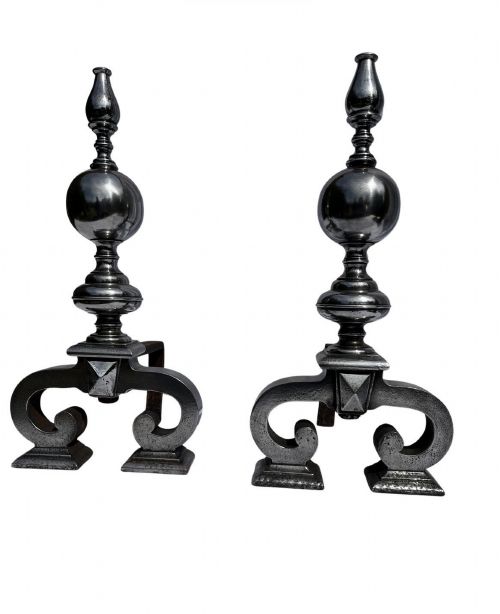


Cast Metal Fireplace Dogs
Cast metal fireplace dogs support logs in an open hearth, bringing structural weight and period character to a chimney breast.
Cast Metal Fireplace Dogs
When you search for cast metal fireplace dogs, you are looking at heavy vertical supports designed to hold fuel wood above the hearth floor. These utilitarian hearth furnishings often feature decorative front terminals ranging from plain standards to elaborate architectural forms.
You are most likely to meet pairs dating from the nineteenth century on this page, though earlier sixteenth-century examples and later twentieth-century pieces also appear. The forms span simple fire dogs and substantial andirons alongside associated fireplace accessories and fenders.
The styles recorded in our inventory reflect periods such as Victorian, Gothic, Georgian, and French Empire, as well as Gothic Revival and Renaissance Revival. Each style dictates the silhouette of the front standard, whether cast in brass, iron, or bronze.
Materials and construction
Foundry work dominates the construction of these pieces, utilising cast iron, brass, and bronze poured into moulds to create decorative uprights. Polished and wrought steel components provide additional strength for the horizontal billets that support the logs.
Makers combined cast elements with forged or polished metal shafts, creating durable assemblies meant to withstand intense hearth heat. Finishing techniques range from polished iron surfaces to heavy brass castings and patinated bronze details.
Listings feature materials spanning cast iron, brass, steel, and bronze across Victorian, Gothic, and Renaissance Revival styles.
Assessing quality and craftsmanship
The distinction between standard utility pairs and superior examples lies in the crispness of the foundry work and the weight of the metal. Finer pieces display sharply defined ornamentation on the front standards, whilst simpler utilitarian versions remain plain.
Material choice also defines the upper range, with monumental bronze and polished steel demanding more complex labour than basic cast iron. Proportion and stability reveal the competence of the original maker in balancing heavy front uprights against the log billets.
The Cast Metal Fireplace Dogs Glossary
- Firedogs
- Supports for logs in a fireplace consisting of a vertical front pillar on feet with a horizontal bar behind. They elevate wood to allow air circulation underneath for better combustion.
- Andirons
- An alternative term for firedogs, usually denoting larger or more decorative pairs used in principal hearths. These often incorporate heavy cast brass or bronze front terminals.
- Fender
- A low metal guard placed in front of the hearth to contain rolling embers and ash. They frequently match the metal and period of the accompanying fire dogs.
- Gothic Revival
- An architectural and decorative style drawing inspiration from medieval forms. Pieces in this idiom feature pointed arches, tracery, and heavy cast iron detailing.
- French Empire
- A neoclassical design style characterised by classical motifs, symmetry, and formal dignity. Items from this tradition often utilise cast brass and patinated bronze.
Cast Metal Fireplace Dogs: Frequently Asked Questions
How do I choose the right size?
Measure the width and depth of your fireplace opening before selecting a pair. The fire dogs must fit comfortably inside the hearth whilst leaving adequate clearance around the sides.
Consider the scale of the front standards in relation to your mantelpiece and surround. Massive monumental pairs require generous hearth spaces to avoid overwhelming the room.
How do I clean cast iron and brass?
Dust iron surfaces regularly with a dry cloth and apply a light coat of grate polish or oil to prevent rust. Avoid using water on unsealed iron components.
Brass and bronze benefit from gentle dusting and occasional cleaning with appropriate metal polish if a bright finish is desired. Many collectors prefer to leave an aged patina intact.
Can I use antique fire dogs with a modern fire?
Most antique cast metal pieces remain robust enough for regular use in open wood-burning hearths. Ensure the metal is free from deep structural cracks before lighting a fire.
If you have a gas log setup or an electric insert, these items can still be placed in front for decorative effect. They provide period authenticity even without an active fire.