




Cast Metal Dog Statue
A cast metal dog statue brings character and presence to a room, ranging from small desk ornaments to heavy life-size hounds.
Cast Metal Dog Statue
When buyers search for a cast metal dog statue, they encounter a diverse array of figures spanning from the late nineteenth century into the twentieth century. The selection includes domestic breeds, working dogs, and temple lions modelled in various postures.
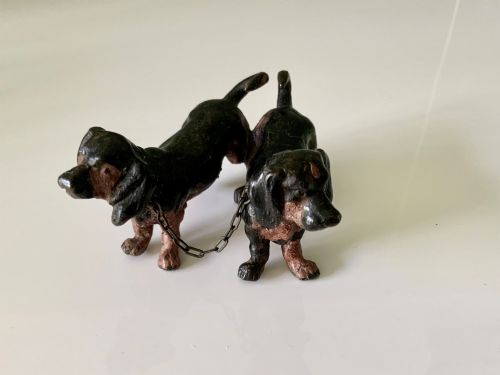
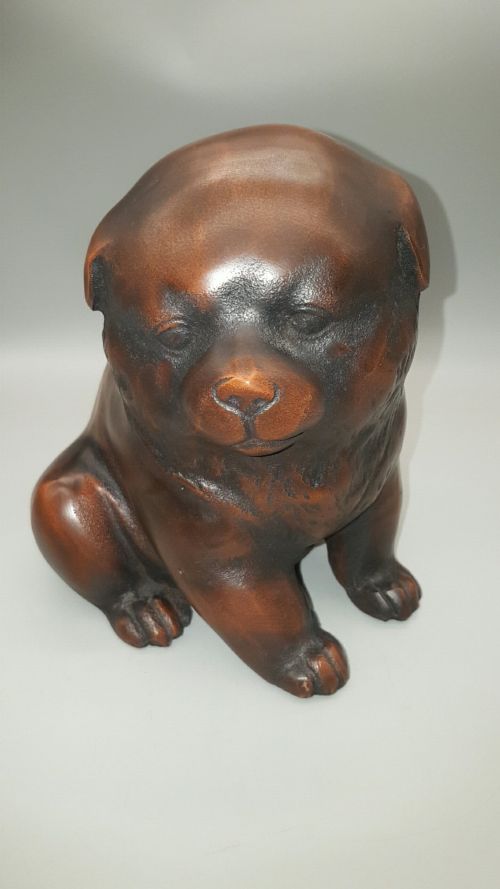
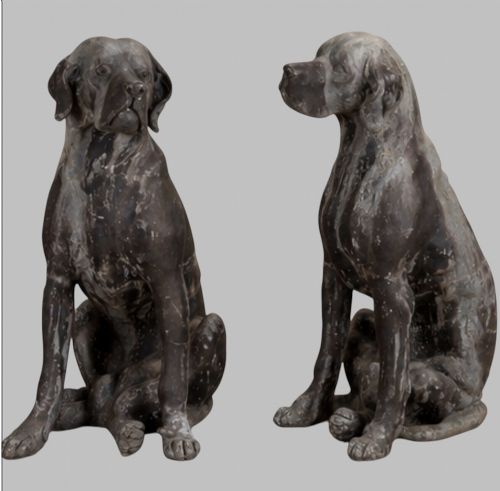
The objects take several distinct forms, including small tabletop figurines, functional table lamps, fireside ornaments, and large garden statues. European animalier works sit alongside Japanese Meiji period bronzes and Tibetan gilt bronze temple lions.
Most examples originate from French, English, and Japanese workshops, employing styles that range from realistic nineteenth-century animalier studies to stylised Art Deco and Chinoiserie interpretations.
How they were made
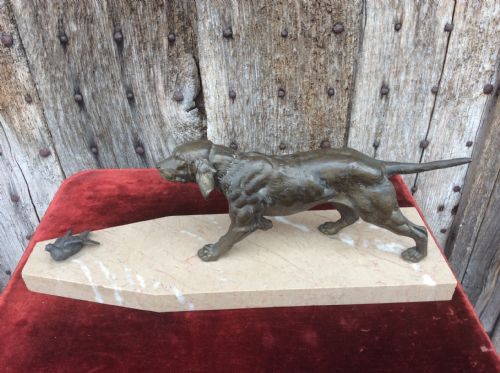
These figures rely primarily on bronze, cast iron, and lead, shaped through traditional casting methods and finished with surface treatments such as cold painting, gilding, or plain paint. Bronze examples often incorporate bases of marble to add weight and elevation.
Surface details depend heavily on the chosen metal, with softer bronzes allowing for fine chisel work and hair texturing, while cast iron pieces yield sharper structural silhouettes for larger garden and fireside statuary.
Several dogs keep watch wearing remarkably stern expressions despite their diminutive desk-friendly proportions.
What varies in quality
Quality rests upon the fidelity of the casting and the crispness of the secondary chasing work done after the metal cooled. Finer pieces retain sharp muscular definition and facial expressions, whereas lesser casts appear soft and muddy in the details.
The integrity of the original surface finish, whether cold paint, patination, or gilding, dictates the desirability of a piece. Original patinas developed through age hold greater appeal than renewed or heavy-handed modern overpainting.
Tsunemitsu·J Moigniez·AL Barye·Barbedienne·Henri Jaquesmart
The Cast Metal Dog Statue Glossary
- Animalier
- A nineteenth-century artistic movement dedicated to the realistic portrayal of animals. Sculptors in this tradition focused closely on anatomical accuracy and natural movement.
- Cold painted
- A technique where paint is applied to bronze without being fired in a kiln. It is particularly common on smaller European cabinet figures and Vienna bronzes.
- Patina
- The surface sheen and coloration developed on metal through age and handling. A natural patina indicates uncompromised historical surfaces.
- Chasing
- The process of hand-refining a metal casting with chisels and punches after it leaves the mould. Skilled chasing separates superior sculptures from routine production pieces.
Cast Metal Dog Statue: Frequently Asked Questions
Where were these dog statues placed originally?
Smaller bronze and brass figures typically sat on library desks, antechamber tables, or mantelpieces as decorative ornaments. Some paired versions served as lighting supports or fireside companions.
Larger cast iron and lead examples stood beside hearths or guarded entrances in gardens and hallways. Temple lions traditionally occupied sacred or formal architectural thresholds.
How do I distinguish bronze from cast iron?
Bronze possesses a heavier, denser feel and does not rust, often displaying a warm brown or green patinated surface. Cast iron is magnetic, prone to surface oxidation, and generally yields a more utilitarian finish unless painted.
Iron statues also tend toward larger garden and fireside formats, whereas bronze is favoured for intricate tabletop figurines and detailed animalier studies.
What is an animalier sculpture?
An animalier sculpture focuses strictly on the naturalistic depiction of animals in various postures. The genre gained prominence in nineteenth-century France through artists who studied anatomy closely.
These pieces capture dogs in motion, at rest, or pointing during a hunt, rendered with high anatomical precision.
How should I care for a metal dog statue?
Dust the surface regularly with a soft, dry cloth to prevent the accumulation of grime. Avoid chemical polishes, as these strip away historical patinas and delicate cold-painted finishes.
Keep pieces away from direct moisture and extreme temperature fluctuations to protect underlying metals and attached marble bases.