




Cast Metal Dog Sculpture
A cast metal dog sculpture brings character and weight to a room, offering enduring forms modelled by makers from the nineteenth and twentieth centuries.
Cast Metal Dog Sculpture
A cast metal dog sculpture encompasses figures, bookends, inkwells, and garden statues created in bronze, cast iron, brass, and lead across periods such as Victorian, Edwardian, and Art Deco. These pieces span English country styles, French Animalier works, Meiji period Japanese bronzes, and Vienna cold painted models.
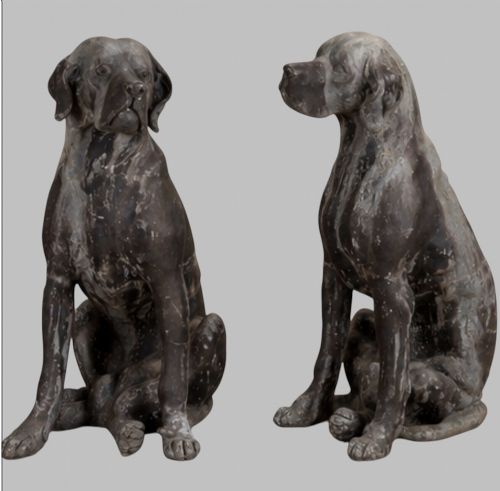
The most common examples on this page are domestic and sporting breeds rendered in bronze or cast iron, ranging from small desk ornaments to life-size garden hounds. Figures frequently adopt naturalistic postures, capturing terriers, poodles, bulldogs, and hunting dogs in detailed relief.
Origins stretch from European foundries in France and England to Asian workshops in Japan and Tibet, demonstrating diverse cultural interpretations of canine subjects. Buyers encounter both intimate cabinet figurines and robust architectural elements such as fireplace fenders.
How they were made
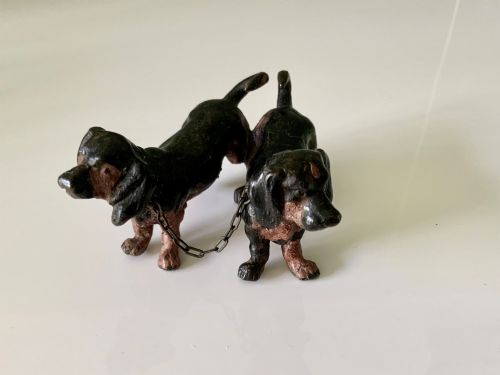
Foundries utilised traditional metal casting techniques, pouring molten bronze, cast iron, brass, or lead into moulds to capture fine anatomical detail. Many smaller pieces received cold painted surfaces, where polychrome pigments were applied after casting rather than fired in a kiln.
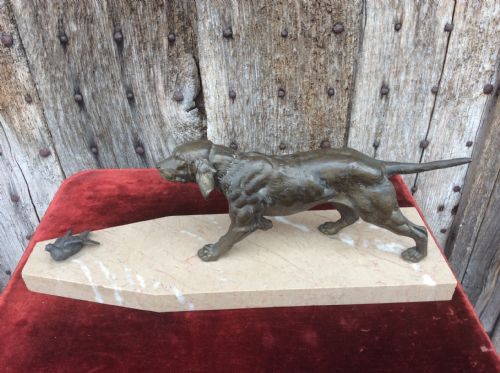
Marbled bases and plinths frequently accompany bronze figures, anchoring the heavier metal compositions and providing a stable foundation for display. Cast iron examples often bear textured finishes or painted coats designed to withstand outdoor or fireside placement.
Several dogs double as functional items, guarding the desk as heavy bookends or holding ink in their paws.
What varies in quality
The preservation of original painted surfaces significantly influences the standing of cold painted bronzes, as worn pigments alter the intended appearance. Heavier gauge metals and integrated signatures or foundry marks similarly distinguish superior workshop production.
Tsunemitsu·J Moigniez·AL Barye·Barbedienne·Henri Jaquesmart
The Cast Metal Dog Sculpture Glossary
- Animalier
- A nineteenth-century artistic movement focused on the realistic depiction of animals, particularly prominent in French bronze sculpture. Practitioners captured beasts in motion or repose with anatomical precision.
- Cold Painted Bronze
- A method of decorating bronze sculptures with unheated paint applied over a sealed surface. This technique was widely utilised by Viennese foundries for small decorative animal figures.
- Cast Iron
- An iron-carbon alloy poured into moulds to create heavy, durable objects. It appears frequently in nineteenth-century garden statues and fireside accessories.
- Meiji Period
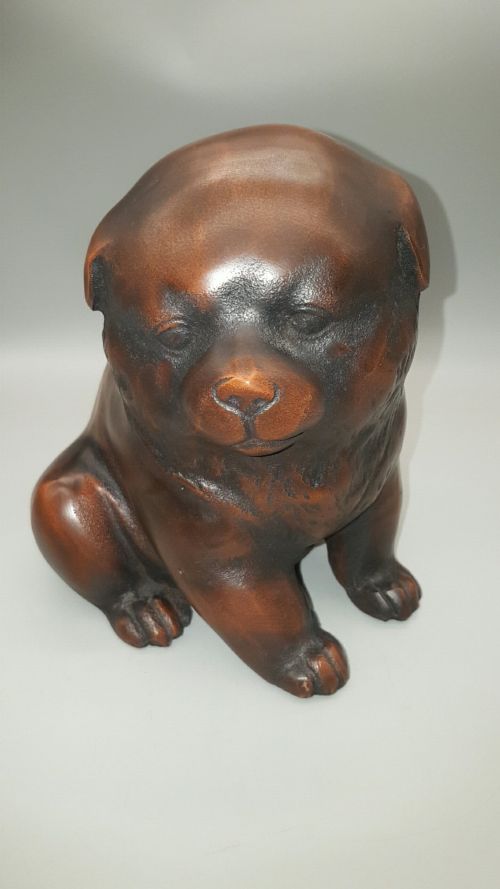
- A Japanese historical era lasting from 1868 to 1912, known for exceptional metalwork and bronze casting. Artisans during this time produced highly detailed animal figurines for export.
- Gilt Bronze
- Bronze treated with a layer of gold applied through mercury amalgamation or fire gilding. This finish adds a luminous decorative surface to temple lions and ornamental figures.
Cast Metal Dog Sculpture: Frequently Asked Questions
How do I clean an antique bronze dog?
Dust gently with a soft brush and avoid commercial polishes that strip historical patination.
Maintain the dry surface by applying microcrystalline wax sparingly if protection is required against atmospheric moisture.
Are cast iron dogs suitable for outdoor display?
Many large nineteenth-century examples were designed for gardens and withstand external weather if monitored for corrosion.
Protect iron surfaces with appropriate coatings to prevent rust accumulation in damp environments.
What is cold painted bronze?
It refers to bronze figures decorated with unheated polychrome paint applied directly onto the metal surface.
These delicate pigments require careful handling to preserve the original coloration and finish.
How can I tell a Meiji period bronze apart?
Japanese bronzes from this era typically exhibit exceptional fidelity in fur texture and subtle patination developed in traditional workshops.
Look for refined casting techniques characteristic of late nineteenth-century Asian export art.