





Cast Iron Plinth
These cast iron plinth supports bring architectural weight and classical presence to gardens and interiors alike.
Cast Iron Plinth
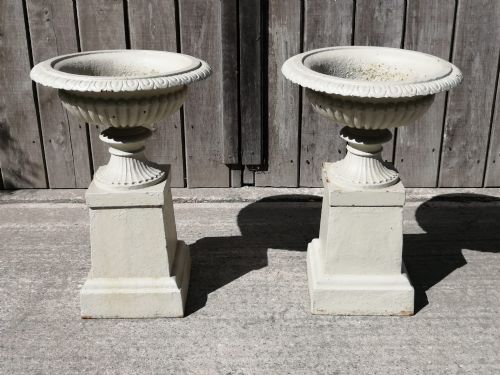
A cast iron plinth acts as the heavy, stable foundation for garden urns, statues, and planters, elevating them to draw the eye in an outdoor or interior space. When you search for a cast iron plinth, you are looking at sturdy architectural supports typically paired with campana urns, column planters, or portrait busts.
The pieces recorded on this page span several distinct eras, drawing heavily from Victorian, Regency, and Georgian aesthetics alongside early twentieth-century examples. You will frequently encounter them supporting classical garden ornaments or French animalier sculptures, combining industrial metalwork with neoclassical grace.
Forms range from simple square pedestals to elaborate fluted columns and portico tables designed to bear substantial weight. These objects bridge utilitarian foundry work and decorative sculpture, serving as robust plinths for display.
Foundry methods and materials
These pieces rely primarily on durable cast iron poured into moulds to capture intricate surface details like acanthus leaves and gadrooning. Foundries utilised molten metal to achieve sharp architectural lines and heavy structural mass.
Cast iron is frequently paired with complementary materials, combining painted finishes, stone, or black marble bases. Some examples incorporate brass, bronze, and steel elements to accent the primary iron structure.
Cast Iron Plinth Retail Price Guide 2026
Typical asking prices for cast iron plinth among the pieces listed under this phrase on Sellingantiques today, from the lower quarter to the upper quarter. They describe what is for sale here now, not the wider market.
Even Shakespeare needs a solid footing, as demonstrated by the nineteenth-century iron plinth supporting the dramatist's bust.
Judging execution and foundry work
Quality rests in the crispness of the casting and the depth of decorative relief, where finer examples display sharp moulding on acanthus leaves and classical motifs. Superior pieces maintain clean casting seams and well-proportioned architectural profiles that feel balanced rather than heavy.
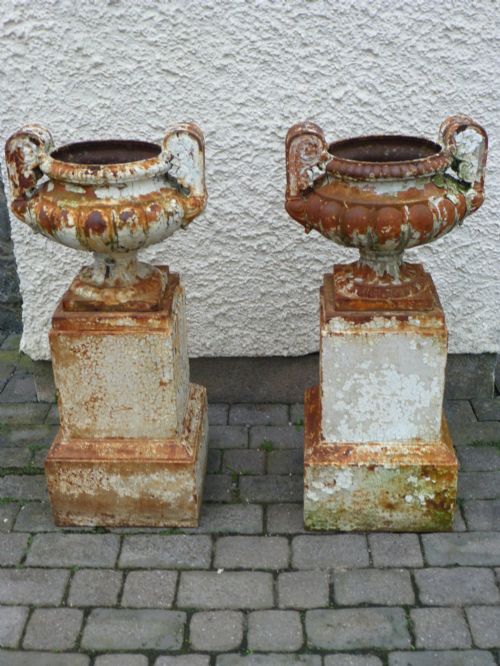
The integrity of the original pairing matters greatly, as plinths and urns designed as a single suite demonstrate superior harmony compared to later matched assemblages. The handling of the metal surface, whether left in historic paint or patinated iron, dictates the visual depth of the object.
Falkirk Carron foundry·Andrew Handyside·Waring and Sons·CHUBB
The Cast Iron Plinth Glossary
- Campana urn
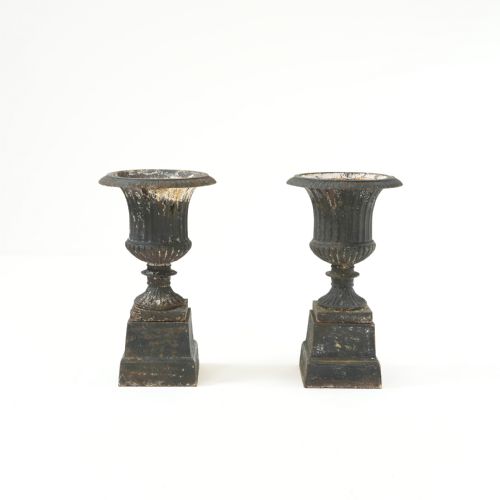
- A bell-shaped garden vessel with an everted rim, frequently mounted upon a column or plinth. This classical form originates in antiquity and was revived extensively during the nineteenth century.
- Gadrooned
- Decorated with a series of convex curves or flutes moulded in a parallel arrangement. This ornamental carving often encircles the body or base of an urn.
- Armillary
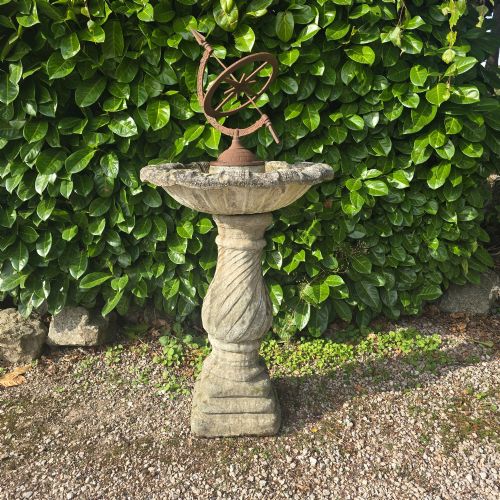
- A spherical model of objects in the sky, consisting of a skeletal sphere of rings centred on Earth. These astronomical instruments frequently crown garden pedestals.
- Animalier
- A nineteenth-century artistic style depicting realistic animals in active or natural poses. French animalier foundry pieces often take the form of domestic or hunting dogs.
Cast Iron Plinth: Frequently Asked Questions
Are these heavy enough for outdoor use?
These items utilise dense cast iron construction, providing natural stability against wind and weather in garden settings.
Their substantial weight ensures they remain secure on lawns, terraces, and porticos without requiring permanent fixings.
How do I clean cast iron?
Maintenance involves removing surface debris with a soft brush and gentle washing when necessary to protect the underlying metal. Avoid harsh abrasives that might strip historic paint or protective surface layers.
Applying appropriate rust inhibitors helps preserve the iron when placed in damp outdoor environments.
Can these be placed indoors?
These objects adapt readily to interior spaces, serving as sculptural pedestals for busts, small tables, or plant stands.
Their architectural presence anchors a room, especially when paired with marble bases or walnut stands.
How do I date a piece?
Dating relies on stylistic clues, such as neoclassical acanthus detailing, regency proportions, or early twentieth-century foundry marks. Comparing the casting technique and associated elements like marble or wood provides further chronological context.
Records from specific foundries also help narrow down the period of manufacture.