

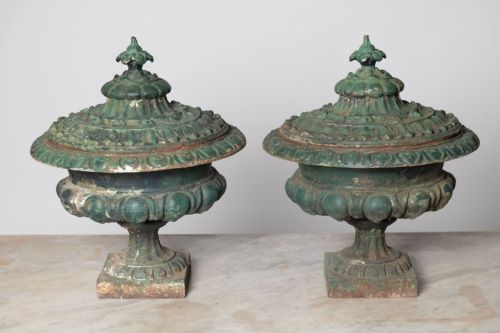

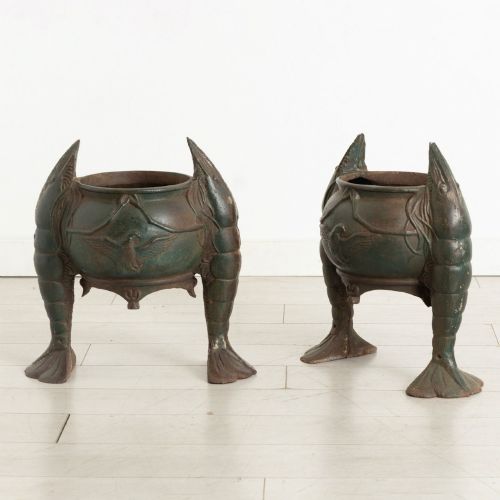
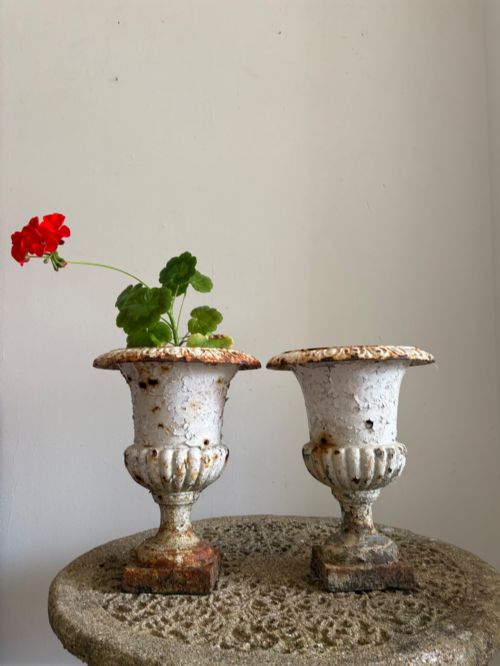
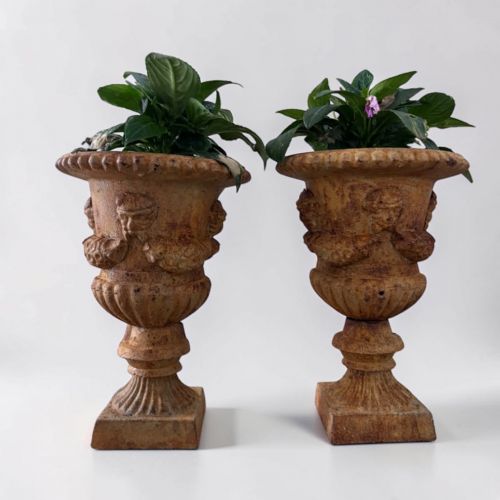



Cast Iron Planter Pair
A cast iron planter pair brings architectural presence to a terrace or garden path through durable metal casting and classical proportion.
Cast Iron Planter Pair
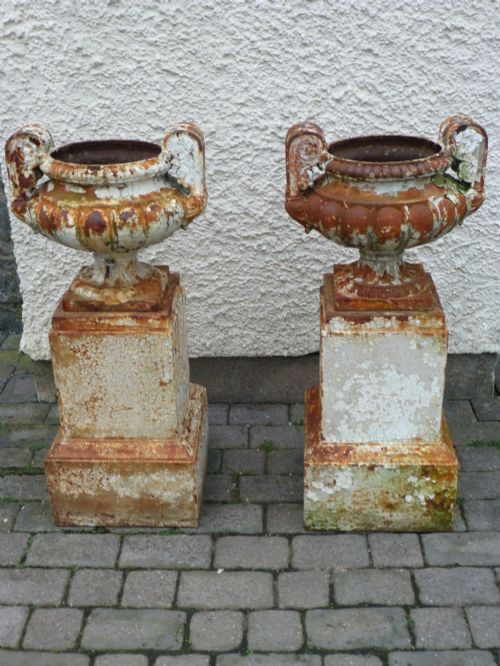
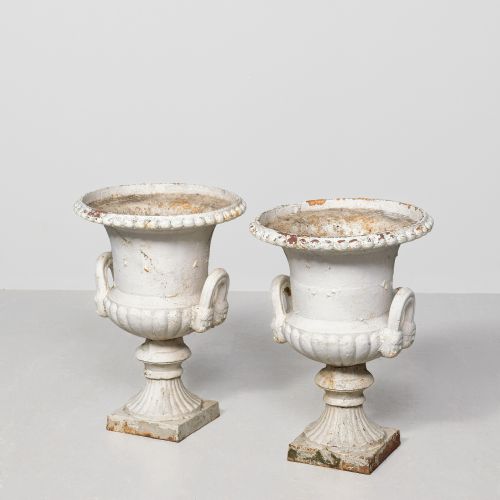
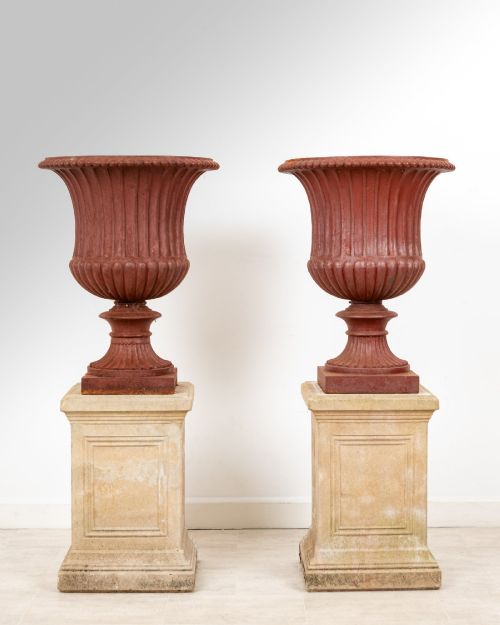
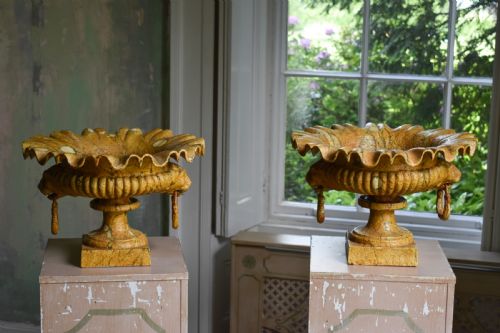
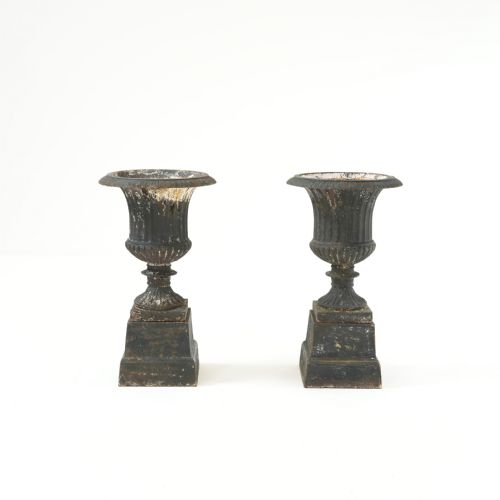
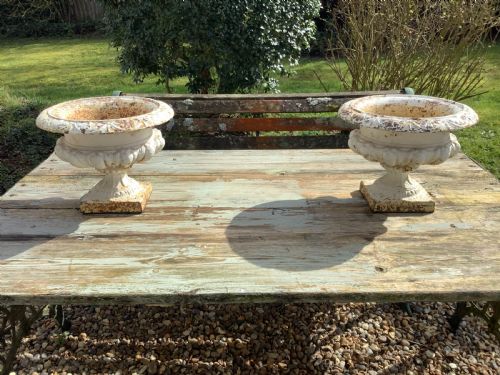
A cast iron planter pair typically takes the form of garden urns, campana vessels, or shallow tazza bowls designed for outdoor display. The selection spans the nineteenth century through the Edwardian period, often featuring neoclassical styling or ornamental details such as fluting and handles.
Foundry methods and materials
Foundries poured molten iron into sand moulds to achieve crisp architectural relief and robust wall thickness. Makers frequently incorporated lead paint, enamel, or stone elements alongside the primary metal to protect the iron from weathering.
Finished surfaces often display layers of distressed historic paint or weathered patination acquired through decades of outdoor exposure.
Listings feature cast iron alongside stone, hardwood, and wrought iron elements across Victorian and Edwardian periods.
Distinctions in craftsmanship
Quality rests in the crispness of the cast relief, where superior foundry work preserves fine details in foliage, handles, and classical motifs without surface pitting. The symmetry between matching vessels and the presence of original mounting plinths or matching lids elevate the standing of a pair.
Weight and structural thickness also distinguish robust foundry production from lighter utility castings, reflecting the ambition of the original commission.
Falkirk Carron Foundry·Coalbrookdale
The Cast Iron Planter Pair Glossary
- Campana
- A bell-shaped garden urn with an everted rim and a tapering lower body. This classic vessel shape forms the basis for many nineteenth-century garden ornaments.
- Plinth
- A heavy rectangular or square base supporting an urn or statue. These solid foundations raise the planter to a commanding height on a terrace or lawn.
- Tazza
- A shallow bowl or cup resting on a stem and foot. Such vessels are frequently cast in iron for formal garden displays.
- Jardiniere
- An ornamental pot or stand for holding plants or flowers. These items often feature decorative openwork or classical relief panels.
- Neoclassical
- A revival style drawing inspiration from classical antiquity. It dominates the decorative vocabulary of Victorian and Regency garden ironwork.
Cast Iron Planter Pair: Frequently Asked Questions
Can I leave cast iron planters outside all winter?
Cast iron withstands low temperatures well, but trapped freezing water can crack the metal body or damage the interior. Raising the base slightly off the ground prevents moisture retention during prolonged wet spells.
lining the interior with protective material also safeguards the historic metal surface from continuous damp soil and root pressure.
How do I date an antique iron urn?
Stylistic clues such as classical campana proportions or Regency framing point towards early nineteenth-century production. Foundry marks, where present, help pinpoint specific makers and operating decades.
surface textures and the layering of historic paint finishes offer further physical evidence of age and continuous outdoor exposure.
Are original plinths important?
Matching plinths provide structural elevation and visual balance that complete the intended architectural silhouette of the pairing. Finding a matched set with original bases remains less common than discovering urns alone.
such complete configurations carry greater historical integrity for formal garden settings.
How should I clean a weathered iron urn?
Gentle washing with warm water and a soft brush removes accumulated dirt without disturbing the historic surface patina or paint layers. Avoid harsh chemical strippers that strip away protective oxidation.
applying a light coat of specialist wax or oil helps preserve bare metal areas against further atmospheric corrosion.