




Cast Iron Hallway Furniture
Cast iron hallway furniture brings utilitarian strength and intricate moulded design to an entrance space, offering durable places for wet umbrellas and walking sticks.
Cast Iron Hallway Furniture
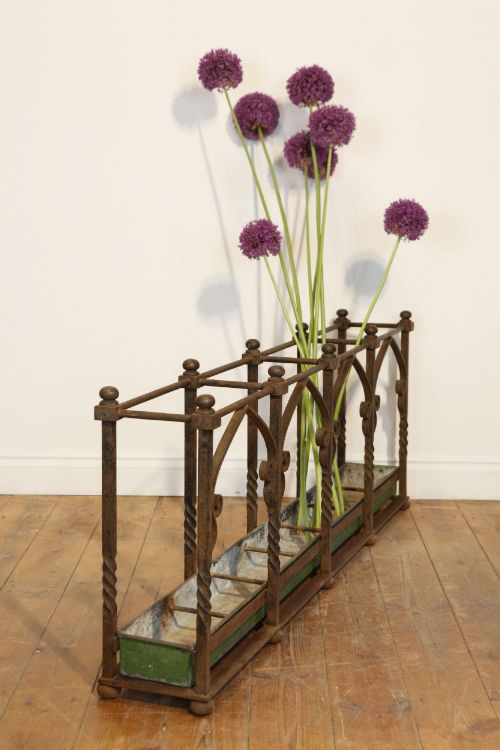
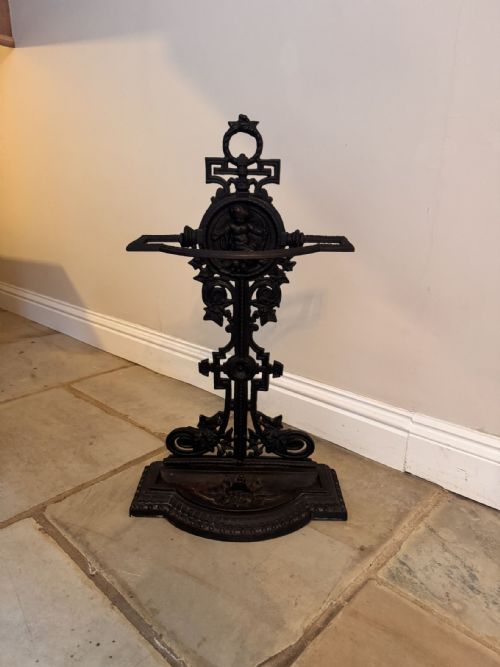
Cast iron hallway furniture centres primarily on umbrella stands, stick stands, and hall stands designed to organise entranceways. These pieces emerge predominantly from the Victorian and Edwardian periods, carrying the heavy structural demands of bustling 19th-century and early 20th-century homes.
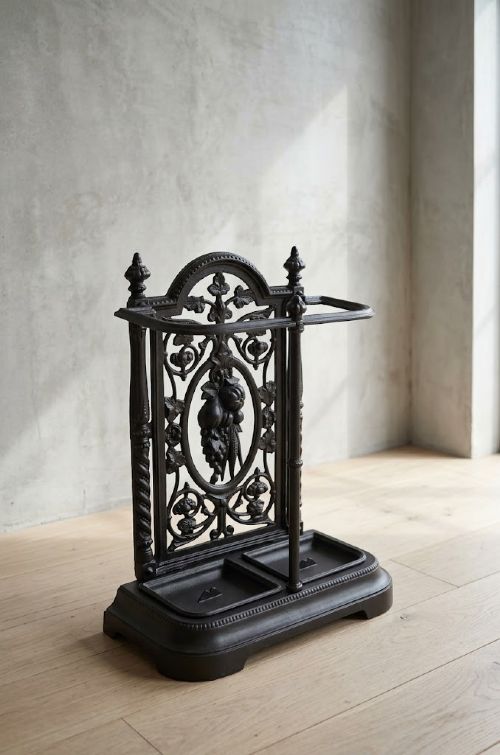
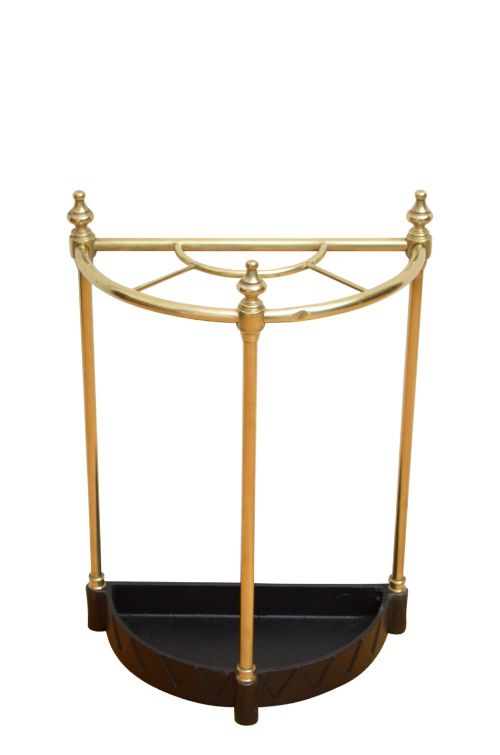
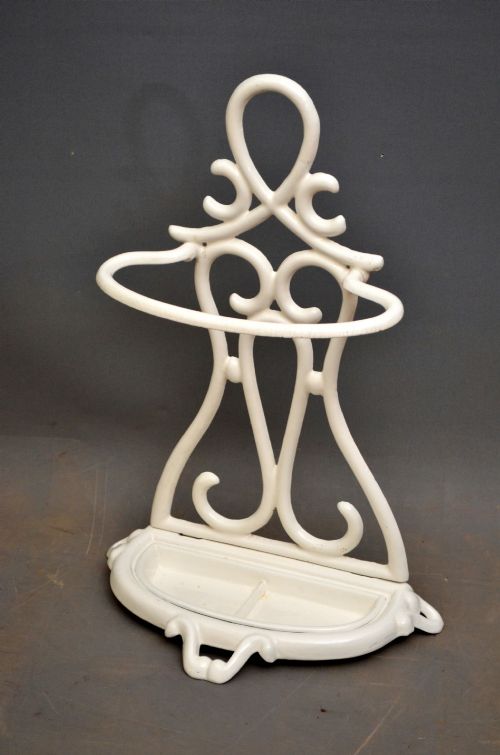
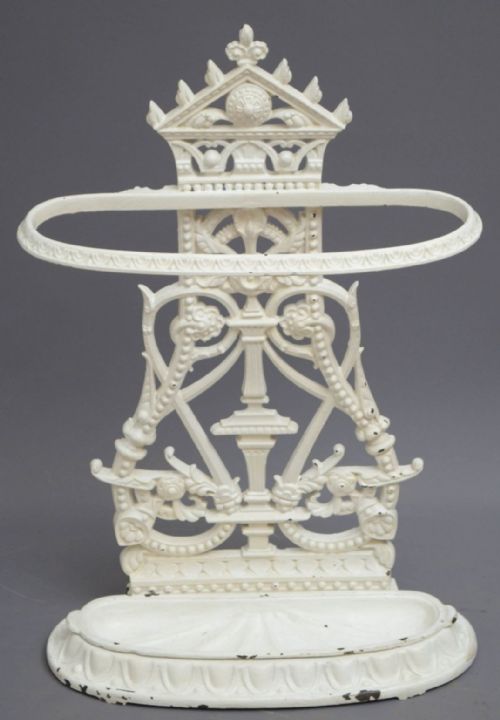
The most common formats met on this page are umbrella and stick stands cast in iron or brass, sometimes incorporating drip trays and auxiliary materials like timber or ceramic. Larger hall stands appear less frequently, providing combined hanging space and umbrella storage within a single moulded framework.
Stylistic expressions span conventional Victorian designs, Gothic Revival forms, and industrial interpretations through to later Edwardian and Art Nouveau aesthetics. Makers ranged from prominent foundries to uncredited workshops, leaving behind a diverse material record of heavy metalwork suited to daily domestic use.
Materials and manufacturing methods
Foundries utilised sand-casting techniques to pour molten iron into detailed moulds, creating the crisp foliage, scrolling framework, and faux bamboo textures seen across these pieces. This method allowed makers to produce intricate openwork patterns that remained structurally rigid enough to support heavy wet walking sticks and umbrellas.
Makers integrated brass rails, ceramic drip pans, enamel finishes, and timber elements to complement the dark, heavy iron frames. Brass components added bright contrast against black or painted cast iron, while removable enamel or ceramic trays caught moisture and protected the floor below.
Secondary structural timbers such as oak and mahogany occasionally formed backing panels or bases within composite hall stands. These mixed-media constructions combined the tensile strength of wood with the decorative moulding capabilities of cast iron.
Cast Iron Hallway Furniture Retail Price Guide 2026
Typical asking prices for cast iron hallway furniture among the pieces listed under this phrase on Sellingantiques today, from the lower quarter to the upper quarter. They describe what is for sale here now, not the wider market.
Listings feature items spanning the Victorian era through the Edwardian period, utilising cast iron, brass, oak, mahogany, and ceramic.
Distinctions in manufacture and preservation
Quality in cast iron hallway furniture rests upon the crispness of the casting and the depth of the moulded detail. Superior examples display sharp, well-defined patterns where foliage, animal figures, or architectural motifs remain clean and unblemished by excess paint or poor finishing.
The integrity of the original components heavily influences the standing of a piece, particularly the presence of matching drip trays and untorn metal frameworks. Pieces retaining their original brass fittings, ceramic liners, and secondary wood elements without replacement parts represent the higher end of the surviving range.
Shoolbred·Falkirk Foundry
The Cast Iron Hallway Furniture Glossary
- Cast Iron
- An iron-carbon alloy poured into moulds to create rigid, highly detailed objects. It forms the primary structural and decorative substance of these hallway pieces.
- Faux Bamboo
- A decorative moulding technique that simulates the segmented stalks of natural bamboo. This style appears frequently across Victorian ironwork and furniture.
- Gothic Revival
- An architectural and decorative style drawing inspiration from medieval forms. Pieces in this aesthetic often feature pointed arches and heavy geometric tracery.
- Drip Tray
- A removable pan placed at the base of a stand to collect water from wet umbrellas. They are typically fashioned from metal, ceramic, or enamel.
Cast Iron Hallway Furniture: Frequently Asked Questions
How do I clean cast iron furniture?
Dust the iron framework regularly with a soft brush to prevent dirt accumulation within the detailed recesses. Avoid harsh chemical cleaners that can strip protective coatings or painted surfaces.
Apply a light microcrystalline wax where appropriate to preserve the metal finish and protect against moisture in busy hallways.
Are original drip trays important?
Original drip trays ensure the piece remains complete and functional for everyday household use. Matching pans enhance historical integrity and maintain the correct proportions at the base.
Replacements are common due to breakage over decades of catching water from wet umbrellas and walking sticks.
How do I date a stick stand?
Stylistic clues such as Aesthetic Movement motifs, Gothic Revival arches, or Art Nouveau curves help assign pieces to specific decades. Material combinations, including early brass components alongside cast iron, also point towards Victorian or Edwardian origins.
Foundry marks and registration numbers stamped into the metal can provide more precise chronological reference points when present.