

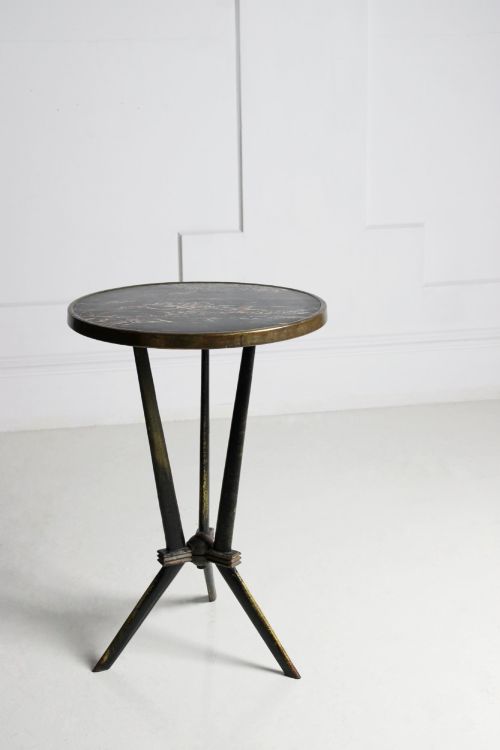
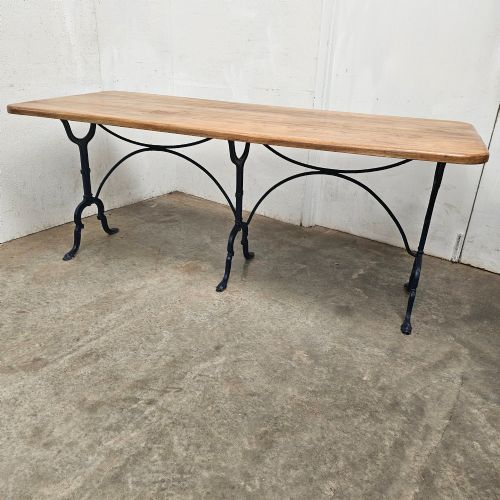
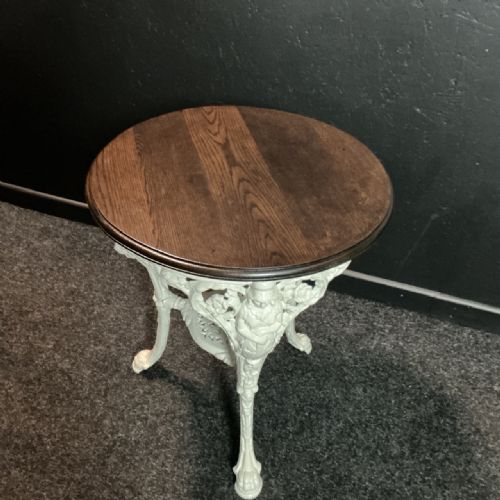
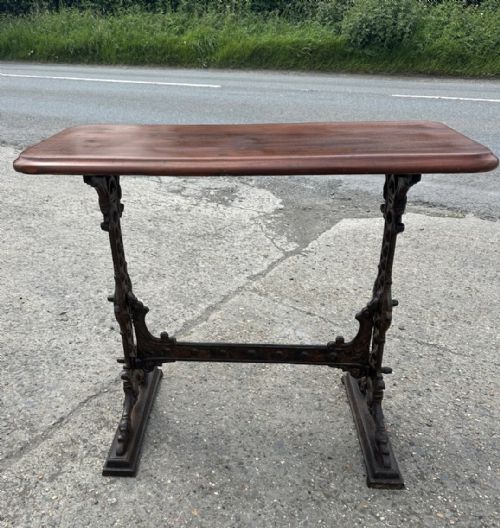
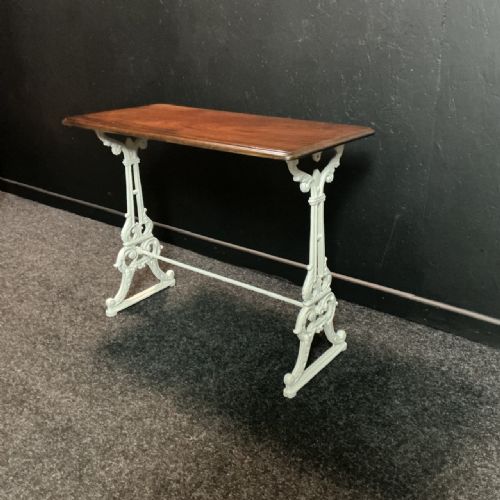


Cast Iron Bistro Base
These cast iron bistro base examples are heavy, sturdy stands built for public houses, cafes and gardens to last generations.
Cast Iron Bistro Base
A cast iron bistro base provides the heavy, stable foundation for small tables found in nineteenth century pubs, cafes and conservatories. You will frequently encounter bases paired with mahogany, oak, elm, pine or marble tops, though some listings offer the standalone iron support.
The styles span Victorian British pubs and French provincial or industrial settings, with forms ranging from compact drinks tables to long dining formats and console pieces. They serve well in smaller breakfast rooms or as garden furniture where weight prevents tipping.
How they were made
Foundries poured molten metal into sand moulds to create ornate scrollwork and Britannia designs, achieving heavy pedestals that anchored light table tops securely. Timber tops like mahogany and elm were joined with traditional fixings, while marble slabs rested directly on the iron frame.
Makers utilised durable hardwoods alongside resilient cast iron to withstand heavy daily use in commercial taverns and domestic conservatories alike.
Cast Iron Bistro Base Retail Price Guide 2026
Typical asking prices for cast iron bistro base among the pieces listed under this phrase on Sellingantiques today, from the lower quarter to the upper quarter. They describe what is for sale here now, not the wider market.
Current listings feature materials including cast iron, mahogany, oak, marble, elm, pine and general wood across nineteenth century and early twentieth century periods.
What varies in quality
The crispness of the cast iron moulding dictates the visual appeal, where finer scrollwork and defined lettering show superior foundry work. Retaining an original timber or marble top rather than a later replacement elevates the integrity of the piece.
The weight and stability of the pedestal base reflect the original intended commercial grade, separating utilitarian pub furniture from lighter domestic pieces.
The Cast Iron Bistro Base Glossary
- Britannia metal
- An alloy frequently associated with pub table designs and figural pedestals. It offers a smooth surface finish.
- Occasional table
- A small, movable piece designed for specific, intermittent use rather than central dining. These often feature decorative cast iron pedestals.
- Pub table
- A commercial hospitality table built with a heavy iron base to prevent tipping in crowded drinking establishments. They frequently incorporate mahogany or pine tops.
- Scroll work
- Ornamental curved patterns cast directly into the iron pedestal. This decorative technique defines much of the Victorian aesthetic.
Cast Iron Bistro Base: Frequently Asked Questions
Are these bases heavy?
Cast iron is dense and weighty by design, intended to anchor pub and cafe tables firmly to the floor.
This heft means the tables remain stable during daily use but require care when moving them across wooden flooring.
Can I use them outdoors?
Many examples originate from gardens, conservatories or outdoor cafe terraces where iron withstands the elements.
Protecting timber or marble tops from prolonged moisture remains advisable, even though the metal bases tolerate weathering.
How do I identify a Victorian base?
Victorian pieces often display specific foundry characteristics, Britannia figural elements or heavy scroll work typical of nineteenth century production.
The recorded periods span the 1880s through to the end of the Victorian era, alongside early twentieth century French cafe designs.
Do tops come included?
Listings feature a mixture of complete tables with original mahogany, oak, elm, pine or marble tops and standalone iron bases.
Checking the individual description confirms whether the timber or stone top is the original pairing.