

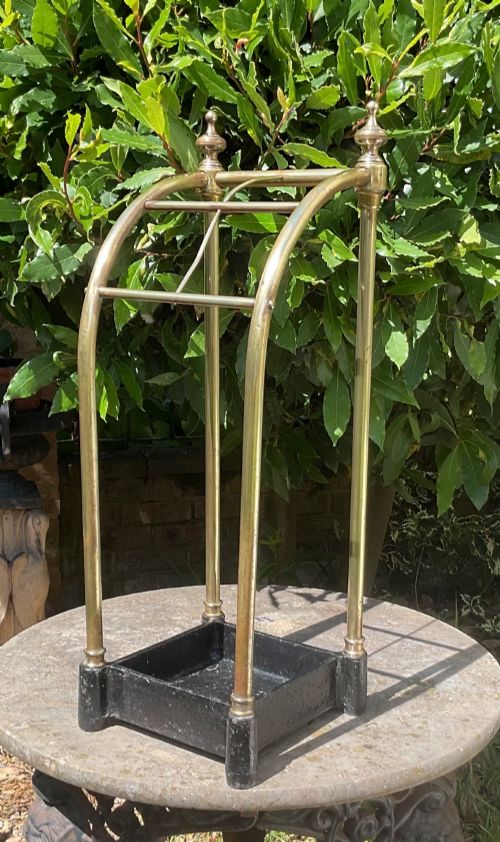


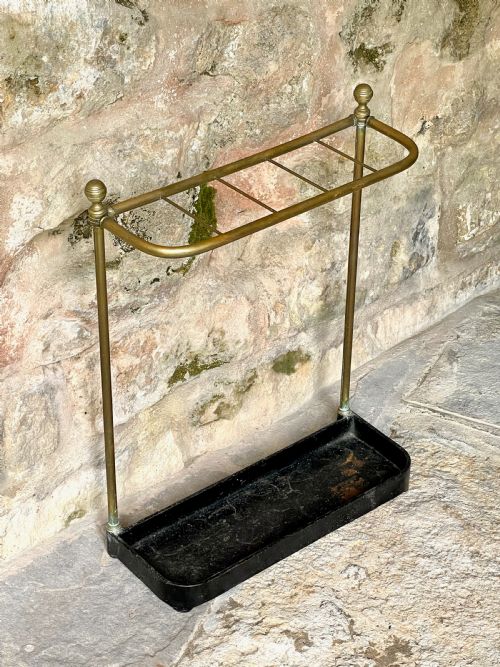

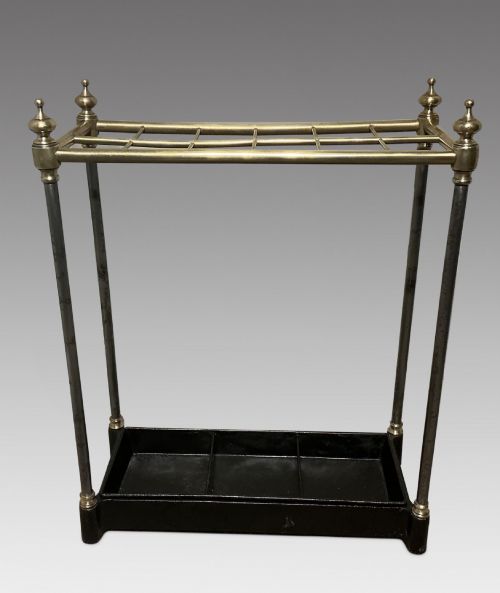
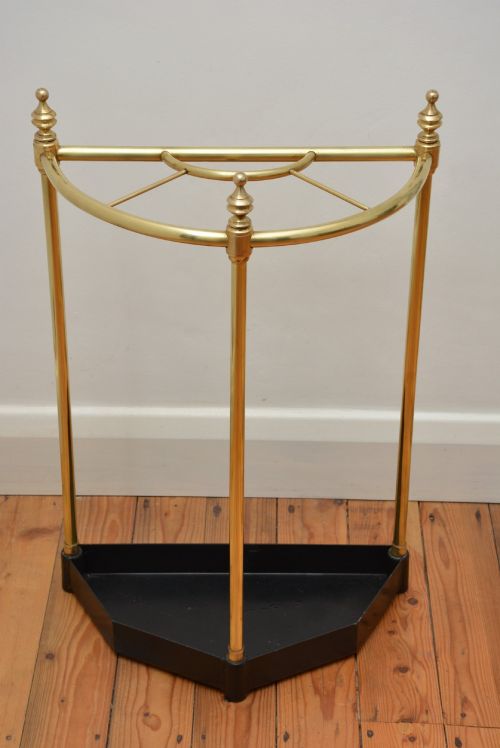
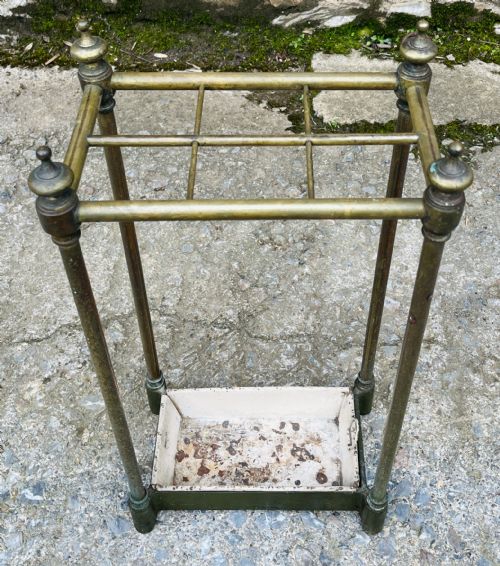
Cast Iron and Brass Umbrella Stand
A cast iron and brass umbrella stand combines weight with polish, holding hall clutter in sturdy order.
Cast Iron and Brass Umbrella Stand
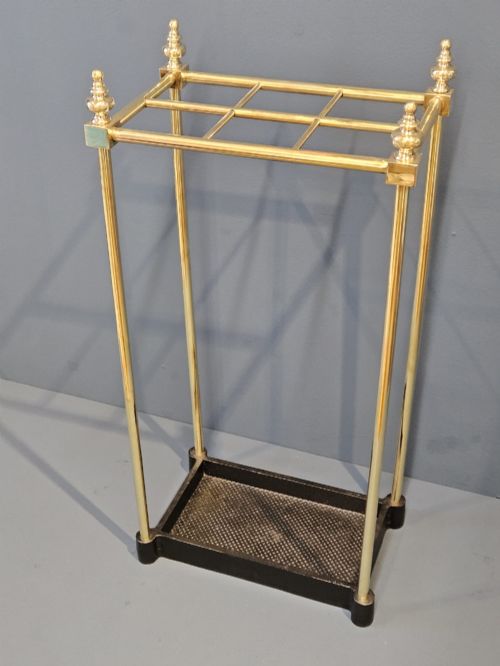
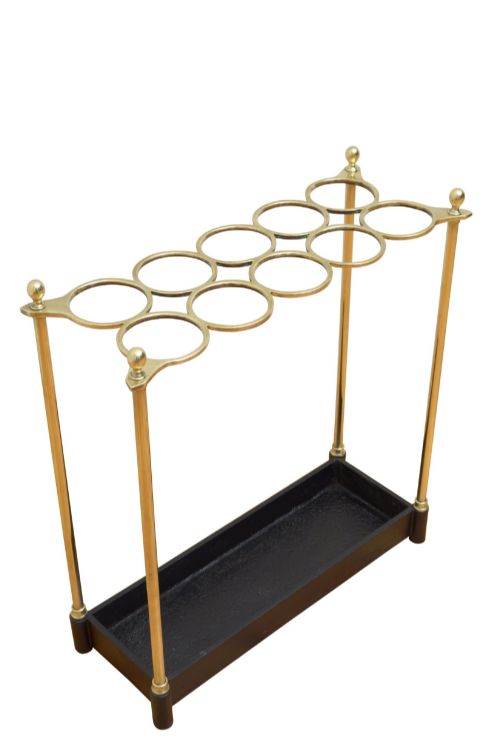
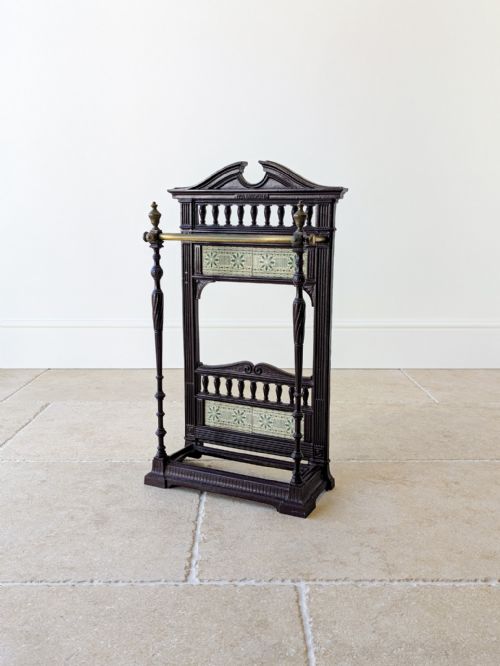
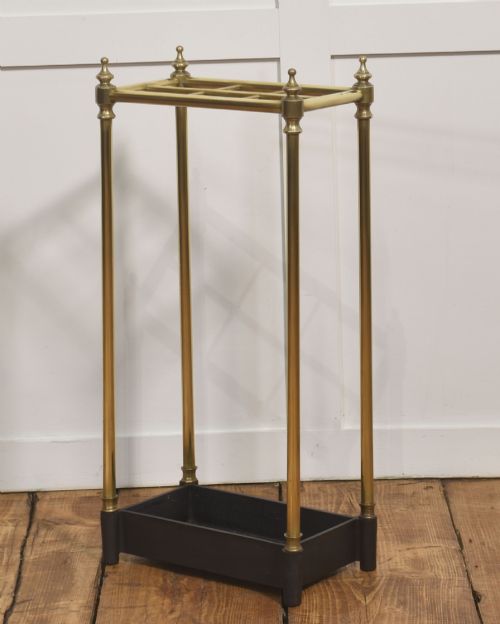
A cast iron and brass umbrella stand serves as a sturdy hallway fixture designed to hold walking sticks and wet umbrellas. Buyers exploring this search phrase find practical Victorian and Edwardian pieces that combine heavy metallic bases with polished metal frames.
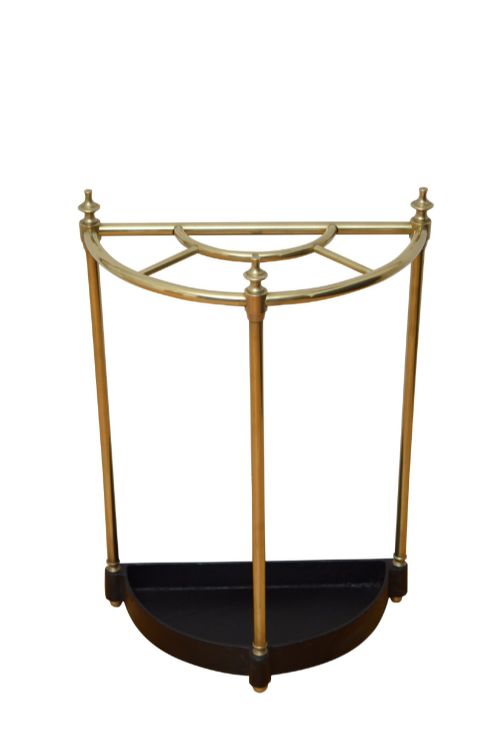
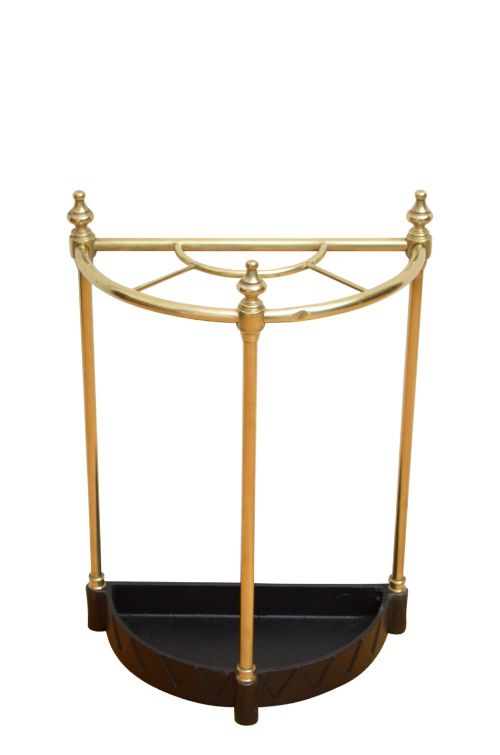
The version most commonly met on this page is the demi-lune or circular stand, utilising a solid iron base to catch water drips while brass rails secure the upright canes. These utilitarian hall furnishings range from simple late nineteenth century designs to marked examples from notable foundries.
Materials and construction
Foundries produced the heavy components of a cast iron and brass umbrella stand by pouring molten metal into sand moulds to form the weighted bases and decorative frames. Iron provided the necessary gravity to prevent tipping when loaded with heavy walking sticks, whilst brass tubes and finials added a bright, reflective contrast.
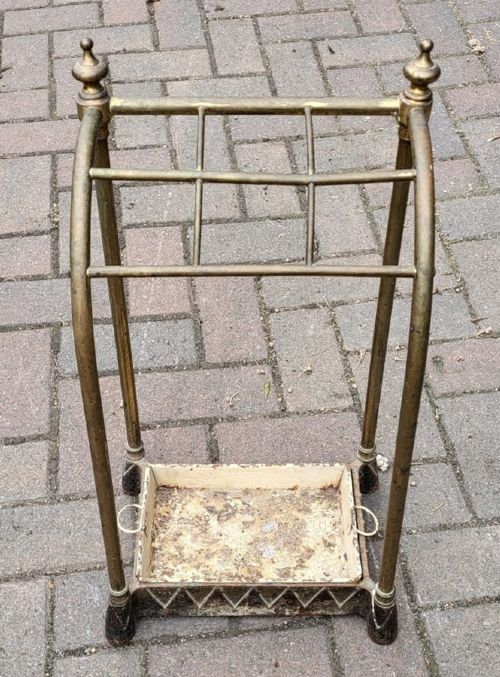
Maker assemblies frequently incorporated ceramic drip trays or dog-tooth metal liners to protect floors from moisture. Artisans joined the dissimilar metals using threaded fasteners, rivets, and structural collars rather than modern adhesives.
Cast Iron and Brass Umbrella Stand Retail Price Guide 2026
Typical asking prices for cast iron and brass umbrella stand among the pieces listed under this phrase on Sellingantiques today, from the lower quarter to the upper quarter. They describe what is for sale here now, not the wider market.
Listings feature items spanning the Victorian, Edwardian, and early twentieth century periods, utilising cast iron, brass, oak, and ceramic.
Distinctions in standard
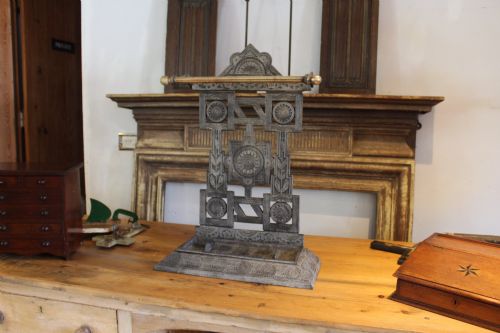
Quality in a cast iron and brass umbrella stand rests upon the crispness of the foundry casting and the thickness of the brass components. Better examples display deep, clean relief work on the iron bases and substantial gauge metal in the tubular frames rather than thin, pressed sheet brass.
The presence of an original drip pan or a recognised foundry mark elevates a piece above standard utility items. Consideration also extends to the structural integrity of the joints, where solid mechanical connections distinguish superior production from ordinary manufacture.
Coalbrookdale·Thomas Jeckyll·Shoolbred
The Cast Iron and Brass Umbrella Stand Glossary
- Demi-lune
- Half-moon shape designed to sit flush against a hallway wall. This configuration saves valuable floor space in narrow entrance passages.
- Dog tooth tray
- A specific pattern of ridged or serrated metal liner used at the base of a stand. It catches water run-off from wet umbrellas.
- Finial
- A decorative terminal ornament topping the vertical brass posts of a stand. These elements often screw into place to secure the frame.
- Foundry
- A workshop or factory where metal is melted and cast into moulds. Famous foundries produced marked ironwork for nineteenth-century hallways.
Cast Iron and Brass Umbrella Stand: Frequently Asked Questions
How do I clean a brass and iron stand?
Wash the cast iron elements gently with a soft brush and dry thoroughly to prevent rust formation. Polish the brass sections sparingly using a traditional metal cleaner, avoiding contact with the iron.
Preserve the existing patina rather than aiming for a mirror finish. Excessive cleaning can remove the aged character accumulated over decades of hallway use.
Where should I place my umbrella stand?
Position the piece in a porch or hallway near the primary entrance door for practical daily use. Ensure the floor beneath is protected if the stand lacks its original drip tray.
Keep the stand away from direct dampness to protect any iron components from corrosion. Adequate ventilation helps wet umbrellas dry properly within the frame.
Are all these stands genuinely Victorian?
The inventory spans several eras, including Victorian, Edwardian, and early twentieth-century production. Stylistic details help distinguish between mid-nineteenth century designs and later Edwardian reproductions.
Examine the construction methods and fastener types to determine the approximate decade of manufacture. Hallmarks or registry numbers stamped into the metal can offer further chronological clues.
What is the purpose of the iron base?
Heavy cast iron bases provide the ballast required to keep tall walking sticks from toppling the entire frame. Iron also resists the corrosive action of standing water better than untreated steel.
Foundries utilised cast iron because it could be formed into elaborate decorative patterns while remaining structurally rigid. This weight distribution is essential for everyday hallway functionality.