
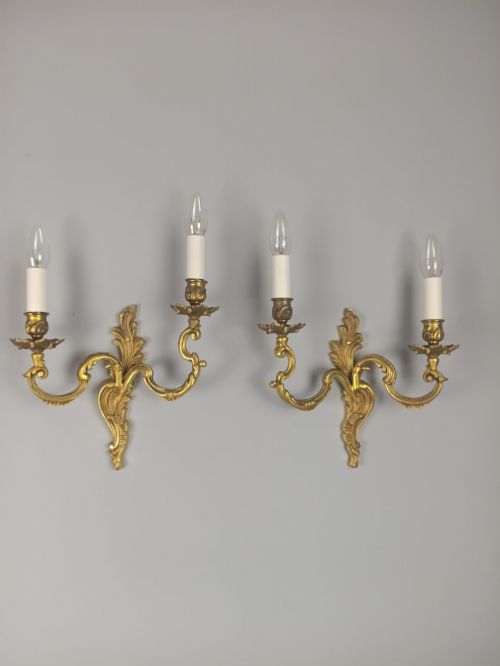


Cast Bronze Wall Appliques
Cast bronze wall appliques bring rich metallic warmth and period illumination to interiors, and you will find pieces ranging from single arm sconces to grand multi arm pairs.
Cast Bronze Wall Appliques
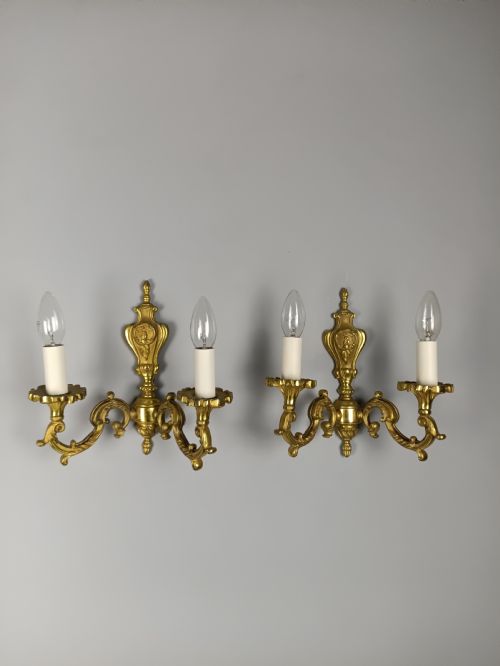
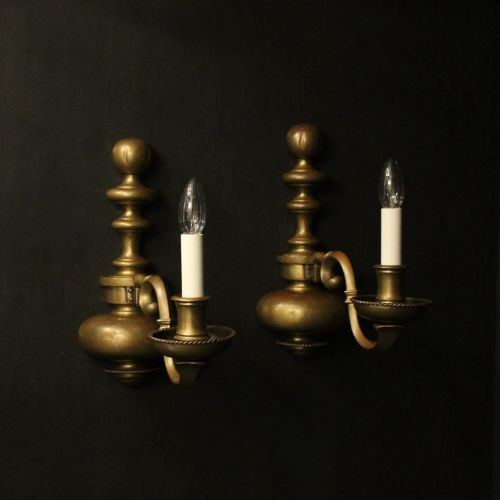
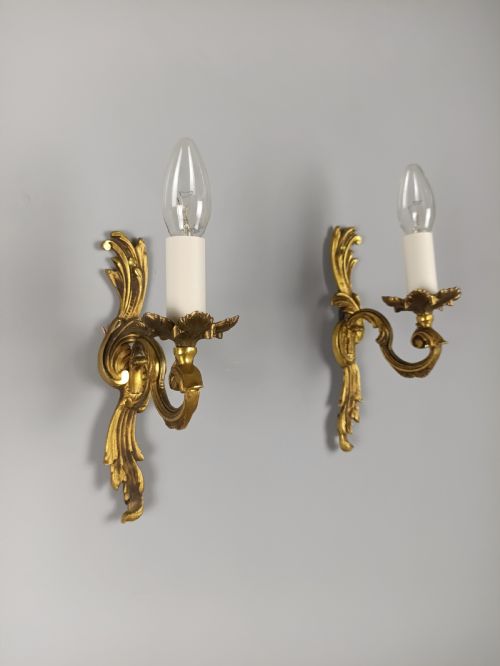
When you search for cast bronze wall appliques, you encounter lighting fixtures and wall mounts designed to project candlelight or lamplight across a room. These pieces trace their origins through the nineteenth century, the Edwardian era, and into the early decades of the twentieth century, reflecting enduring domestic utility. You frequently meet pairs of French Rococo revival lights, alongside English traditional designs and streamlined Art Nouveau creations.
The objects on this page take various structural forms, encompassing twin arm and triple arm wall lights, girandoles, and occasional furniture mounts repurposed for display. Many examples originate from French workshops, while others reflect English craftsmanship from the nineteenth century. These fixtures serve as both functional illumination and decorative wall hardware.
Makers such as Poix Blin and retailers like Liberty appear among the listed pieces, demonstrating the breadth of production across different decades. The materials span from solid bronze and brass to gilded bronze, ormolu, and silver plate. Selecting a set allows you to introduce period character and tactile metallic texture directly onto your walls.
How they were made
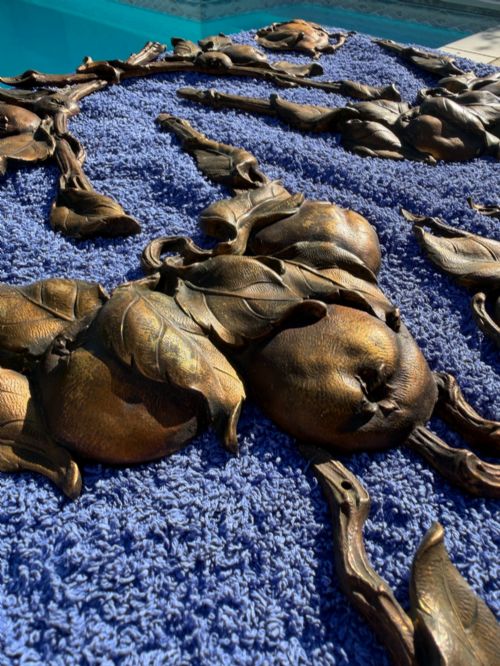
Makers produced cast bronze wall appliques by pouring molten metal into detailed moulds, capturing intricate decorative motifs such as scrolling foliage and asymmetrical shells. Craftsmen then refined the raw metal through chiselling and smoothing to sharpen the surface details. Following the casting process, artisans frequently applied layers of gold gilt or ormolu to enhance the reflective quality of the bronze.
Production techniques varied from traditional sand casting used in nineteenth century English workshops to specialised French manufacturing methods associated with Rococo revival pieces. Workshops sometimes combined brass and bronze elements within a single fixture, assembling arms and backplates with mechanical fasteners. Silver plating and gilding were applied as finishing steps to protect the metal and achieve specific surface sheens.
Materials recorded across these wall lights include solid bronze, gilded brass, silver plate, and traditional ormolu.
What varies in quality
The refinement of the casting separates standard production from exceptional work, visible in the crispness of leaf work and the depth of relief on the backplate. Superior pieces retain thicker applications of gilt bronze or ormolu that age with a deep, warm lustre rather than wearing away to reveal base metals. The structural integrity of the arm joints and the weight of the metal also distinguish finer examples from lighter commercial items.
Artisanal precision in chasing and finishing dictates how light plays across the surface of a cast bronze wall applique. Items carrying signatures or attributed to established names such as Poix Blin or Liberty demonstrate documented standards of design and execution. The harmony of matched pairs and the completeness of original mounting hardware further influence the overall character of each fixture.
Poix Blin·Liberty
The Cast Bronze Wall Appliques Glossary
- Ormolu
- Finely ground high-carat gold applied to a bronze base through a mercury amalgamation process or modern electroplating. This finish imparts a rich golden sheen that resists tarnishing over decades.
- Girandole
- A decorative wall mounted branch candlestick or light fixture featuring a reflective backplate. The mirrored or polished metal surface amplifies the illumination cast into the room.
- Rococo
- An ornate design style characterised by asymmetrical scrolls, C-curves, and naturalistic plant motifs. Originating in France, this aesthetic returned to popularity during nineteenth century revivals.
- Applique
- A decorative wall bracket or sconce designed to hold candles or electric bulbs. These fixtures mount directly onto vertical surfaces to provide accent or task lighting.
- Gilding
- The application of a thin layer of gold leaf or metallic powder to the surface of bronze or brass. This technique protects the underlying metal while providing a decorative metallic radiance.
Cast Bronze Wall Appliques: Frequently Asked Questions
How do I install antique wall sconces?
Mounting antique wall sconces requires securing the backplate firmly to wall studs or using appropriate masonry anchors to support the weight of the bronze metal. Many older pieces were originally designed for candles and require careful adaptation if you intend to wire them for electricity.
Consult a qualified electrician to ensure that historical wiring channels or modern conversion kits meet safety standards without compromising the structural integrity of the bronze frame.
What is the difference between bronze and brass?
Bronze is an alloy primarily composed of copper combined with tin, resulting in a heavier material with a deep, warm brownish tone. Brass is an alloy of copper and zinc, which typically exhibits a brighter, more golden yellow colour.
In historical lighting, makers often used both metals interchangeably or combined them within a single fixture, sometimes applying gilt layers over the top to unify the appearance.
How do I clean gilded bronze appliques?
Maintain gilded bronze appliques by dusting them gently with a soft, dry brush to prevent the accumulation of dirt within intricate crevices. Avoid harsh chemical cleaners, abrasive cloths, or metal polishes that can strip away delicate gold gilt and ormolu surfaces.
Professional conservation is recommended if deeper cleaning becomes necessary to preserve the historical patina and protective finish of the metal.
How do I date a cast bronze wall light?
Dating a cast bronze wall light involves examining the casting techniques, fixing screws, stylistic markers, and any maker marks stamped into the metal. Nineteenth century pieces often show hand-chased details and heavier bronze construction, while later twentieth century examples display uniform machine finishing.
Comparing the decorative motifs, such as French Rococo revival curves or Edwardian symmetry, against known production periods helps narrow down the decade of manufacture.