





Cast Bronze Lion Ornament
These cast bronze lion ornament pieces bring powerful presence to a room, ranging from grand French Animalier studies to sturdy domestic door stops.
Cast Bronze Lion Ornament
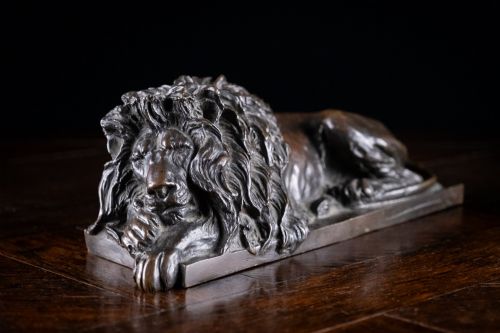
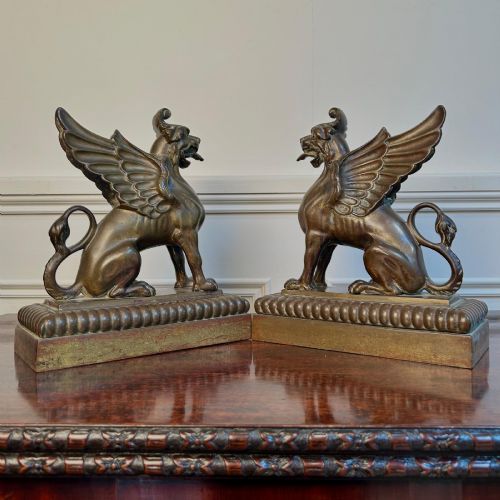
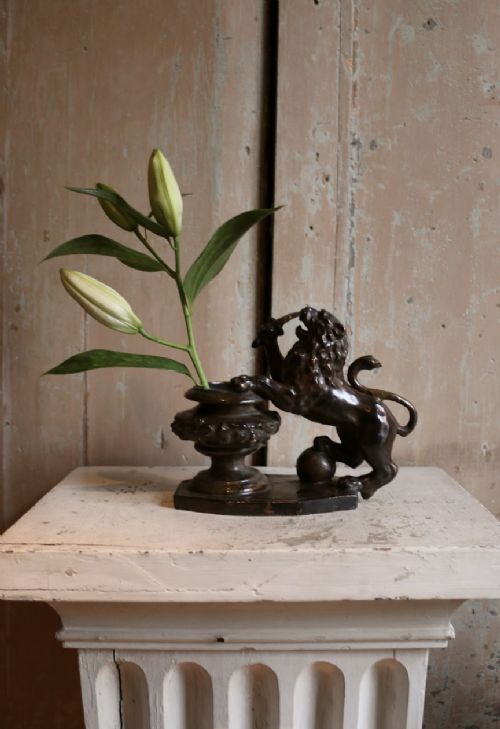
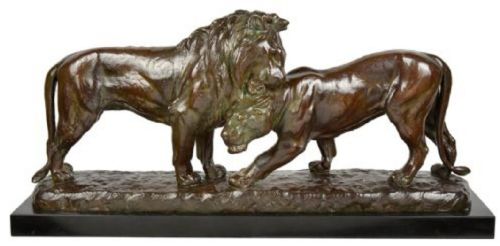
When you search for cast bronze lion ornament, you encounter a robust mix of decorative works spanning the seventeenth through to the early twentieth century. The selection includes recumbent beasts, seated pairs, and functional items like inkwells and door stops.
French Animalier works and Neoclassical interpretations dominate the forms, alongside striking Tibetan Himalayan temple lions and Victorian Gothic Revival pieces. Most examples date from the nineteenth century, though earlier seventeenth-century survivals occasionally appear.
The objects serve varied purposes, functioning primarily as sculptural mantel ornaments, desktop accessories, or heavy architectural stops. Their origins stretch from European foundries to Himalayan temples, reflecting diverse cultural approaches to casting the king of beasts.
How they were made
Foundries utilised traditional metal casting techniques, working primarily in bronze alongside patinated bronze and brass to achieve substantial weight and durable forms. Many surfaces received careful patination to enhance texture, depth, and shadow across the musculature.
Certain sculptural compositions incorporate secondary materials such as marble, green marble, wood, and timber for plinths and bases. These supportive mounts elevate the metalwork and provide stable foundations for heavy figures and functional inkwells.
Cast Bronze Lion Ornament Retail Price Guide 2026
Typical asking prices for cast bronze lion ornament among the pieces listed under this phrase on Sellingantiques today, from the lower quarter to the upper quarter. They describe what is for sale here now, not the wider market.
Listings span four distinct periods, incorporating seventeenth-century metalwork alongside nineteenth-century French Animalier sculptures and twentieth-century interpretations.
What varies in quality
The fidelity of the casting dictates visual success, separating sharply rendered musculature and fine mane detail from softer, more generalised surfaces. Superior pieces capture tension and posture with anatomical precision.
Foundry signatures and historical attribution elevate certain works, particularly those associated with documented nineteenth-century sculptors or established Parisian founders. The depth, richness, and preservation of the original patina also distinguish finer examples from standard production.
Antonio Canova·Paul Édouard Delabrièrre·Louis Riche·Al Barye·Barbedienne
The Cast Bronze Lion Ornament Glossary
- Animalier
- A nineteenth-century artistic movement focusing on the realistic depiction of animals, particularly in bronze sculpture. French practitioners mastered this genre with intense anatomical study.
- Patinated bronze
- Bronze treated with chemical solutions to produce specific surface colours and tones. This process protects the metal while enhancing visual depth.
- Neoclassical
- A style drawing inspiration from the classical art and culture of ancient Greece and Rome. Works in this vein often display formal balance and dignity.
- Grand Tour
- A cultural journey undertaken by wealthy Europeans to study classical antiquities. Souvenirs from these travels included small-scale bronzes.
- Andiron
- A horizontal metal support used in pairs inside a fireplace to hold logs. Sturdy bronze figures frequently adorned the visible fronts of these hearth implements.
Cast Bronze Lion Ornament: Frequently Asked Questions
How were they used historically?
Historically, these bronze figures served multiple domestic and decorative functions across affluent European and international interiors. Smaller examples operated as desk weights or inkwells.
Larger seated or recumbent figures decorated libraries, halls, and mantelpieces as symbols of strength and nobility. Some heavier pieces doubled as door stops or architectural supports.
How do I care for patinated bronze?
Maintaining patinated bronze requires minimal intervention to preserve the original surface chemistry and protective finish. Gentle dusting with a soft, dry cloth prevents particulate build-up.
Avoid chemical polishes, abrasives, and excessive moisture, which can strip away the historical patina. Placing pieces away from direct heat sources protects any integrated timber or marble bases.
How do I tell nineteenth century pieces apart?
Nineteenth-century pieces often display distinct stylistic markers linked to the French Animalier school or Victorian revival movements. Examining the casting technique and surface finish helps identify the period.
Look for foundry stamps, signature marks, and the quality of the chisel work applied after casting. The composition and type of base materials, such as green marble, also offer clues to the era of manufacture.