




Cast Bronze Desk Accessories
Cast bronze desk accessories bring practical weight and character to a workspace, ranging from playful Victorian animal figures to sleek Art Deco designs.
Cast Bronze Desk Accessories
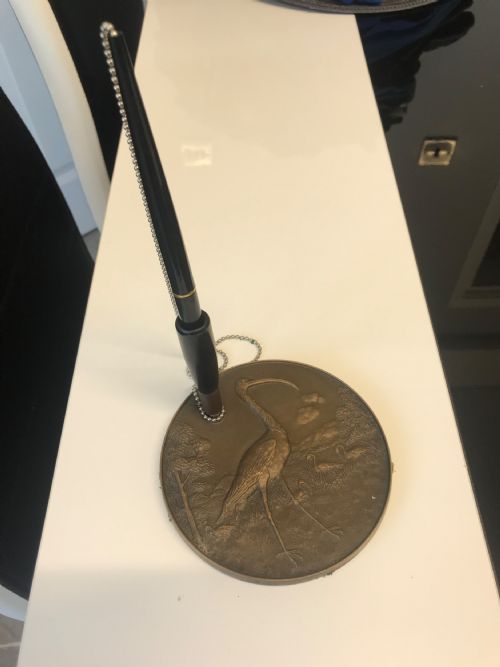
When buyers search for cast bronze desk accessories, they look for functional items designed to organise or decorate a writing table. These pieces include inkwells, bookends, paperweights, pen rests, and desk tidies originating from various periods.
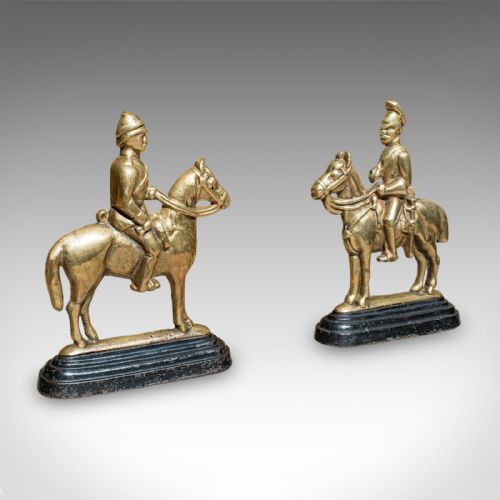
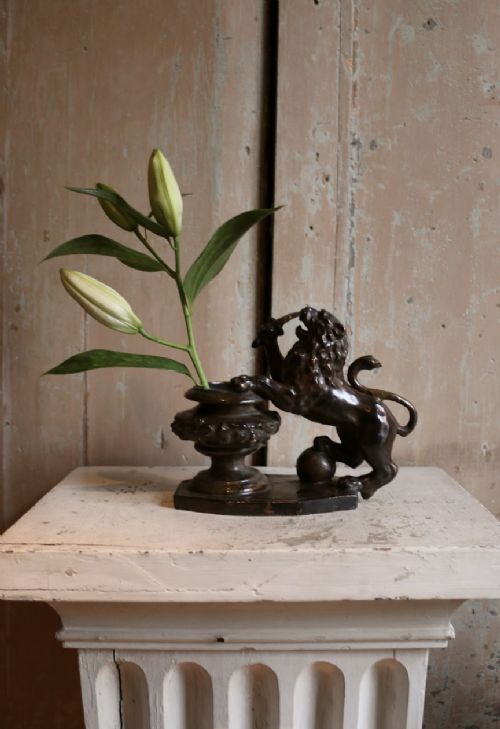
The selections available here lean heavily toward figural and novelty items from the nineteenth and early twentieth centuries. Animals, literary figures, and architectural motifs dominate the forms found in these listings.
Origins stretch across European workshops, Asian traditions, and American foundries. Buyers encounter everything from utilitarian Chinese brush rests to elaborate Austrian cold painted animal studies.
Materials and methods of production
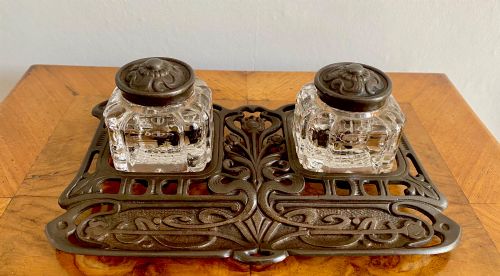
Foundries utilised traditional casting techniques to shape bronze, brass, and related metal alloys into detailed forms. Many items incorporate contrasting elements such as glass inserts for inkwells, hardstone bases, or carved mahogany undercarriages.
Surface finishes vary significantly across the pieces. Artisans applied patinas, gilding, or cold painted polychrome details by hand to accentuate the sculptural qualities of the metalwork.
Materials extend beyond pure bronze to include cast metal, spelter, brass, glass, hardstone, and painted surfaces.
Evaluating the standard of execution
Quality rests primarily on the crispness of the casting and the sensitivity of the chasing work after the metal cooled. Superior examples retain sharp anatomical details, clear facial expressions, and well-defined textures in fur, feathers, or clothing.
The integrity of the original components also determines merit. Pieces that retain their matching glass ink inserts, undamaged cold painted surfaces, or original patination command greater appreciation than those with replaced parts or heavy overpainting.
A.Cohen & Co Ltd London·Franz Gruber·C Omin·Jennings Brothers·Ernest Louis ADNIN
The Cast Bronze Desk Accessories Glossary
- Cold painted bronze
- Bronze sculpture finished with oil or water-based paint that is not fired in a kiln. This technique gained immense popularity in Austrian foundries during the late nineteenth and early twentieth centuries.
- Patina
- The surface sheen and coloration developed through age or chemical treatment applied by the maker. It protects the metal and adds depth to the sculptural contours.
- Animalier
- A nineteenth-century artistic movement focused on the realistic depiction of animals. Practitioners applied this style to functional desk items such as inkwells and bookends.
- Desk tidy
- A compartmentalised desk accessory used for holding miscellaneous writing implements, stamps, or small stationery items. They often incorporate pen trays and ink wells.
- Brush rest
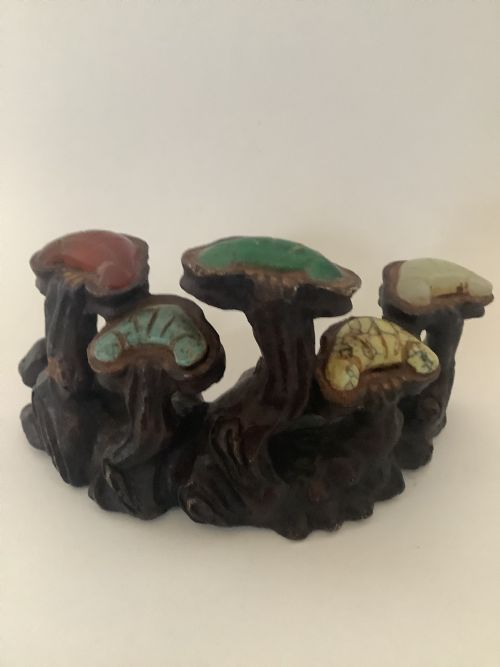
- A small stand, traditionally originating in Asian art, designed to support calligraphy brushes between uses. They frequently take the form of miniature landscape ridges or stylised animals.
Cast Bronze Desk Accessories: Frequently Asked Questions
How do I clean a bronze inkwell?
Dust gently with a soft, dry brush to preserve any remaining patina or cold painted finish. Avoid chemical polishes that strip away age and character from the metal.
If the piece has glass components, remove them carefully before addressing the metal housing to prevent moisture damage to old adhesives or linings.
Are these items suitable for daily desk use?
Many pieces remain robust enough for everyday service, particularly heavier items like bookends, paperweights, and solid desk ornaments. Inkwells require careful inspection of their glass liners if you intend to fill them with modern ink.
For delicate cold painted figures or pieces with fragile protruding elements, lighter placement away from heavy foot traffic on the desk is advisable.
How can I tell Victorian pieces from Art Deco examples?
Victorian desk accessories tend toward ornate naturalism, animal subjects, and elaborate ornamentation rooted in historical revival styles. Look for heavy casting and rich, dark patinas.
Art Deco pieces embrace stylised geometry, streamlined silhouettes, and simplified human or animal forms typical of the interwar period.
What is cold painted bronze?
Cold painting involves applying paint directly to a finished bronze casting without subjecting the piece to high-temperature kiln firing. This method allowed for vibrant polychrome finishes on small animal and human figures.
Because the paint is merely surface-applied, surviving examples often show charming areas of wear where handling occurred over generations.