

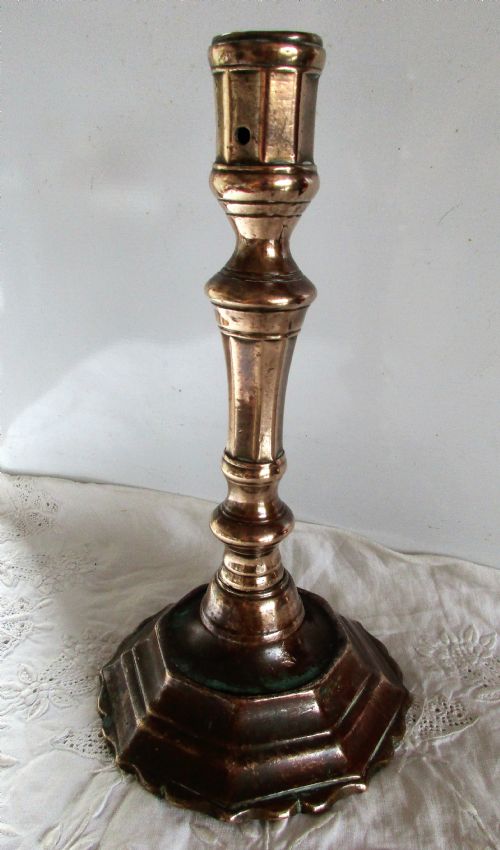


Cast Bronze Candlestick Holder
These cast bronze candlestick holder examples bring heavy metal work from the eighteenth and nineteenth centuries into modern rooms.
Cast Bronze Candlestick Holder
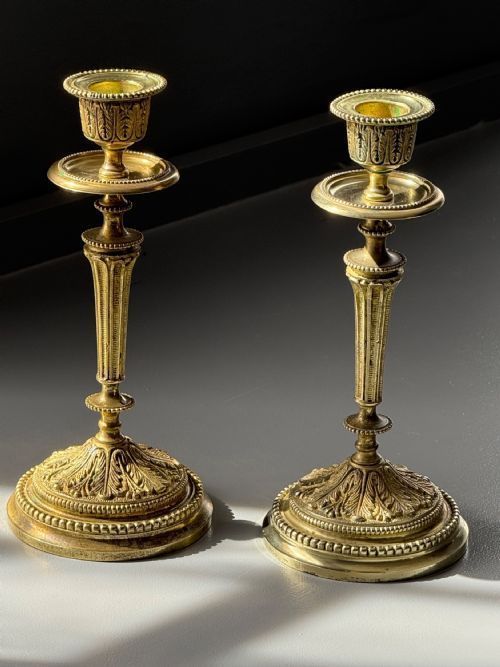
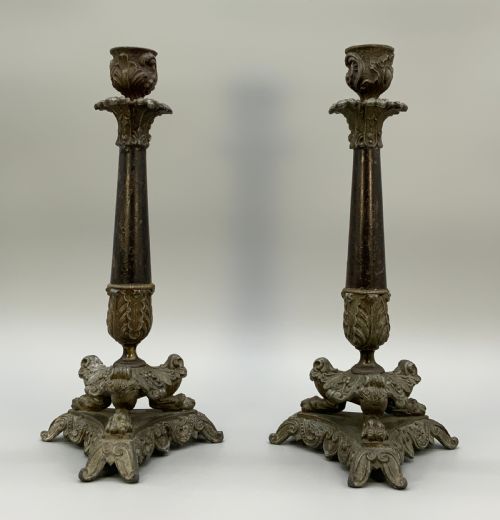
A cast bronze candlestick holder represents a solid metal lighting fixture shaped by foundry work during the eighteenth, nineteenth, and early twentieth centuries. These objects range from simple Georgian and Victorian sockets to sculptural pairs designed in French Empire, Louis XVI, and Gothic Revival styles.
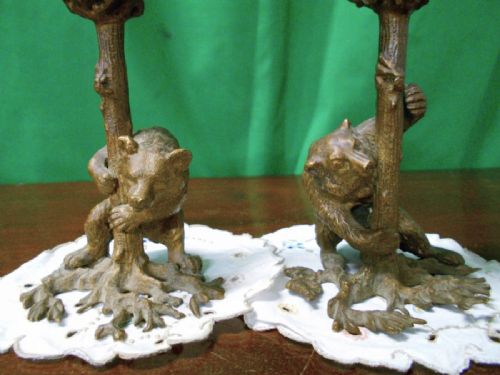
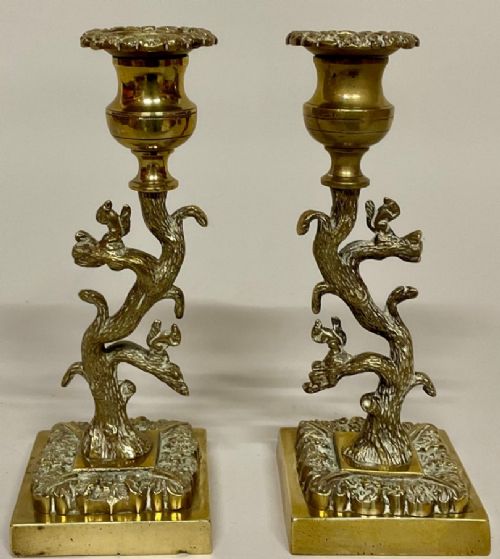
Buyers seeking a cast bronze candlestick holder encounter diverse figurative forms, including trees with squirrels, medieval characters on stilts, and classical Athenienne shapes. Many examples survive as pairs or sets, incorporating brass, ormolu, and bronze patinated spelter alongside traditional cast bronze.
How they were made
Foundries utilised traditional metal casting methods to shape bronze, brass, and spelter into intricate figurative and architectural designs. Artisans then applied surface finishes such as gilt bronze, ormolu, silvering, and dark patination to accentuate the detailed relief work.
Components like campana sconces, sculptural figures, and square bases were cast separately before being assembled into finished table lights and candelabra.
Cast Bronze Candlestick Holder Retail Price Guide 2026
Typical asking prices for cast bronze candlestick holder among the pieces listed under this phrase on Sellingantiques today, from the lower quarter to the upper quarter. They describe what is for sale here now, not the wider market.
The inventory records diverse stylistic influences, including Louis XVI, French Empire, Gothic Revival, and Black Forest animal motifs.
What varies in quality
The precision of the metalwork defines the distinction between standard production and superior examples. Sharply articulated chasing on gilt bronze and bronze patinated surfaces reveals the hand of a skilled foundry worker.
Weight and stability separate robust cast bronze and brass pieces from lighter alternatives like spelter and cast iron. Cohesion in paired objects and the crispness of classical or figurative details indicate the standard of manufacture.
Ferdinand Barbedienne
The Cast Bronze Candlestick Holder Glossary
- Ormolu
- Gilded bronze used extensively for decorative mounts and objects in French furniture and lighting. The technique involves applying a mercury and gold amalgam to bronze before heating.
- Campana
- A vase-shaped lighting component resembling an inverted bell, commonly found at the top of candlesticks. This classical form supports the candle nozzle.
- Patination
- The surface coloration and ageing developed on bronze through exposure or deliberate chemical treatment. A dark bronze patina alters the original metallic sheen.
- Pricket
- A sharp spike rising from the centre of a drip pan to secure a candle. This medieval form appears on ecclesiastical and revival candlesticks.
- Spelter
- A zinc alloy utilised as a cheaper alternative to bronze for casting figurative items. It requires careful patination to imitate heavier metals.
Cast Bronze Candlestick Holder: Frequently Asked Questions
What are cast bronze candlestick holders made of?
These pieces consist primarily of cast bronze, though listings also include brass, gilt bronze, ormolu, and bronze patinated spelter. Different foundries selected metals based on cost and the desired weight of the final object.
Surface finishes vary from bright gilding and silvering to dark chemical patination applied to highlight sculptural details.
How do I identify French Empire candlesticks?
French Empire pieces display classical motifs, symmetry, and architectural forms inspired by antiquity. They frequently incorporate cast bronze with contrasting gilt and patinated surfaces.
Many examples feature campana sconces and heavy bases that reflect the formal interior styles of the early nineteenth century.
Can I use antique candlesticks for modern dining?
These holders function well on dining tables and mantelpieces provided the sockets accommodate standard modern candle diameters. Care is required to protect surfaces from melting wax.
Their solid metal construction makes them stable, though pairing heights should be checked if using them as a set.
What periods do these candlesticks come from?
The selection spans the eighteenth century through the early twentieth century, encompassing Georgian, Victorian, and Edwardian periods. Revival styles like Louis XVI and Gothic Revival also draw on earlier historical aesthetics.
Dates range from around eighteen hundred up to nineteen hundred and ten across English, French, and Russian workshops.