





Cast Brass Tray
A cast brass tray brings substantial metalwork into daily rooms, offering a durable surface shaped by Victorian and Edwardian hands.
Cast Brass Tray
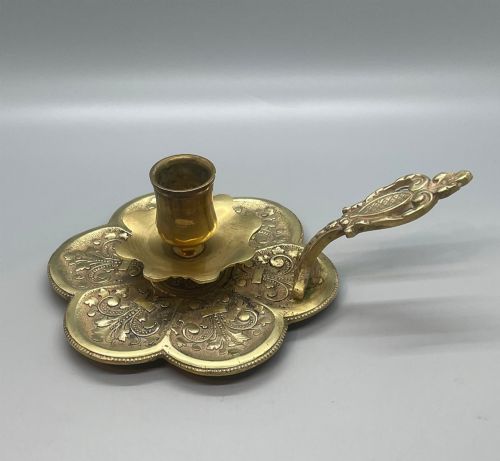
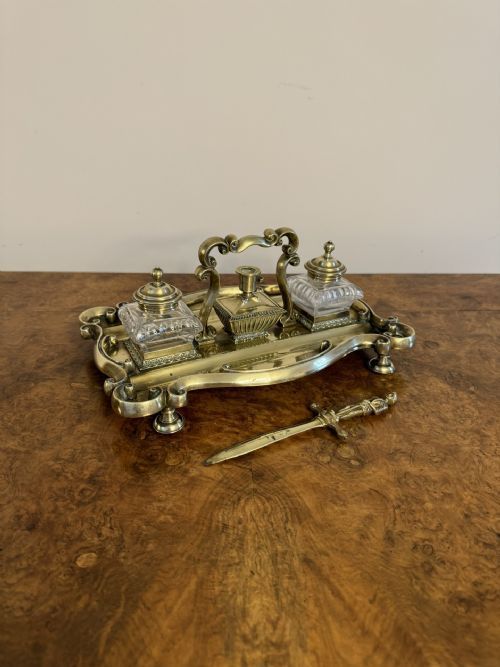
A cast brass tray search reveals functional metal desk accessories and ink stands produced across the Victorian, Edwardian, and early twentieth century periods. These items range from heavy desk sets with pen rests to chambersticks and small platters shaped in brass, bronze, and copper.
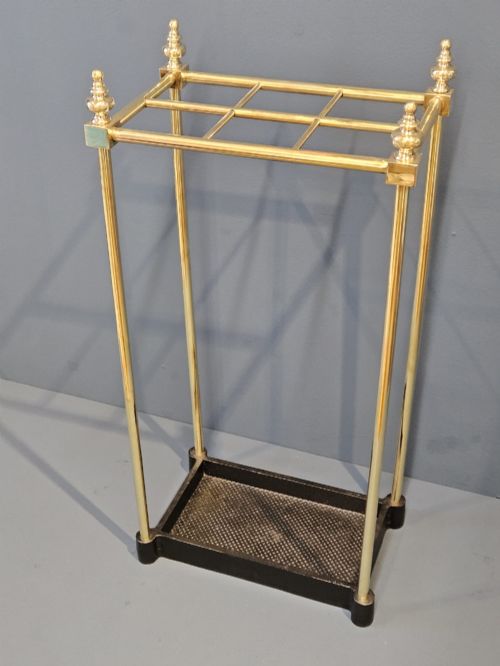
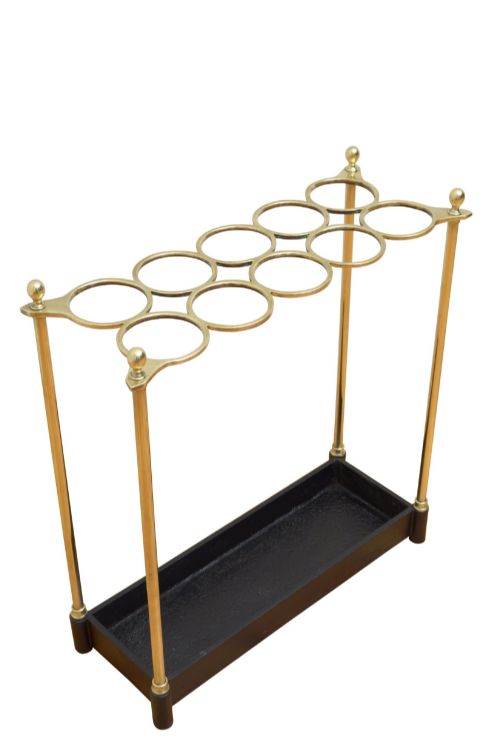
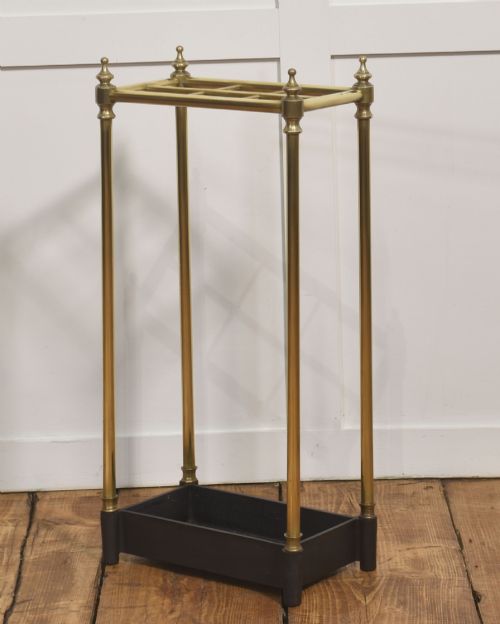
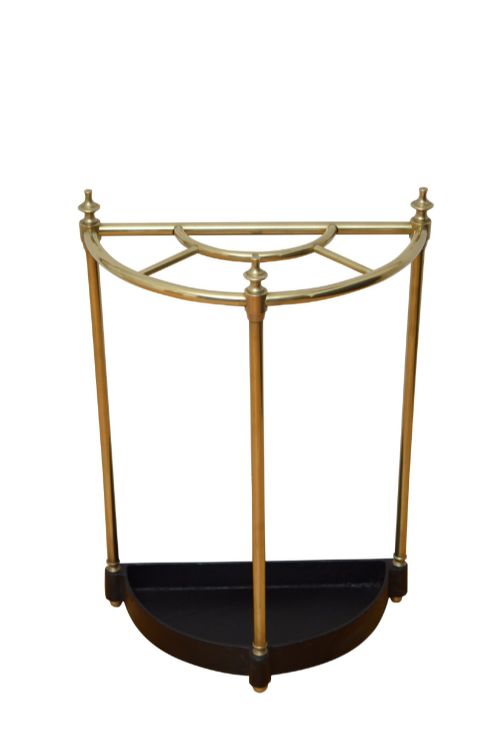
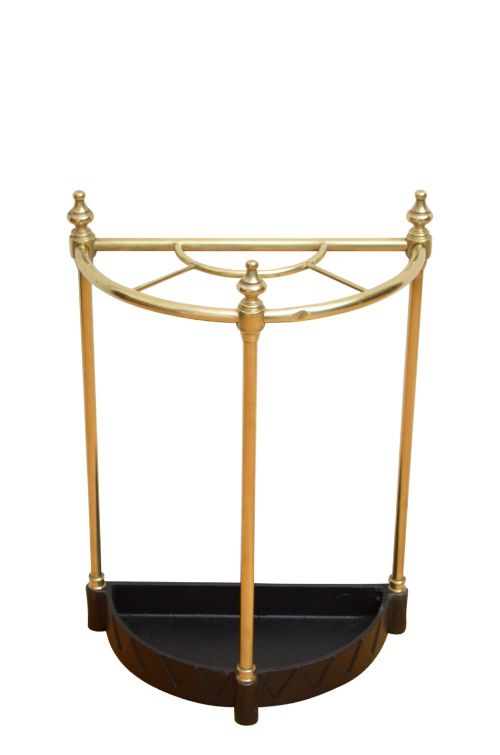
While broader categories like umbrella stands and stick stands dominate the listings alongside wooden and cast iron combinations, smaller desk items represent the primary flat tray forms. Buyers encounter French Rococo Revival, Art Nouveau, and Neoclassical styles among these smaller desk accessories and platters.
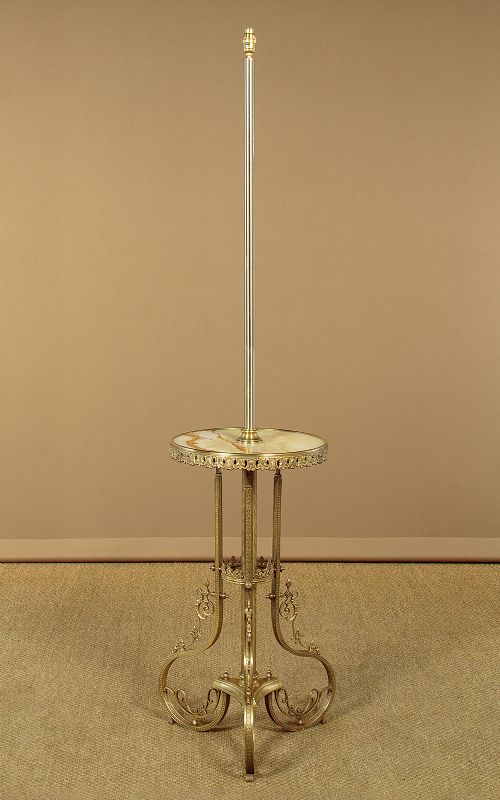
The material composition extends beyond pure brass to include mixed metals and combinations with oak or mahogany bases, reflecting how these items served utilitarian roles in nineteenth and twentieth century hallways and studies.
How they were made
Items listed under this category rely primarily on casting techniques using brass, bronze, or copper, often paired with cast iron bases for stability. Manufacturers combined heavy metal casting with fitted wooden components in oak or mahogany for larger hallway pieces.
Surface details emerged through moulding and chasing, producing decorative ball finials, dog tooth patterns, and fluid Art Nouveau lines. Artisans secured these metal elements using sturdy mechanical fasteners and integrated steel supports where structural weight was needed.
Cast Brass Tray Retail Price Guide 2026
Typical asking prices for cast brass tray among the pieces listed under this phrase on Sellingantiques today, from the lower quarter to the upper quarter. They describe what is for sale here now, not the wider market.
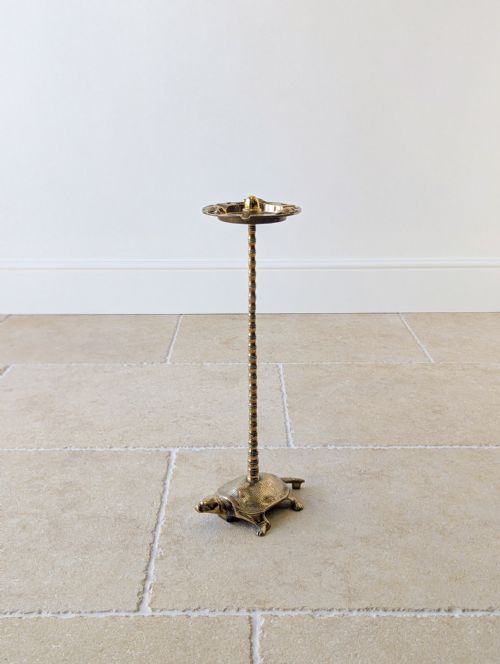
Tortoiseshell patterns met smoking rooms when early twentieth-century makers cast cigar stands for the Victorian gentleman.
What varies in quality
Quality rests in the crispness of the cast ornamentation and the thickness of the metal plate, distinguishing robust Victorian and Edwardian desk sets from lighter production. Heavier castings hold finer decorative detail in floral motifs and figural elements.
The integrity of mixed-material construction also separates standard pieces from finer examples, particularly where brass frames meet solid oak, mahogany, or cast iron bases without looseness or mismatched repairs.
Shoolbred
The Cast Brass Tray Glossary
- Cast brass
- Molten alloy poured into a mould to form rigid shapes. This technique allows for heavier weight and sharper surface decoration than pressed sheet metal.
- Chamberstick
- A low portable candleholder fitted with a handle and a small catchment tray. It was designed to be carried through a house at night.
- Demi-lune
- A half-moon shape used for trays and umbrella stands. This profile allowed hallway furnishings to sit flush against a wall.
- Inkwell
- A small lidded container for liquid ink, frequently set into a larger desk tray alongside pen rests.
- Neoclassical
- A design style drawing on classical Greek and Roman motifs. It appears on brass and bronze platters through symmetrical geometry and restrained ornamentation.
Cast Brass Tray: Frequently Asked Questions
How do I clean a brass tray?
Wash the surface gently with warm soapy water and a soft cloth to remove accumulated dust and grime. Avoid harsh chemical polishes that strip away the aged patina collected over decades.
Dry the metal thoroughly after washing to prevent spotting. Preserve the natural dark highlights in recessed details by leaving older patination untouched.
Where were these trays used?
Desk sets and ink trays found their primary placement on writing tables in studies, libraries, and drawing rooms. Smaller platters served for holding correspondence or small personal items.
Larger variations functioned as chambersticks carried through bedrooms and hallways. Their durable metal construction suited daily handling by household members.
How do I date a brass tray?
Examine the casting method and the prevailing decorative style to narrow the production period. Victorian and Edwardian examples often feature heavier metalwork and distinct period motifs like Art Nouveau curves.
Check for construction marks, patent numbers, or retailer stamps on the underside. Mixed materials like oak or mahogany backing also help anchor pieces to the nineteenth or early twentieth century.
Can I use these trays daily?
Solid cast brass and bronze items offer robust durability suited for everyday utility in modern homes. Their heavy construction withstands regular placement of keys, coins, or stationery.
Protect polished wooden surfaces underneath by adding discreet felt pads if placing the tray on fine furniture. Ensure ink wells or damp items are emptied regularly to protect the metal.