

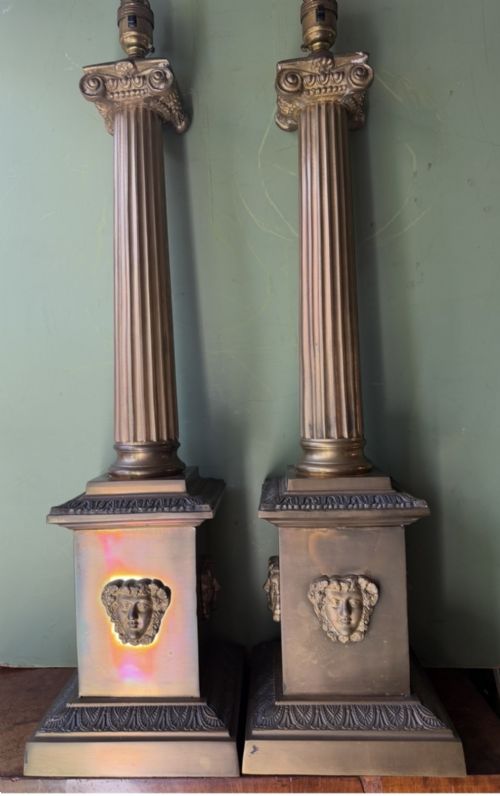


Cast Brass Column Lamp
These cast brass column lamp examples bring heavy metalwork and classical proportion straight into a room, offering height and steady candle or oil illumination.
Cast Brass Column Lamp
When you search for a cast brass column lamp, you enter a field dominated by heavy metal shafts, stepped bases, and capitals drawn from classical architecture. The pieces appearing here span the nineteenth century into the early decades of the twentieth, moving from Victorian oil burners to later standard and table lights.
Most examples rely on the Corinthian order for their upper details, showing acanthus leaves and scrolled corners cast in solid brass. Alongside these formal designs, you find French classical interpretations and pieces showing Gothic revival influence with pointed arches and heavier mouldings.
Forms range from modest table heights to tall standard lamps designed to stand directly on the floor. Many began life as oil lamps with glass fonts before conversion to electricity, while others started as candlesticks adapted for wiring.
How they were made
Foundries produced these lamps by pouring molten brass into sand moulds, creating rigid columns and substantial square or stepped bases that required minimal subsequent finishing. Craftsmen then turned the metal on lathes to sharpen decorative reeding and fluting along the shaft.
Makers combined the heavy cast metalwork with blown and moulded glass, incorporating clear, opaline, or coloured glass fonts between the brass base and the burner assembly. Bronze elements also appear alongside the brass, adding tonal variation to the column shafts.
Cast Brass Column Lamp Retail Price Guide 2026
Typical asking prices for cast brass column lamp among the pieces listed under this phrase on Sellingantiques today, from the lower quarter to the upper quarter. They describe what is for sale here now, not the wider market.
The selection includes pieces spanning the Victorian period, the 1850s to the 1930s, utilising cast brass, bronze, moulded glass, and opaline glass.
What varies in quality
The distinction between ordinary production and finer work lies in the crispness of the casting and the weight of the metal. Superior pieces display sharply defined acanthus leaves on the capitals and clean edges on the stepped bases without the blurring that comes from worn foundry moulds.
Proportion and material combination also define the better examples, particularly where cut or opaline glass fonts integrate seamlessly with the brass collars. Heavier gauge metal provides stability, ensuring the tall columns support standard lamps securely without flex.
JOSEPH HINKS·Hinks
The Cast Brass Column Lamp Glossary
- Corinthian capital
- The ornate top section of a column decorated with carved or cast acanthus leaves and small volutes. This is the most common capital style seen on these brass columns.
- Font
- The oil reservoir positioned near the top of the lamp, frequently made from moulded, cut, or opaline glass. Many survive from the nineteenth-century conversion period.
- Standard lamp
- A tall floor-standing lighting fixture with a vertical column shaft. These heavy brass examples provide substantial vertical presence in a room.
- Bronze
- An alloy of copper and tin used alongside brass in several of these column lamps. It provides a darker, richer tone to specific components.
Cast Brass Column Lamp: Frequently Asked Questions
Are these lamps converted from oil?
Many examples on this page began as nineteenth-century oil lamps or candlesticks before receiving modern electrical wiring and fittings. This background accounts for the reservoirs and burners adapted into modern lamp holders.
Collectors value this heritage because the heavy cast metal bases and glass fonts were built to support the weight of oil reservoirs, making them exceptionally sturdy for daily electrical use.
How do I date a brass column lamp?
Dating relies on stylistic clues like Gothic revival arches, Victorian proportions, or Edwardian Corinthian detailing, alongside the manufacturing marks on the metal or burner mechanisms. Period indicators also appear in the type of glass used for the fonts.
Earlier nineteenth-century pieces often display heavier sand-cast components and hand-finished brass surfaces, whereas later twentieth-century examples show more uniform machine-finished assembly.
Where should I place a standard lamp?
Tall floor-standing standard lamps suit corners or seating areas where their vertical brass columns provide adequate downward illumination without crowding the floor space. Their substantial weight keeps them stable on most flooring.
Pairing them with appropriate fabric shades balances the heavy metal base and allows the classical proportions of the column to remain the focal point.
What is an opaline glass font?
Opaline glass is a translucent, milk-white material used to create the central reservoir or decorative section of the lamp body. It diffuses light softly when illuminated.
Found alongside cast brass columns, this glass type adds contrast to the heavy metallic elements of the nineteenth-century pieces.