



Cased Teaspoons
These cased teaspoons bring together fitted presentation boxes and matched silver, offering a glimpse into formal tea drinking of past decades.
Cased Teaspoons
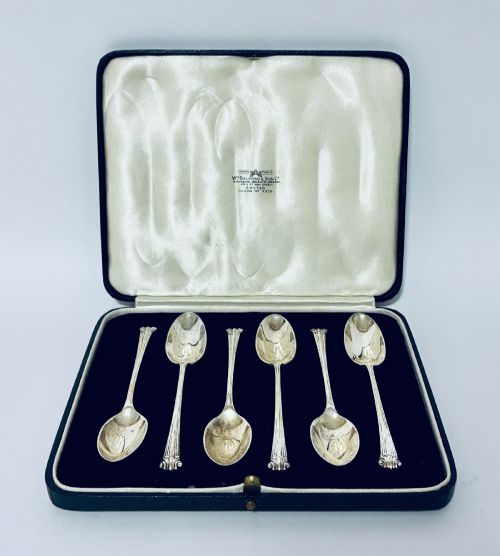
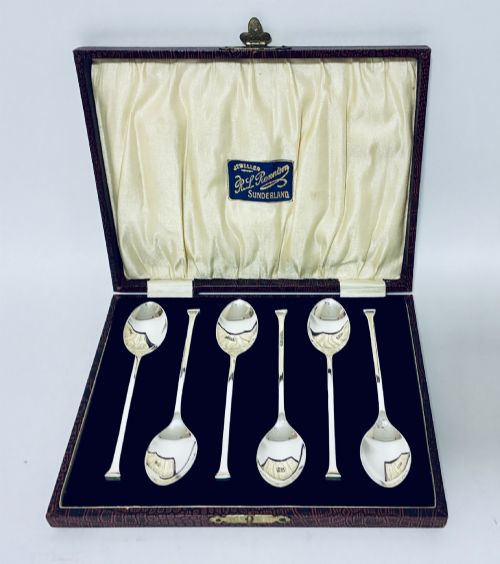
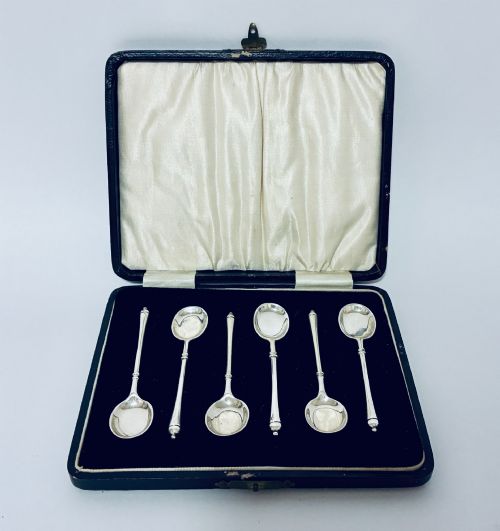
Cased teaspoons comprise matching sets of spoons housed in fitted presentation boxes, often accompanied by matching sugar tongs. When searching for cased teaspoons, buyers encounter matched sets designed for formal tea or coffee service, frequently presented in fitted containers.
The selections span multiple eras, encompassing Victorian, Edwardian, and Art Deco designs alongside Mid-Century Modern and Arts and Crafts examples. Sets range from small gatherings of four spoons up to larger collections of twelve, sometimes featuring specialised forms such as demi-tasse or coffee spoons.
Origins stretch across British assay offices including London, Sheffield, and Chester, alongside continental makers from Norway and Germany. The fitted boxes themselves form an integral part of the survival, utilising protective outer coverings to safeguard the metalwork within.
Materials and construction
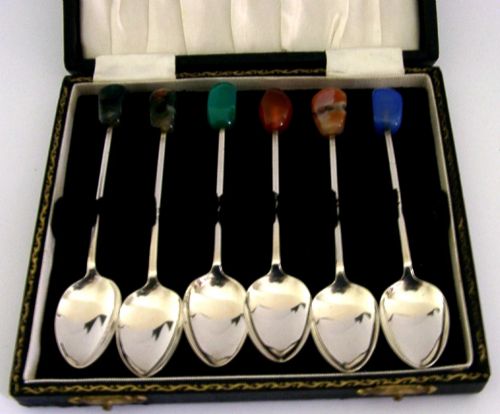
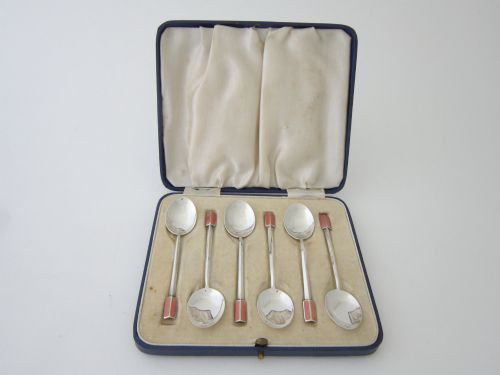
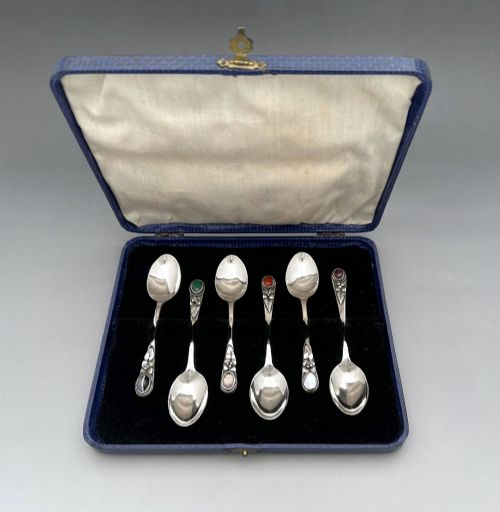
The spoons are fashioned from sterling silver or silver-gilt, with select examples incorporating decorative elements such as vitreous enamel, semi-precious stones, or agate. Metalwork techniques involve traditional silversmithing, casting, and hand-applied coloured enamel work.
Presentation cases utilise a rigid core lined internally with soft fabrics including velvet, silk, or satin to cushion the metal. Exteriors are typically finished in leatherette or textured coverings to protect the contents during storage and transport.
Cased Teaspoons Retail Price Guide 2026
Typical asking prices for cased teaspoons among the pieces listed under this phrase on Sellingantiques today, from the lower quarter to the upper quarter. They describe what is for sale here now, not the wider market.
Certain sets even commemorated rowing achievements, letting sailors stir their tea with themed Tamesis sailing club spoons.
Assessing quality and execution
The distinction between standard sets and finer examples often rests on the complexity of the decorative work, such as hand-painted guilloche enamel or custom-formed finials like seal top and apostle designs. Maker attribution also plays a role, with established silversmith firms commanding greater interest through crisp hallmarks and heavier gauge silver.
The condition and original integrity of the fitted case substantially influence the overall appeal. Sets that retain their original velvet or silk linings intact within a well-preserved exterior demonstrate careful preservation of the complete ensemble.
P A W Bateman·David Andersen·Walker and Hall·Robert Stebbings·Cooper Brothers and Sons
The Cased Teaspoons Glossary
- Hallmark
- Official stamps struck into precious metals indicating the assay office, standard of purity, and year of manufacture. These marks provide definitive historical attribution for silver pieces.
- Silver-gilt
- Sterling silver that has been coated with a thin layer of gold through a chemical or electrochemical process. This treatment gives the metal a warm golden appearance.
- Demi-tasse
- A small cup used for serving Turkish coffee or espresso, accompanied by correspondingly small spoons. These miniature utensils frequently appear in fitted presentation sets.
- Leatherette
- A synthetic material designed to imitate leather, commonly used for the durable outer casing of presentation boxes. It protects the velvet and silk interior linings.
- Guilloche
- A decorative engraving technique where a precise, intricate geometric pattern is mechanically etched into a metal surface. Enamel is frequently applied over this work to create shimmering depth.
Cased Teaspoons: Frequently Asked Questions
What are cased teaspoons?
These items are matched sets of silver spoons supplied with a dedicated fitted storage box for protection and presentation. They were traditionally produced for domestic hospitality or as formal gifting items.
The inclusion of a fitted container distinguishes them from loose cutlery drawers, keeping the set complete and shielded from tarnish when not in use.
How were cased teaspoons used?
They were utilised during formal afternoon tea or after-dinner coffee service to stir sugar or milk into hot beverages. The spoons remained in their fitted boxes until special occasions or gatherings.
Matching tongs were frequently included in the case to handle sugar lumps hygienically alongside the teaspoons.
How do I care for silver and enamel?
Silver components require occasional gentle polishing with a dedicated cloth to remove natural tarnish without harming any underlying detail. Enamelled surfaces should be kept away from harsh chemicals and extreme temperature changes.
Storing the items back inside their original velvet or silk-lined cases prevents unnecessary scratching and exposure to airborne pollutants.
How do I identify different periods?
Stylistic cues such as geometric Art Deco enamel work, organic Arts and Crafts motifs, or ornate Victorian engraving offer immediate visual clues to the era of manufacture. Examining the case exterior materials and interior lining styles provides further contextual dating.
Official silver hallmarks stamped onto the bowls or stems provide the most precise indication of the exact year and location of production.