



Cased Silver Scissors
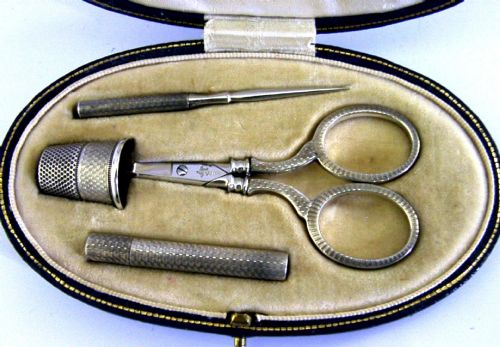
Cased silver scissors are fitted protective sets designed to preserve delicate blades and handles for the table, sewing room or travel.
Cased Silver Scissors
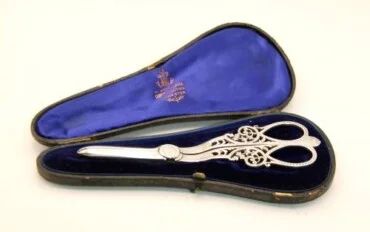
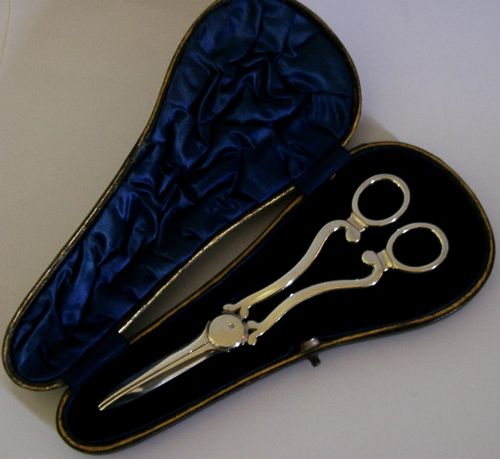
Cased silver scissors encompass specialised cutting tools housed within protective fitted boxes lined in silk or velvet, most frequently encountered as grape shears or sewing implements from the nineteenth and early twentieth centuries. These fitted sets serve both domestic utility and formal dining, protecting precious metal from tarnish and physical damage while stored between uses.
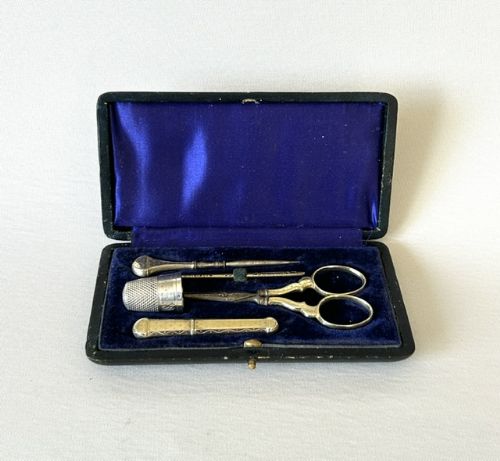
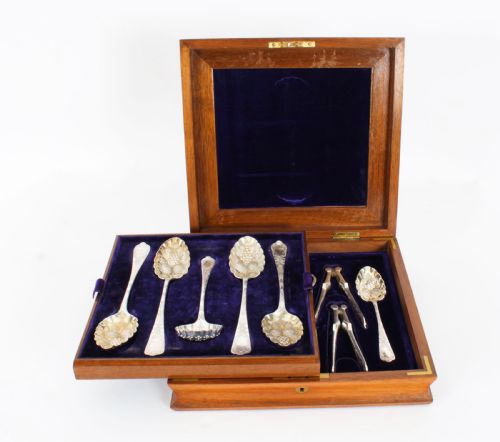
The pieces on this page span the Victorian and Edwardian eras, with a strong representation of grape shears alongside sewing compendiums, vanity sets and grooming cases. Grape scissors dominate the selection, often appearing alongside fruit knives, spoons or nutcrackers within fitted presentation boxes covered in leatherette or leather.
Origins stretch from English workshops to nineteenth-century French makers, utilising sterling silver, silver plate and steel blades housed in velvet or silk interiors. Collectors encounter various configurations, from single pairs of folding campaign scissors to comprehensive travelling valet sets and sewing boxes.
Materials and construction
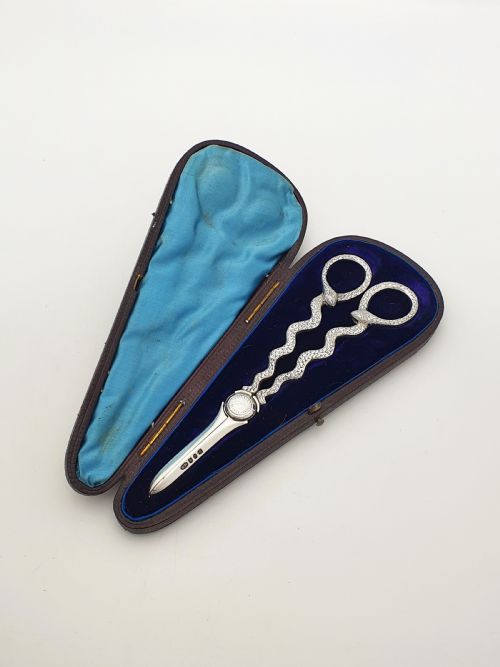
Makers combined solid sterling silver or silver plate for the handles and outer mounts with tempered steel for the cutting edges, ensuring the scissors remained functional while retaining decorative appeal. Handles frequently display cast or engraved ornamentation, ranging from foliate scrollwork to naturalistic animal motifs like snake handles.
The protective cases utilise rigid timber or card structures covered in leather, leatherette or smooth textiles, lined internally with moulded slots trimmed in silk or velvet to cradle each implement securely. Hinge work, clasps and internal partitions demonstrate precise craftsmanship designed to withstand frequent travel and daily use.
Cased Silver Scissors Retail Price Guide 2026
Typical asking prices for cased silver scissors among the pieces listed under this phrase on Sellingantiques today, from the lower quarter to the upper quarter. They describe what is for sale here now, not the wider market.
Grape shears with writhing snake handles ensure that even a modest fruit course comes with a sudden jolt of Victorian drama.
Assessing quality
Quality rests upon the crispness of the cast or engraved decoration on the silver handles and the retention of the original fitted case with its intact silk or velvet lining. Pieces by noted silversmiths command attention through superior weight, balanced proportions and clear hallmarks stamped into the metal.
The structural integrity of the storage box and the secure fit of the scissors within their dedicated recess indicate the grade of the original commission. Higher-tier examples preserve their original gilding, complete tool complements, and unblemished steel blades without excessive wear or replacement components.
Josiah Williams & Co·Wakely & Wheeler·Levi & Salaman·Mappin & Webb·Martin, Hall & Co·Hukin & Heath
The Cased Silver Scissors Glossary
- Grape shears
- Specialised scissors with broad, curved blades designed to sever fruit stems without bruising the fruit. They often feature naturalistic vine engraving or animal motifs along the handles.
- Silver gilt
- Silver that has been coated with a thin layer of gold, providing a rich yellow lustre over the white metal base. This technique is frequently observed on interior sewing components and vanity sets.
- Leatherette
- A simulated leather material used to cover the exterior of protective storage cases during the Victorian and Edwardian periods. It offers durability and a neat finish for fitted presentation boxes.
- Compendium
- A comprehensive boxed set containing multiple related implements, such as sewing tools or grooming accessories, arranged neatly within a single fitted tray.
Cased Silver Scissors: Frequently Asked Questions
What are cased silver scissors used for?
These implements served specific domestic and social rituals, primarily slicing grapes at the dining table or executing fine needlework and grooming tasks. The protective cases ensured that delicate steel blades and decorated silver handles remained pristine between uses.
Dining sets often accompanied fruit knives and nutcrackers for dessert courses, while smaller variants formed part of portable sewing companions or gentleman's travelling valet sets.
How do I care for silver scissors?
Maintenance requires gentle cleaning with a soft microfibre cloth to remove dust and tarnish without abrading engraved details or damaging textile linings. Avoid harsh chemical dips, particularly if the piece incorporates steel blades or delicate velvet interiors.
Storing the items securely within their original fitted cases protects the metal from atmospheric moisture and prevents accidental scratching of the delicate silver surfaces.
How can I tell Victorian from Edwardian pieces?
Victorian examples tend to feature heavy, ornate ornamentation, deep hand-chasing and naturalistic motifs like snakes or elaborate foliate scrolls. Cases from this era often utilise rich velvet linings and sturdy leather coverings.
Edwardian pieces generally lean towards lighter, refined proportions and cleaner neoclassical lines, reflecting changing tastes at the turn of the twentieth century. Hallmarks stamped on the silver provide definitive confirmation of the exact assay office and year of manufacture.
Are the blades made of solid silver?
Cutting edges are almost invariably fashioned from tempered steel to maintain a functional, sharp edge during use. Solid silver or silver plate was reserved for the decorative bows and handles.
This bi-metallic construction ensures the scissors function properly while presenting a polished silver appearance when viewed inside the fitted presentation box.