




Cased Silver Knife
A cased silver knife brings fitted presentation cases and fitted interiors to dining tables, offering secure storage and display for formal cutlery.
Cased Silver Knife
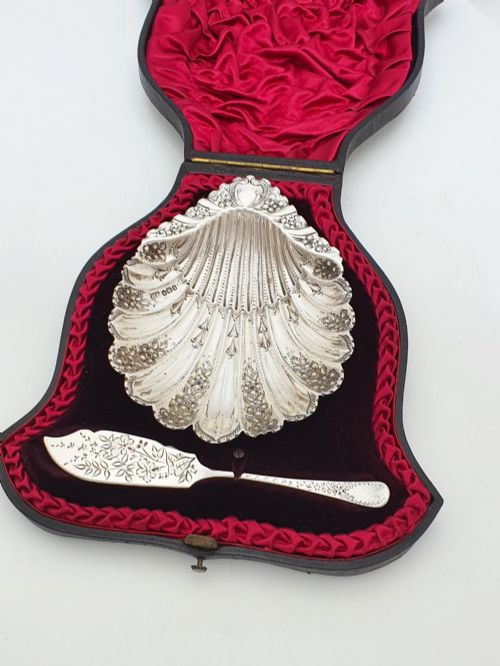
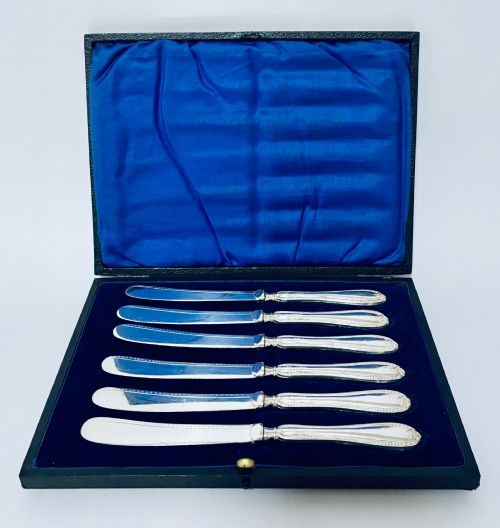
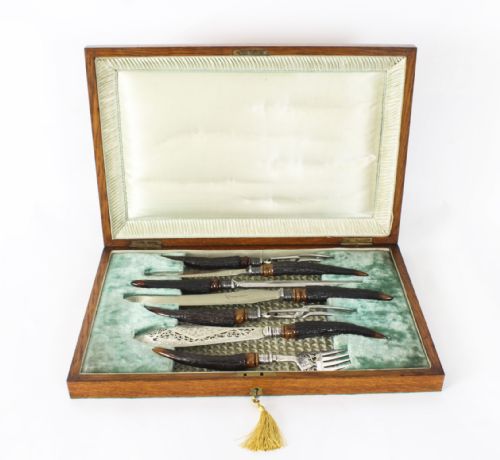
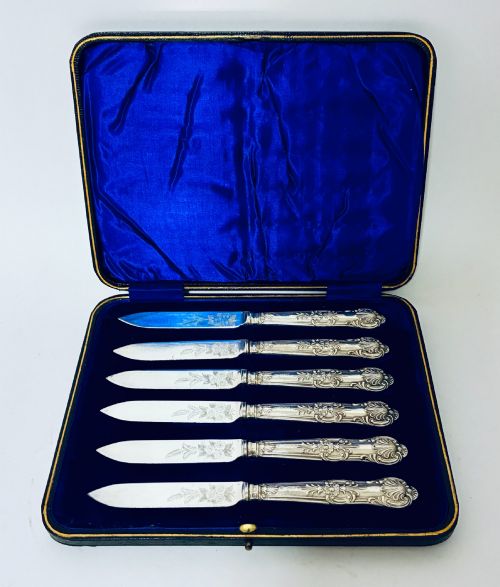
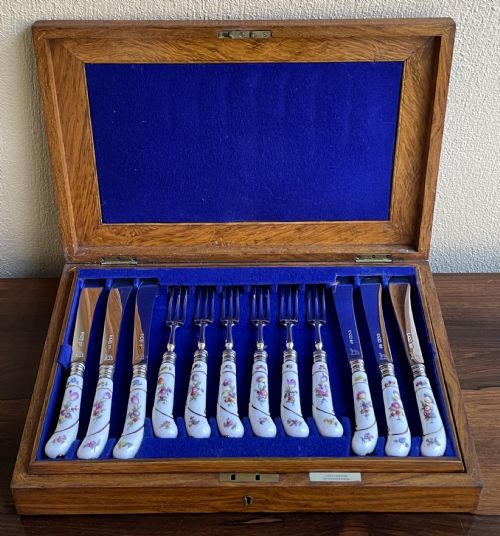
A cased silver knife brings together individual eating utensils and fitted presentation boxes, often appearing in sets of butter knives, dessert knives, fruit knives, or serving implements. These pieces span the Victorian, Edwardian, and George V periods, showing how dining culture developed elaborate presentation methods for specific dining tasks.
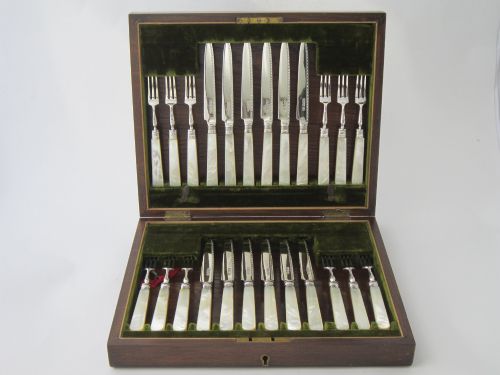
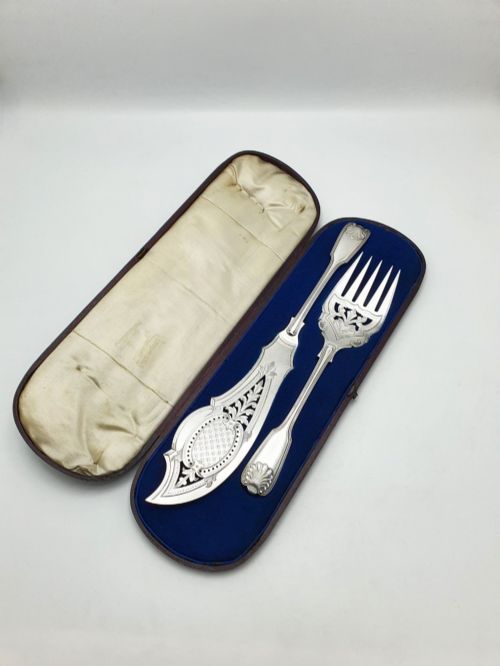
Buyers most frequently encounter sets of butter knives, dessert sets, and fish servers housed in tailored boxes lined with velvet or silk. The forms range from single fruit knives with cast silver blades to comprehensive cutlery sets and christening gifts designed for domestic display and use.
Materials and construction
The construction relies on sterling silver or silver plate combined with functional cutting edges of steel, alongside handles shaped from mother of pearl, antler horn, wood, and porcelain. Blades feature engraved decoration, while handles are shaped to fit the hand comfortably.
Storage boxes utilise wood frames lined with tactile fabrics such as velvet and silk to protect the metal and mother of pearl components during storage and transport.
Cased Silver Knife Retail Price Guide 2026
Typical asking prices for cased silver knife among the pieces listed under this phrase on Sellingantiques today, from the lower quarter to the upper quarter. They describe what is for sale here now, not the wider market.
Listings feature items spanning the Victorian, Edwardian, and George V periods, incorporating sterling silver, silver plate, steel, mother of pearl, velvet, and silk.
Assessing quality and craftsmanship
Quality rests in the crispness of the blade engraving, the precise fit of the implements within their lined boxes, and the integrity of natural handle materials like mother of pearl and antler horn. Superior examples maintain intact silk and velvet linings alongside robust structural joints between blade and handle.
Makers demonstrate skill through balanced proportions in multi-piece dessert and fish serving sets, where every element matches the aesthetic of the fitted case.
The Goldsmiths & Silversmiths·Carrington·Waring & Gillows
The Cased Silver Knife Glossary
- Sterling silver
- An alloy containing 925 parts of pure silver per thousand, commonly used for the construction of high-quality cutlery handles and blades. This standard metal mark provides assurance of silver content.
- Silver plate
- A base metal substrate coated with a thin layer of pure silver, offering the visual appeal of solid silver at a different production tier. Items using this technique appear frequently in serving sets.
- Mother of pearl
- The iridescent internal layer of mollusc shells, shaped and polished to form smooth handle scales for fruit and dessert knives. This organic material requires careful handling.
- Antler horn
- Natural horn material derived from deer antlers, carved and textured to create durable, tactile handles for carving and serving sets. Each handle shows unique natural grain patterns.
Cased Silver Knife: Frequently Asked Questions
What are cased silver knives used for?
These implements serve specialised dining functions such as spreading butter, cutting fruit, serving fish, or handling desserts during formal meals. The fitted cases ensure the items remain organised and protected between uses.
They also function as presentation pieces, often given as christening gifts or commemorative sets housed in velvet and silk-lined boxes.
How do I care for silver knives?
Cleaning requires gentle polishing with appropriate silver cloths to avoid damaging engraved surfaces or delicate handle materials like mother of pearl and porcelain. Storage should take place within the original fitted cases to prevent scratching.
Keeping the items away from excessive moisture preserves the wooden boxes and the velvet or silk linings.
How can I tell Victorian from Edwardian sets?
Victorian pieces often display heavier ornamentation, deeply engraved floral motifs, and robust sterling silver construction typical of the nineteenth century. Cases from this era frequently feature darker wood finishes and rich velvet interiors.
Edwardian sets tend to incorporate lighter aesthetic lines, often combining steel blades with mother of pearl handles or pairing silver with cut glass knife rests in brighter satin linings.
Are these knives suitable for daily use?
Many sets remain robust enough for regular dining, particularly sterling silver butter knives and solid fruit sets. Hand washing helps maintain the integrity of organic handles and delicate blade engraving.
Care should be taken with antique mother of pearl and horn handles, which benefit from avoidance of dishwashers and harsh detergents.