




Cased Silver Forks
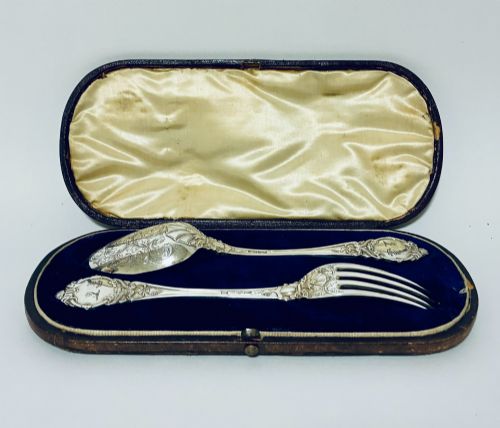
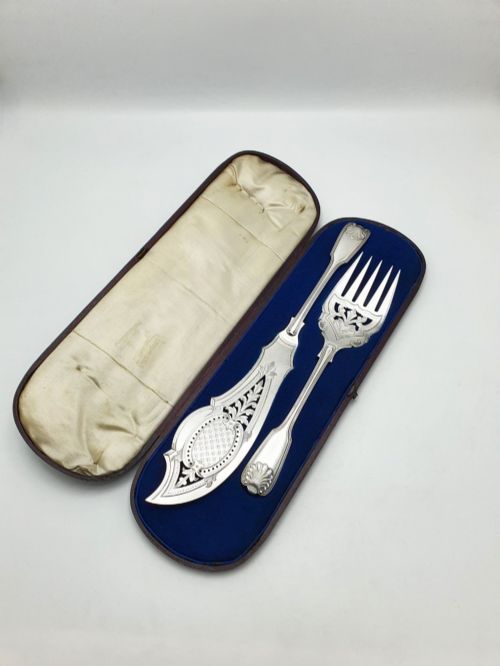
These cased silver forks span utilitarian fish servers and delicate christening sets, preserved in fitted presentation boxes lined with silk or velvet.
Cased Silver Forks
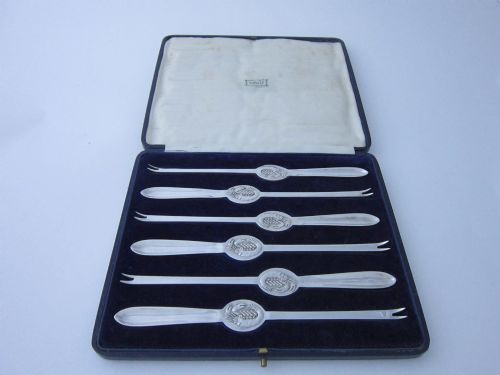
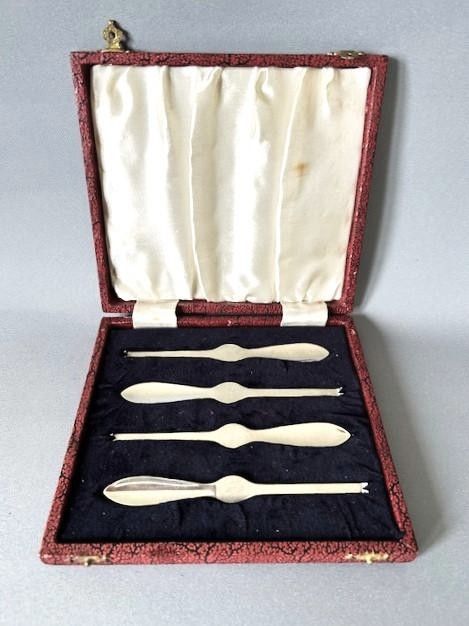
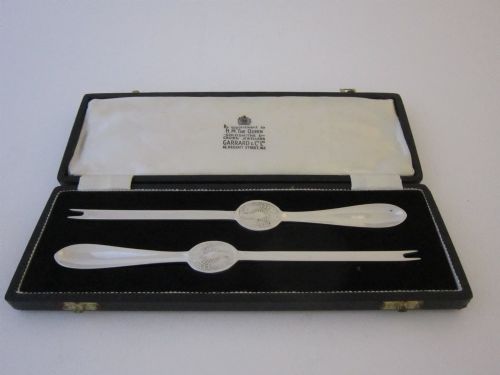
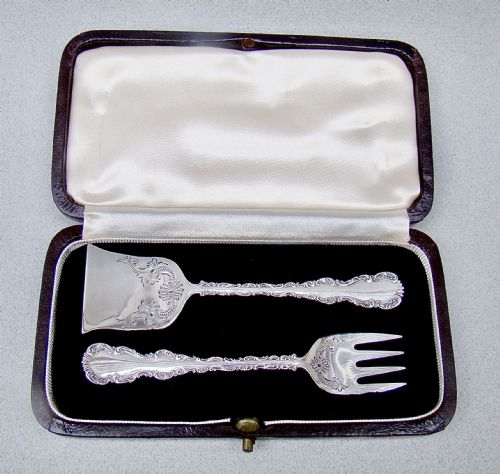
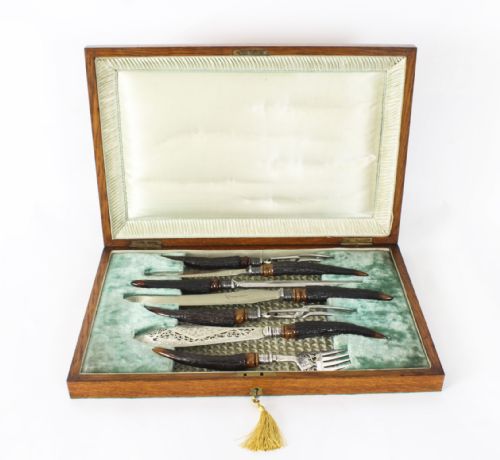
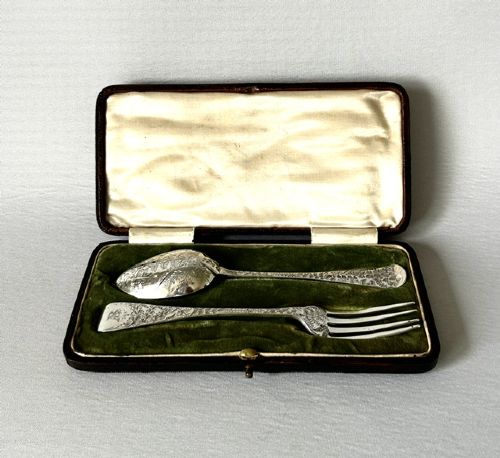
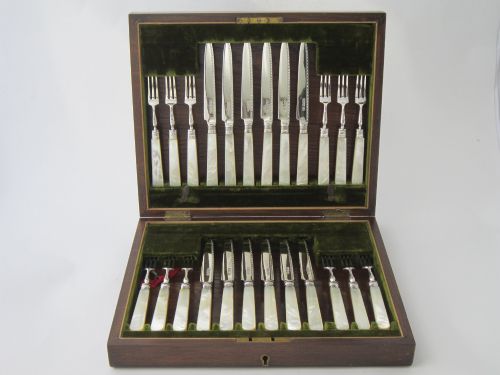
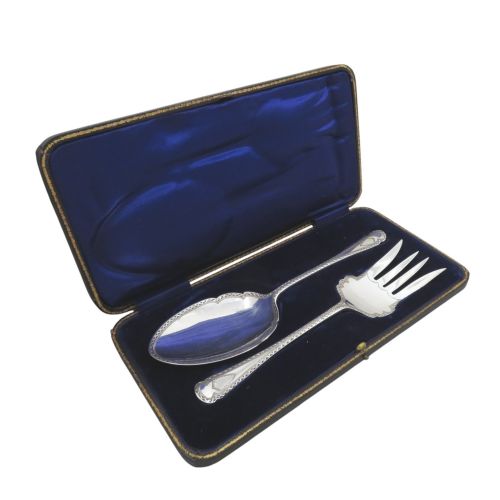
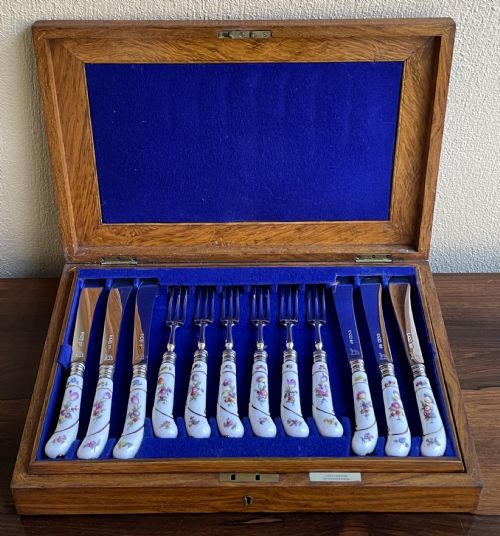
When you search for cased silver forks, you encounter sets designed for specific dining and presentation purposes across the Victorian, Edwardian, and mid-century periods. These items encompass distinct categories such as Christening sets, fish servers, lobster picks, dessert sets, and bread forks.
The most common variants on this page are Victorian and Edwardian iterations, frequently housed in fitted wooden or leatherette cases lined with velvet or silk. They range from single specialty items like bread forks to matching multi-piece dessert and seafood services.
Materials and construction
Items in this category utilise solid sterling silver or silver plate for the metal components, often combined with organic handles made from mother-of-pearl, antler horn, or porcelain. Metalwork techniques involve intricate engraving, chasing, and pattern stamping such as the Coburg design.
Protective outer housings are constructed from wood, leather, or textured leatherette, while interiors rely on soft textiles like silk and velvet to cradle each specific utensil securely within custom recesses.
Cased Silver Forks Retail Price Guide 2026
Typical asking prices for cased silver forks among the pieces listed under this phrase on Sellingantiques today, from the lower quarter to the upper quarter. They describe what is for sale here now, not the wider market.
Several dining sets include specialised implements for extracting lobster and crab meat with utmost propriety.
Factors of distinction
Distinctions in quality arise from the purity of the metal, evidenced by sterling silver standards versus silver plate, alongside the specialised skill required to shape organic handle materials like mother-of-pearl and antler horn.
The sophistication of the enclosing case contributes significantly, where custom-fitted wooden boxes lined in quality silk or velvet denote higher-tier presentation than standard leatherette alternatives.
Henry Wilkinson·Garrard·Suckling Ltd·Carrington·William Devenport·Harrods·Waring and Gillows·Thomas Harwood and Co·John Round
The Cased Silver Forks Glossary
- Sterling silver
- A silver alloy containing 92.5 percent pure silver and 7.5 percent other metals, usually copper. This standard is frequently denoted by hallmarks on the metal.
- Silver plate
- A base metal substrate coated with a thin layer of pure silver. This technique offered an accessible alternative to solid sterling silver utensils.
- Mother-of-pearl
- The iridescent inner layer of pearl oyster and freshwater mussel shells. It is shaped into smooth, decorative handles for cutlery.
- Christening set
- A matched group of utensils, often a fork, knife, and spoon, presented as a traditional gift for an infant. These are commonly housed in fitted presentation boxes.
- Fish servers
- A paired fork and knife or slice designed for serving fish dishes. They often feature broad, heavily engraved blades and tines.
Cased Silver Forks: Frequently Asked Questions
What are cased silver forks used for?
These utensils were created for specific dining tasks, including serving fish, eating lobster or seafood, and enjoying desserts or afternoon tea.
Many sets were also designated for ceremonial or gift purposes, such as Christening presents for children, keeping the individual pieces protected together.
How do I identify the period of a set?
Dating relies primarily on official hallmarks stamped into the silver, which indicate the assay office and year of manufacture.
Stylistic indicators, such as Victorian engraving patterns, Edwardian forms, or mid-century modern design cues, also help determine the era.
What materials are handle components made from?
Handles are fashioned from traditional materials like mother-of-pearl, antler horn, and porcelain, alongside solid silver or silver-plated metal.
Organic materials provide distinct tactile qualities and visual contrast against the polished metal tines.
How should I store cased sets?
The original fitted boxes are designed to keep the utensils secure and minimise movement that could cause scratching or wear.
Keeping the pieces inside their velvet or silk-lined wooden or leatherette cases helps protect both the metal and the delicate handle materials from environmental exposure.