



Cased Perfume Bottle
A cased perfume bottle brings together fine glass and protective housing in portable luxury from the Georgian, Victorian, and Edwardian eras.
Cased Perfume Bottle
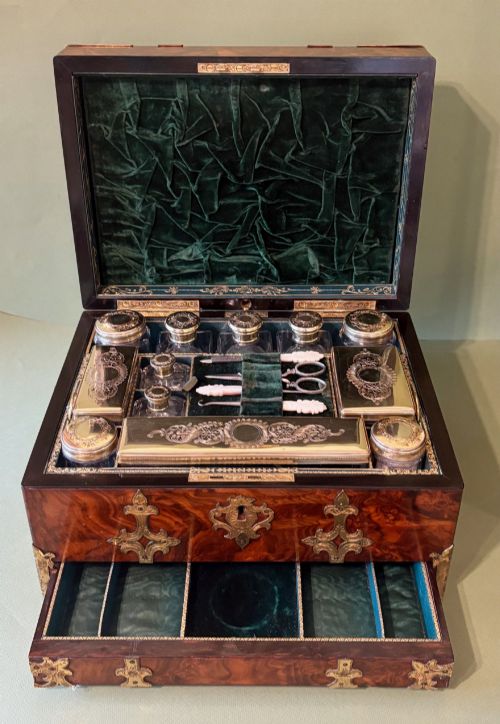
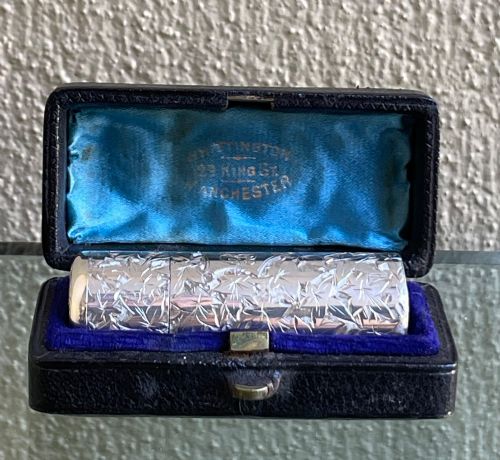
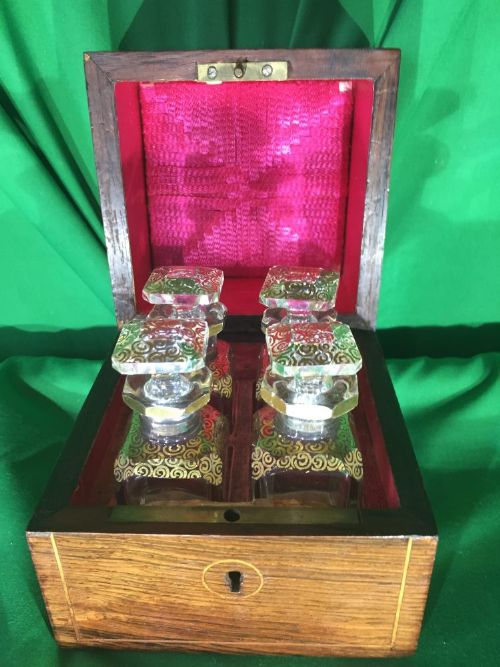
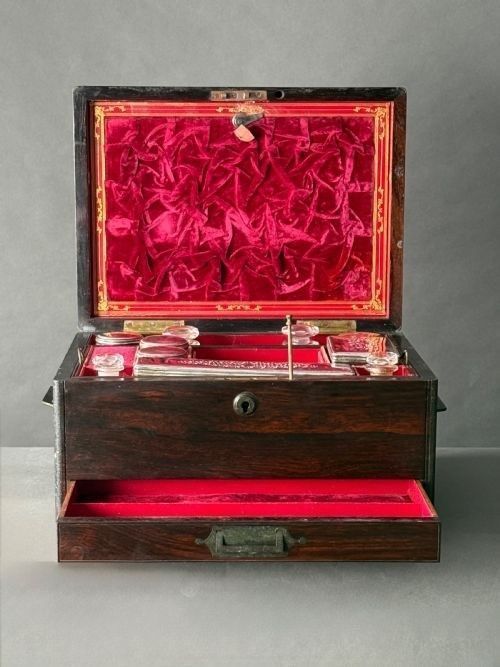
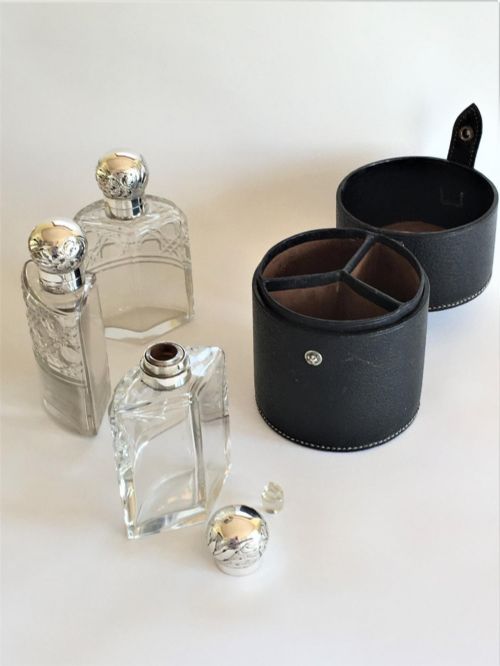
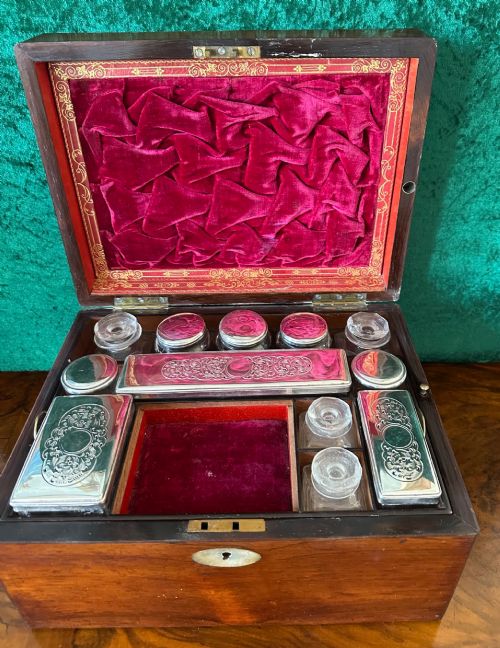
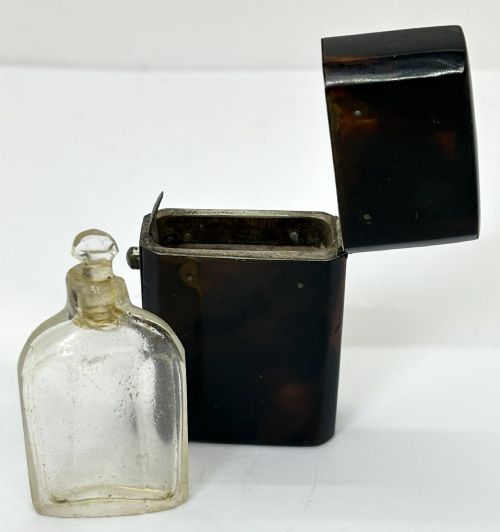
When you search for cased perfume bottle, you encounter portable scent containers housed in dedicated boxes, caskets, and travelling sets designed for the vanity or journey. These pieces range from single scent bottles protected in leather or tortoiseshell holders to elaborate rosewood and coromandel boxes fitted with multiple crystal cut bottles.
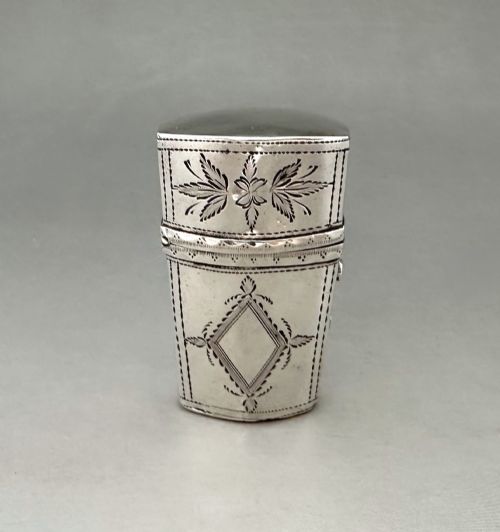
The version you are most likely to meet on this page is a Victorian or Edwardian creation featuring sterling silver mounts and cut glass, often arranged in pairs or trios within a hinged wooden case. Alongside these sit Georgian tortoiseshell etuis and French travelling vanity cases housing delicate glass scent containers.
Materials and technique
Makers constructed the protective housings using dense hardwoods like rosewood and coromandel, alongside brass bound leather and tortoiseshell, often lining the interiors with velvet or silk to secure the glass. Metalwork elements such as sterling silver and silver-gilt were chased, embossed, or cast to form secure caps and decorative mountings.
The bottles themselves utilise clear or coloured glass, including opaline and overlay glass, shaped by cutting and moulding techniques to catch the light. Skilled craftspeople also employed carved bone, ivory, and fruitwood to build intricate etuis and caskets tailored to individual scent containers.
Listings feature pieces spanning the Georgian, Victorian, and Edwardian periods, constructed from rosewood, coromandel, tortoiseshell, and sterling silver.
What varies in quality
Quality rests in the integration between the outer case and its internal fittings, where precision in the partitions determines whether the bottles rest securely without movement. Superior examples exhibit matched sets of crystal cut or overlay glass bottles with fully intact stoppers and crisp hallmarks on the silver mounts.
The distinction between standard containers and finer works also appears in the choice of exterior materials, such as figured coromandel or intricately inlaid tortoiseshell, paired with sophisticated locking mechanisms and well-preserved velvet linings.
Horton & Allday·Asprey·Harrach
The Cased Perfume Bottle Glossary
- Casket
- A small ornamental box or chest used for holding valuables or perfume bottles. These pieces often feature hinged lids and fitted velvet interiors.
- Etui
- A small case for holding needles, cosmetics, or scent bottles. Georgian examples frequently incorporate specialised tools alongside the perfume container.
- Overlay glass
- Glass formed with two or more distinct layers of different colours. The outer layer is partially cut away to reveal the contrasting colour beneath.
- Silver-gilt
- Silver that has been plated with a thin layer of gold. This treatment provides a rich golden finish while utilising a silver base.
- Coromandel
- A dense, heavily grained exotic timber prized for fine nineteenth-century boxes. Its dark brown colour and striking figure elevate the status of travelling cases.
Cased Perfume Bottle: Frequently Asked Questions
What is a cased perfume bottle?
A cased perfume bottle is a portable scent container supplied with its own dedicated protective housing, which ranges from simple leather sleeves to elaborate velvet-lined wooden boxes.
These housings protected fragile glass vessels during travel and served as decorative objects on dressing tables.
How were cased perfume bottles used?
Owners carried personal fragrances during travel or kept them on dressing tables for daily grooming. Fitted cases held not just the bottles, but occasionally auxiliary items like funnels and instruments.
Multiple bottles within a single case allowed the owner to carry different scents or fresh cologne while away from home.
How do I date a cased scent bottle?
Dating relies on hallmarks stamped on silver mounts, material choices, and case construction styles typical of Georgian, Victorian, or Edwardian manufacturing.
Silver components often bear maker marks and date letters that pinpoint the exact year of production.
Are all the bottles original to their cases?
Most surviving sets retain their original fitted interiors and matching bottles, though some configurations have been assembled over time to replace missing elements.
Inspecting the snugness of the fit and consistency of the glass style helps determine if the bottles belong to the case.