

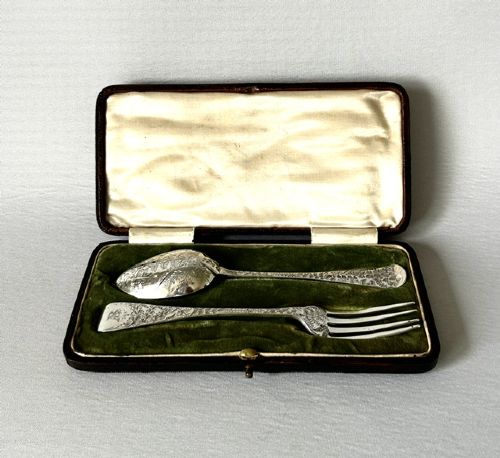
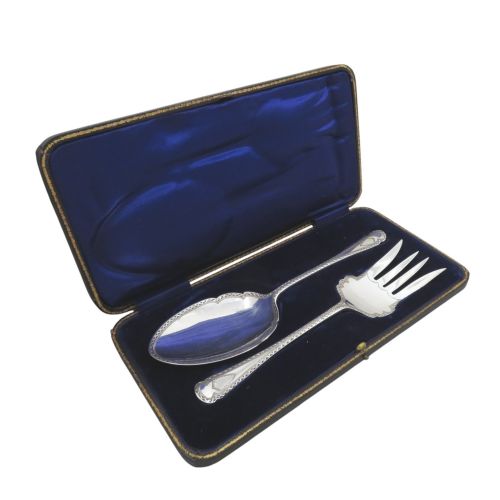
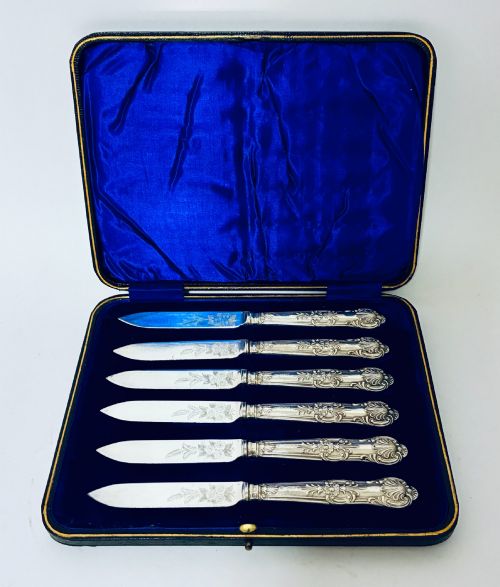
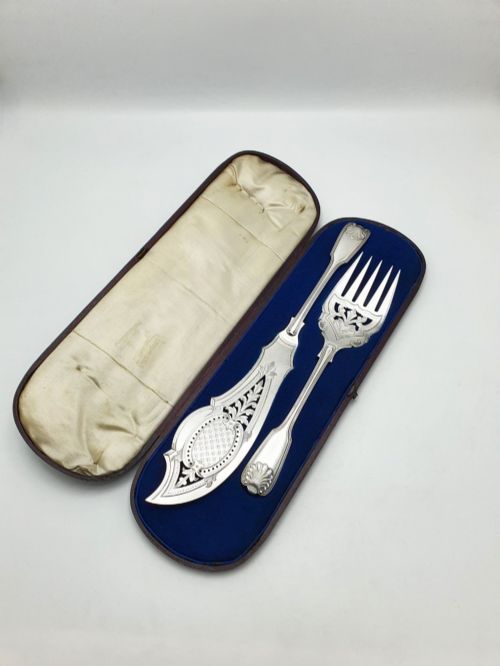


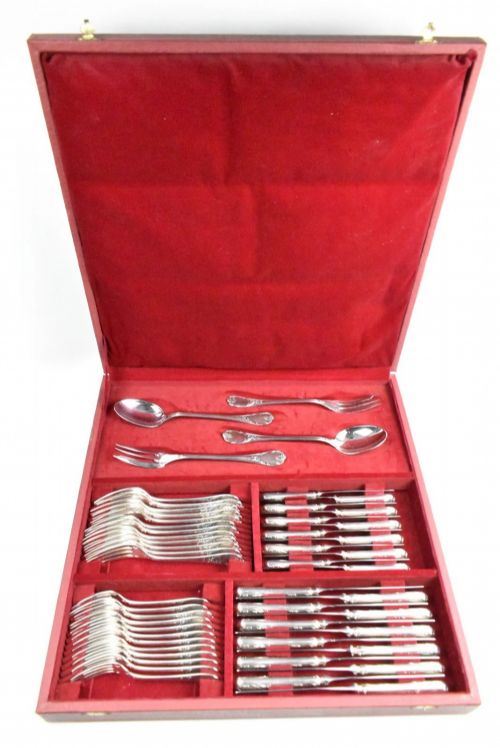

Cased Flatware Set
A cased flatware set brings together matched cutlery and purpose-built presentation boxes from the Georgian, Victorian, Edwardian, and Art Deco eras.
Cased Flatware Set
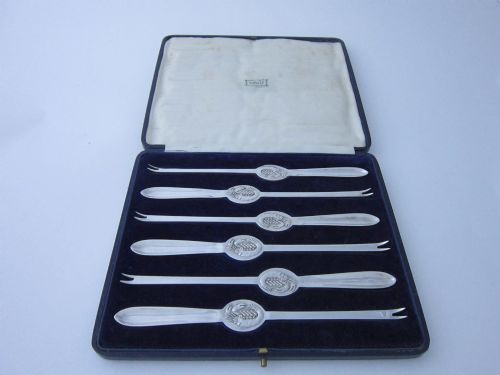
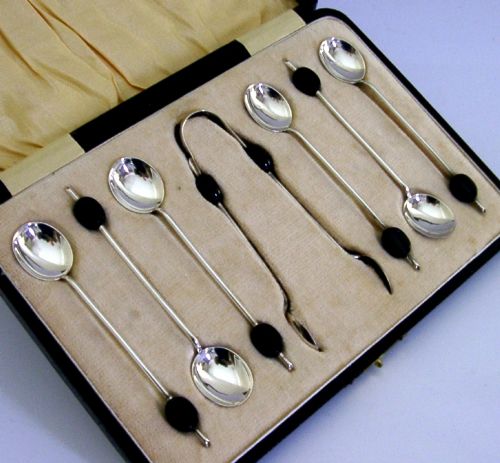
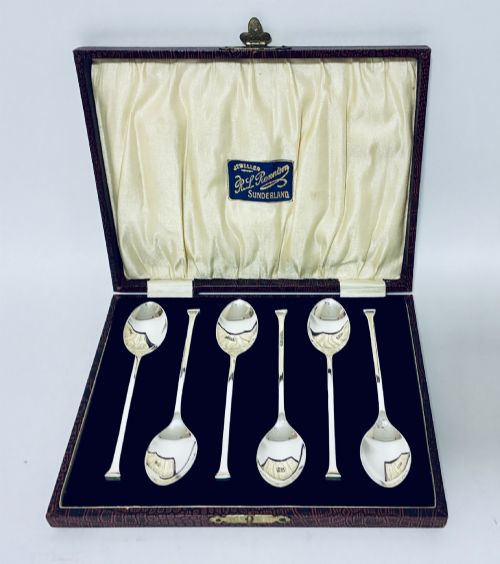
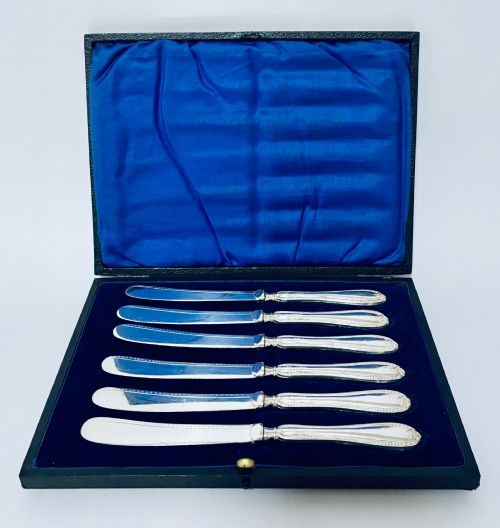
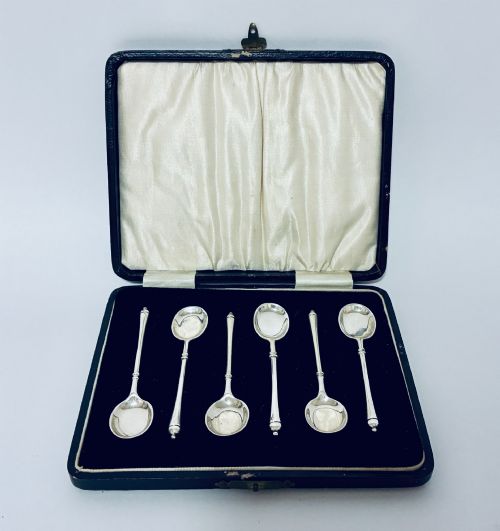
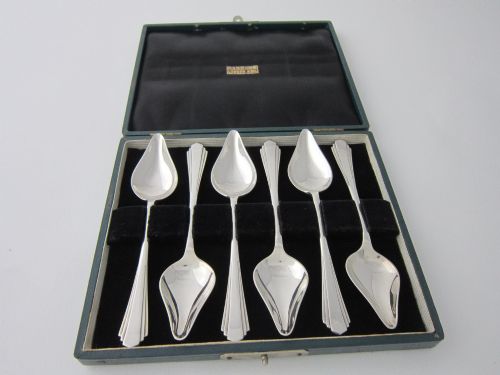
A cased flatware set comprises coordinated pieces of cutlery, ranging from butter knives and teaspoons to fish servers and large dining services, housed in fitted containers. You will frequently encounter Victorian and Edwardian services alongside Art Deco and 1930s sets on this page.
The contents vary from small christening groups and seafood picks to full table settings with serving spoons and forks. These items were designed for storage and presentation, keeping delicate silver and plated wares safe when not in use on the dining table.
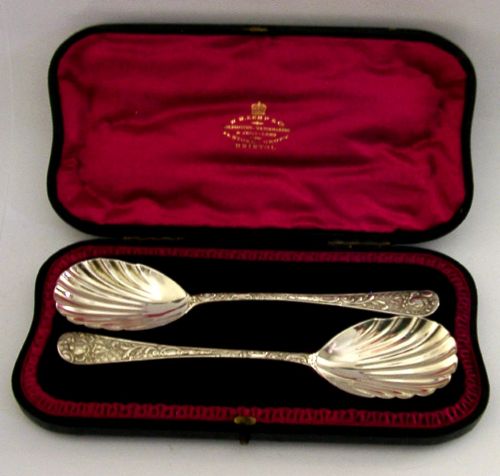
Pieces often span distinct domestic uses, such as dessert services, fruit knives, and berry spoons. Each arrangement reflects the dining customs and social rituals of its specific period of manufacture.
Materials and methods of construction
Makers utilised sterling silver, silver plate, steel, and mother-of-pearl for the cutlery itself, employing techniques like chasing, engraving, and silver-gilding to decorate the surfaces. Some specialised pieces also incorporate enamel or horn.
The protective cases rely on sturdy wooden frames covered in materials such as leatherette, velvet, satin, and silk. Interiors are typically moulded to fit the exact contours of the utensils, often lined with soft fabric to prevent scratching.
Cased Flatware Set Retail Price Guide 2026
Typical asking prices for cased flatware set among the pieces listed under this phrase on Sellingantiques today, from the lower quarter to the upper quarter. They describe what is for sale here now, not the wider market.
Lobster picks and grapefruit spoons remind us that earlier generations invented specialised metal tools for every conceivable dietary hurdle.
Variations in quality
Quality rests upon the weight and purity of the metal, the crispness of the chased or engraved decoration, and the integrity of the fitted case. Solid sterling silver sets naturally command greater regard than silver-plated alternatives.
The craftsmanship of the presentation box is equally telling, marked by the durability of the outer covering, the precise fitting of the internal lining, and the quality of the hinges and clasps.
Deakin & Francis·Christofle Marly·Suckling Ltd·John Locker·P A W Bateman
The Cased Flatware Set Glossary
- Flatware
- Utensils used for eating, serving, and cutting food, encompassing items like spoons, forks, and knives. These are frequently grouped together in fitted presentation boxes.
- Silver-Gilt
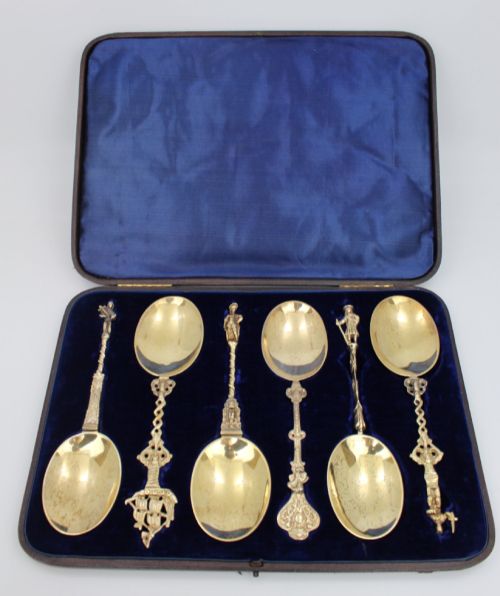
- Silver that has been coated with a thin layer of gold on its surface. This technique provides a rich, two-tone appearance often seen on apostle spoons and presentation flatware.
- Serving Set
- A matched group of larger utensils designed for distributing food at the table, such as fish servers, berry spoons, or carving instruments. They often appear alongside smaller pieces in fitted boxes.
- Apostle Spoon
- A spoon featuring the figure of an apostle or saint cast or engraved on the terminal of the handle. These traditional designs appear singly or in matched sets within fitted cases.
- Leatherette
- A synthetic material manufactured to imitate leather, commonly used to cover the exterior of cutlery presentation cases during the late nineteenth and twentieth centuries.
Cased Flatware Set: Frequently Asked Questions
What periods do these cased flatware sets come from?
The listings span the Georgian, Victorian, Edwardian, and Art Deco periods, extending through the 1930s and 1940s. Each era brings distinct decorative styles and handle materials to the cutlery.
Victorian and Edwardian examples appear frequently, alongside earlier Georgian items and later twentieth-century silver-plated services.
Were these sets used for everyday dining?
Many cased sets were designated for special dining occasions, dessert courses, or specific foods like fish, fruit, and seafood. Christening sets and tea services were also given as gifts.
Because they were kept in protective boxes, they often survived in better condition than un-cased cutlery used for daily meals.
How do I care for silver flatware and its case?
Store the cutlery inside its fitted box to protect the metal from tarnishing and to prevent the pieces from scratching against one another. Clean the silver gently with appropriate polishes when necessary.
Keep the velvet or silk linings dry and avoid exposing the leatherette or wooden cases to direct sunlight and damp environments.
Can I mix pieces from different cased sets?
Mixing pieces is possible for general use, but matching the pattern, maker, and period ensures a cohesive display within the box. Sets were originally designed as harmonious units.
Checking the hallmarks and engraving styles helps identify whether all items in a presentation case belong to the same original production.