



Cased Dessert Flatware
Cased dessert flatware brings together knives, forks, spoons, and serving pieces housed in fitted presentation boxes for fruit and sweet courses.
Cased Dessert Flatware
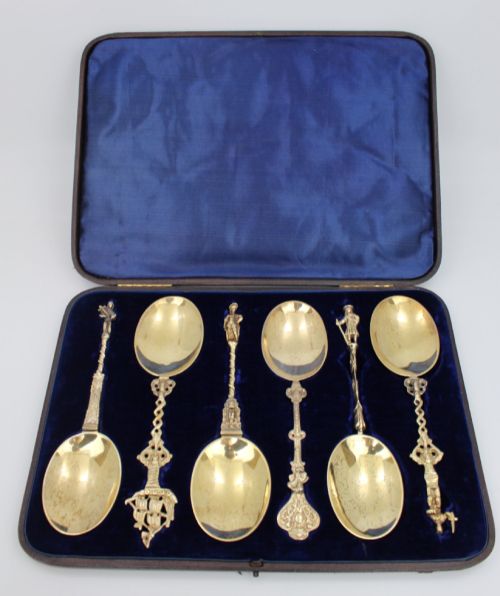
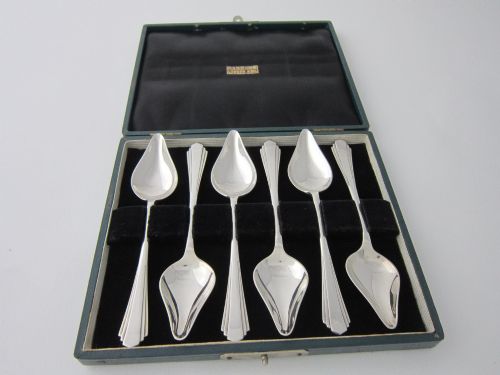
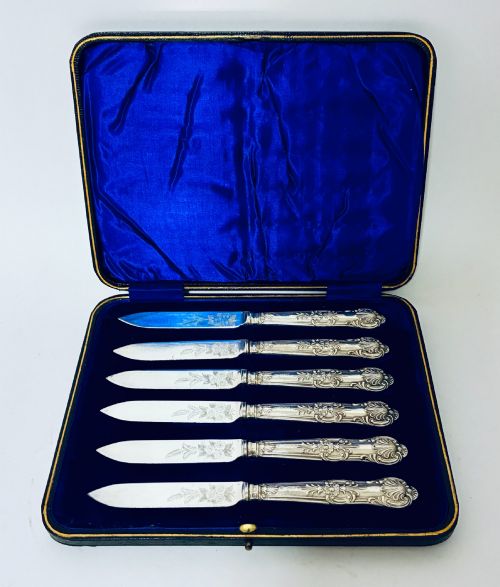
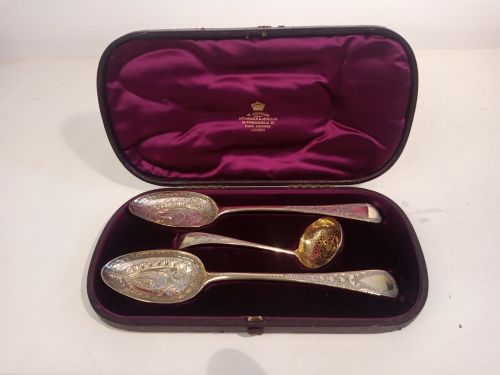
Cased dessert flatware comprises matched sets of cutlery designed specifically for the final course of a meal, housed in fitted boxes lined with protective fabrics. When searching for cased dessert flatware, buyers encounter sets for fruit, cake, grapefruit, and berries, alongside serving spoons and knives.
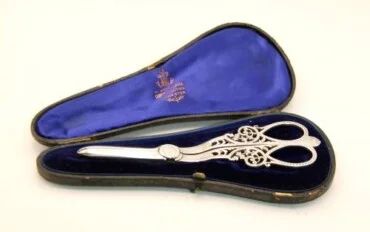
The selections available span several distinct periods, most notably the Georgian, Victorian, Edwardian, and Art Deco eras. Forms range from solitary grape scissors and serving pairs to comprehensive settings of six knives and forks.
Originating largely from British workshops and domestic dining traditions, these items reflect the formal dining habits of the nineteenth and twentieth centuries. The primary presentation formats utilise hinged wooden boxes lined with velvet, silk, satin, or leatherette to secure each utensil.
How they were made
Manufacturing methods rely heavily on sterling silver and silver plate for blades, bowls, and tines, paired with handles shaped from mother of pearl or worked in solid silver. Certain items incorporate steel blades alongside pearl handles, particularly in Edwardian and Victorian examples.
Enamel work appears on specific twentieth-century pieces to add colour and decorative detail to spoon handles. Metals undergo casting and forging processes, while cases utilise timber foundations covered in leatherette and fitted with internal linings of satin, silk, or velvet.
Cased Dessert Flatware Retail Price Guide 2026
Typical asking prices for cased dessert flatware among the pieces listed under this phrase on Sellingantiques today, from the lower quarter to the upper quarter. They describe what is for sale here now, not the wider market.
Listings feature sterling silver, silver plate, mother of pearl, velvet, and leatherette across Georgian, Victorian, Edwardian, and Art Deco periods.
What varies in quality
Quality differences lie in the weight and gauge of the silver used for the utensils, as well as the precision of the fit within the storage case. Thicker gauge metal provides greater durability and a more substantial feel in the hand during use.
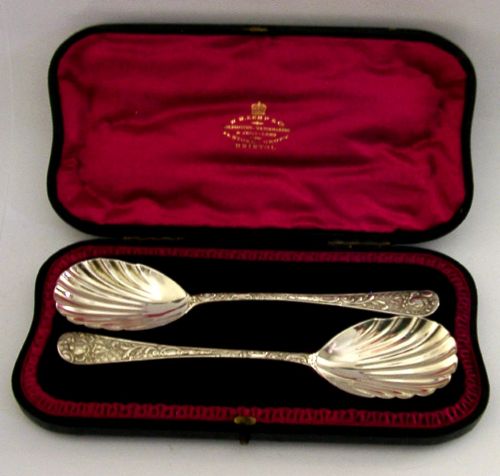
The choice of handle material and the complexity of surface decoration, such as cast or chased foliate patterns on berry spoons, distinguish standard utility items from finer presentation pieces. The condition of the original lining materials and the structural integrity of the outer box also influence the overall standard of a set.
The Cased Dessert Flatware Glossary
- Berry spoon
- A large serving spoon with fruit motifs chased or embossed into the bowl, typically dating from the Georgian or Victorian periods. These pieces were adapted for serving soft fruits.
- Mother of pearl
- The iridescent internal layer of pearl oyster shells utilised for knife and fork handles. This material offers a smooth tactile surface and a distinctive pale lustre.
- Leatherette
- A simulated leather material employed to cover the exterior of presentation cases during the twentieth century. It provides a durable protective outer shell for the fitted wooden box.
- Cast blade
- A metal blade formed by pouring molten silver into a mould rather than cutting it from a flat sheet. This technique permits deeper relief work and shaping.
- Canteen
- A fitted box or cabinet designed specifically to store a complete set of cutlery. These containers keep flatware organised and protected from tarnishing.
Cased Dessert Flatware: Frequently Asked Questions
What is cased dessert flatware used for?
These sets were produced for dining rooms where fruit, cakes, and desserts required dedicated utensils rather than main course cutlery.
Specific pieces served specialised functions, such as grapefruit spoons with serrated edges or sugar sifters paired with berry spoons.
How do I identify the period of a set?
Stylistic clues such as geometric Art Deco lines or ornate Victorian floral chasing help assign a set to its era. Materials like mother of pearl handles and fitted velvet boxes also point to specific manufacturing decades.
Hallmarks stamped onto the silver components provide the most precise indication of date and origin.
How should I store these sets?
Keeping the utensils inside their original fitted case protects the metal from excessive air exposure and minimises tarnishing. The internal velvet or satin linings cushion each piece to prevent scratching.
Store the boxes in stable environmental conditions away from direct sunlight and dampness to preserve both the timber and the fabric.
Can I use these utensils daily?
Many buyers incorporate these items into modern dining routines for special meals and dessert courses. Hand washing protects delicate handle materials like mother of pearl and keeps vintage silver in good condition.
Avoiding dishwasher use prevents damage to both the antique metal and the original fitted presentation boxes.