

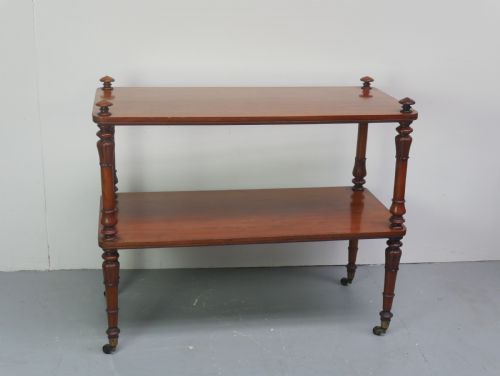
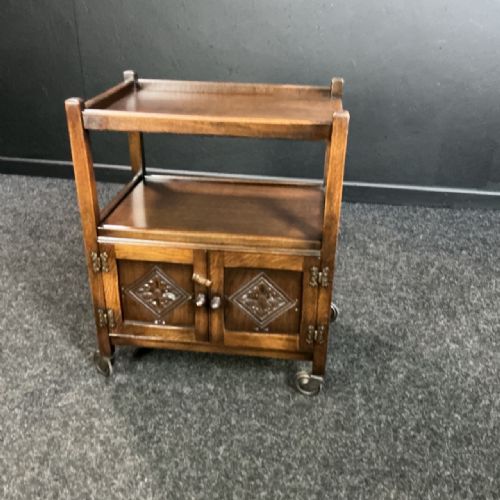


Carving Trolley
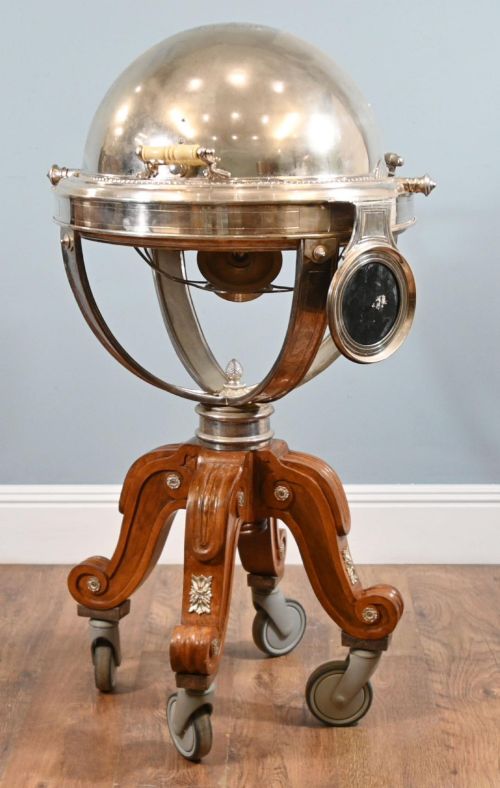
A carving trolley brings heavy service pieces to the dining room with wheeled convenience.
Carving Trolley
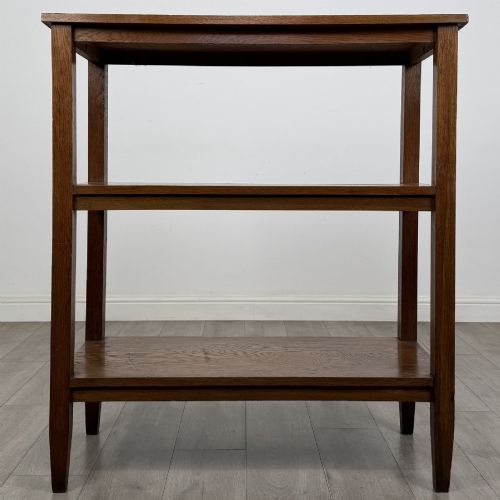
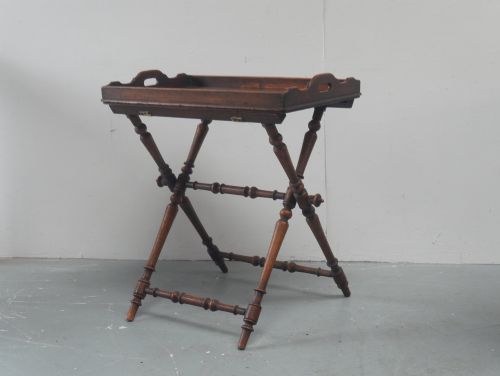
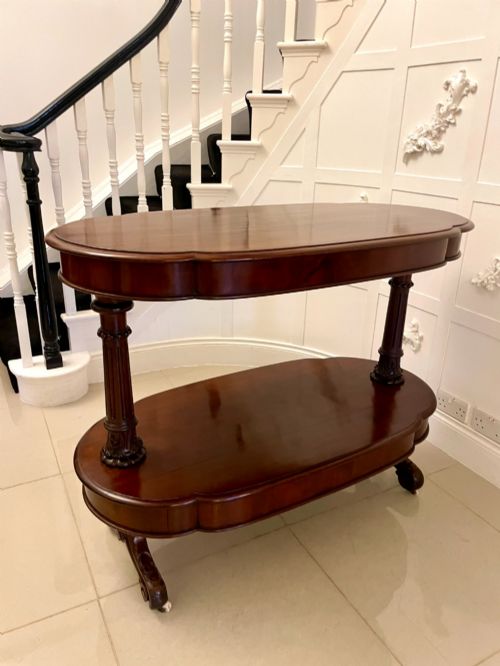
When you search for a carving trolley, you meet utilitarian dining furniture designed to hold joints, bottles, and service wares close to the table. These pieces span the Georgian, Victorian, and Edwardian eras down to the 1930s.
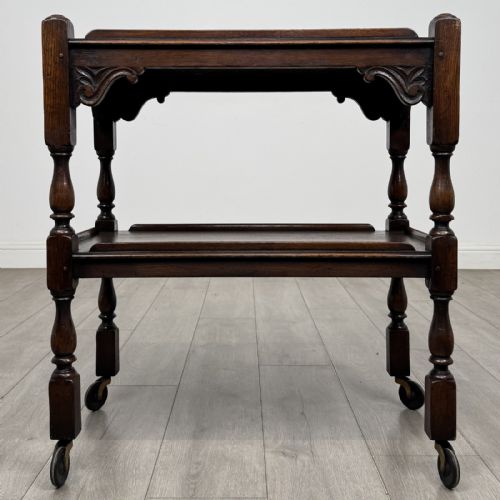
The form crosses paths with dumbwaiters, tiered stands, buffets, and tea trolleys. Mahogany and oak dominate the material record, frequently accompanied by walnut, hardwood, brass, and glass.
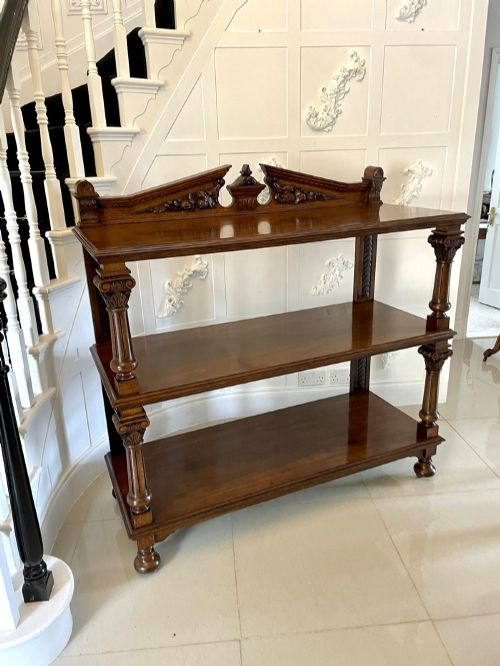
You encounter three-tier étagères, rise-and-fall mechanisms, and wheeled servers with lift-off trays. Styles stretch from Jacobean Revival and William IV to Chinese Export and French Folk Art.
Factors of quality
The standard of timber selection and depth of carving separate utilitarian workshop output from finer cabinet work. Dense grain, well-figured mahogany, and crisp hand-carved oak details elevate a piece.
Mechanisms dictate utility, distinguishing simple static shelves from fully adjustable rise-and-fall tiers and smooth-rolling castors. Solid construction at the joints ensures the piece bears heavy service weight without wobble.
Carving Trolley Retail Price Guide 2026
Typical asking prices for carving trolley among the pieces listed under this phrase on Sellingantiques today, from the lower quarter to the upper quarter. They describe what is for sale here now, not the wider market.
Listings span from the Georgian period through the Victorian and Edwardian eras into the 1930s, utilising mahogany, oak, walnut, and brass.
Maple & Co
The Carving Trolley Glossary
- Dumbwaiter
- A multi-tiered piece of dining room furniture used for holding food and dishes without the need for servants. These often feature revolving or tiered shelves.
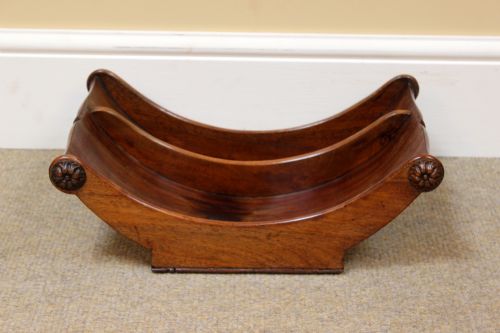
- Cheese coaster
- A small wheeled tray or dish carriage designed to glide along the dining table for passing cheese or fruit. They appear in mahogany and oak.
- Étagère
- A set of open shelves for displaying or serving items, arranged in multiple tiers. The form provides vertical storage on slender uprights.
- Barley twist
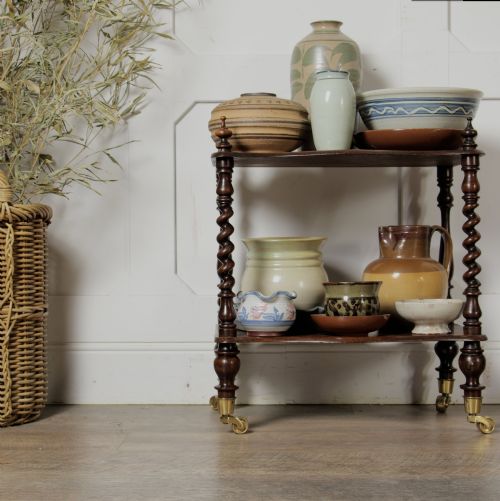
- A spiral turning technique applied to wooden furniture legs and supports. It was popular across Victorian and revival periods.
- Rise and fall
- A mechanical function allowing tiers on a dumbwaiter or buffet to adjust in height. This enables varying clearance between shelves.
Carving Trolley: Frequently Asked Questions
What is a carving trolley used for?
A carving trolley serves as a mobile station for holding joints of meat, heavy dishes, and service items during dining.
It allows hosts to wheel food directly to the table or beside a sideboard for easy serving.
How do I date an antique trolley?
Dating relies on timber choices, turning styles, and mechanical fittings like castors and rise-and-fall ratchets.
Georgian and Victorian pieces display heavier timbers and hand-carving, while 1920s and 1930s examples often introduce lighter tea trolleys and drinks cabinets.
Can I use an antique trolley for drinks?
Many tiered stands, dumbwaiters, and tea trolleys adapt well to holding glassware and bottles for entertaining.
Colonial drinks cabinets and removable tray tables offer specific compartments suited to beverage service.
Are these trolleys sturdy enough for daily use?
Solid mahogany and oak frames built with traditional joinery provide robust weight-bearing capacity.
Checking the stability of the wheels and tier joints ensures safe movement across modern floors.