
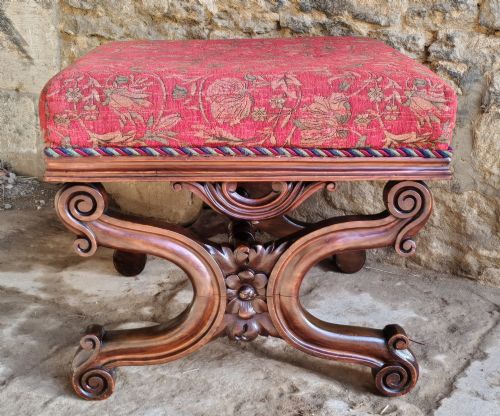
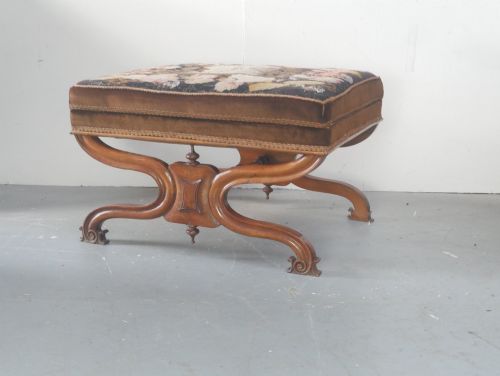
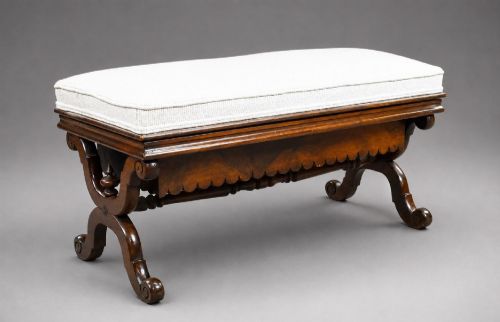
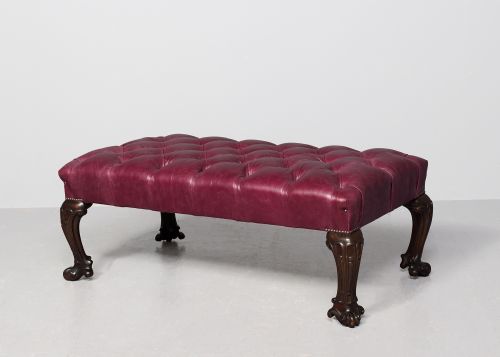
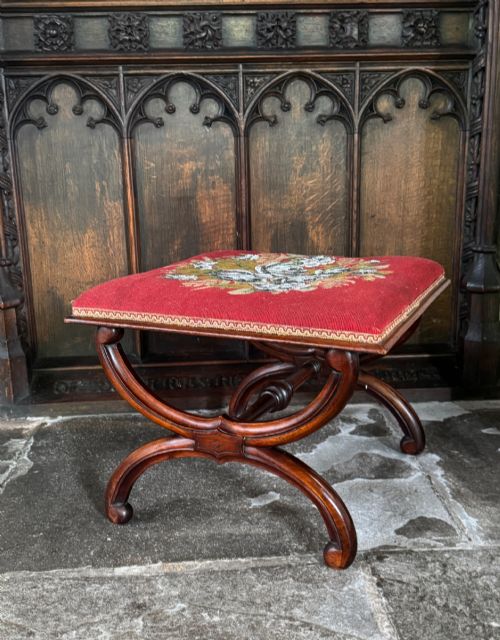
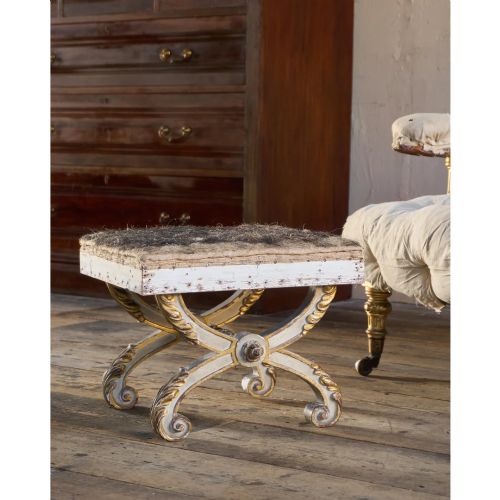
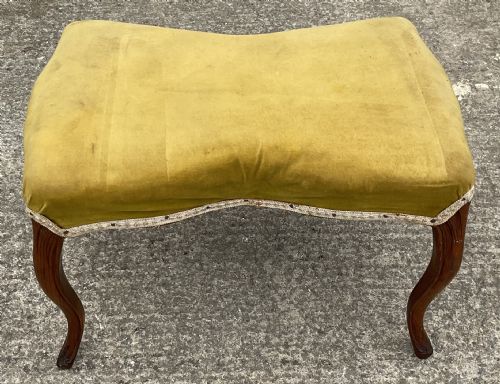
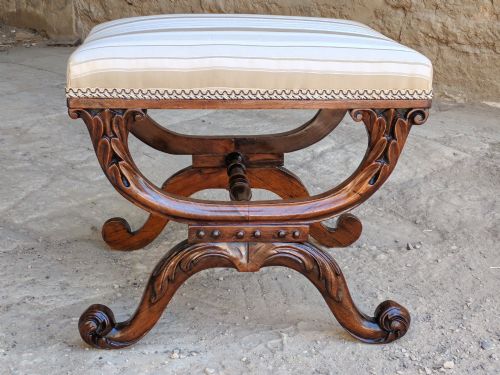

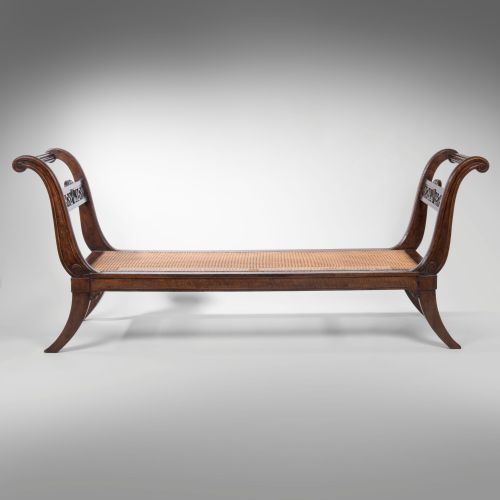
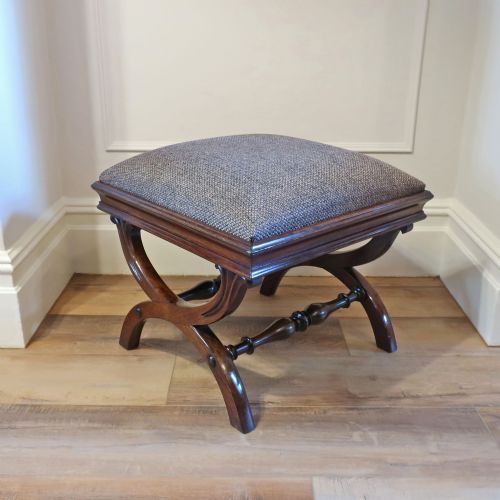
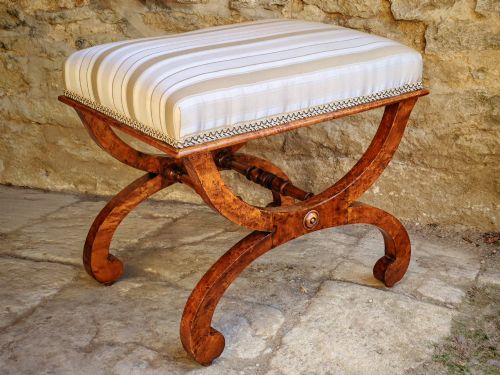
Carved X Frame Stool
A carved x frame stool brings classical curule lines and rich timber frames into a room with undeniable presence.
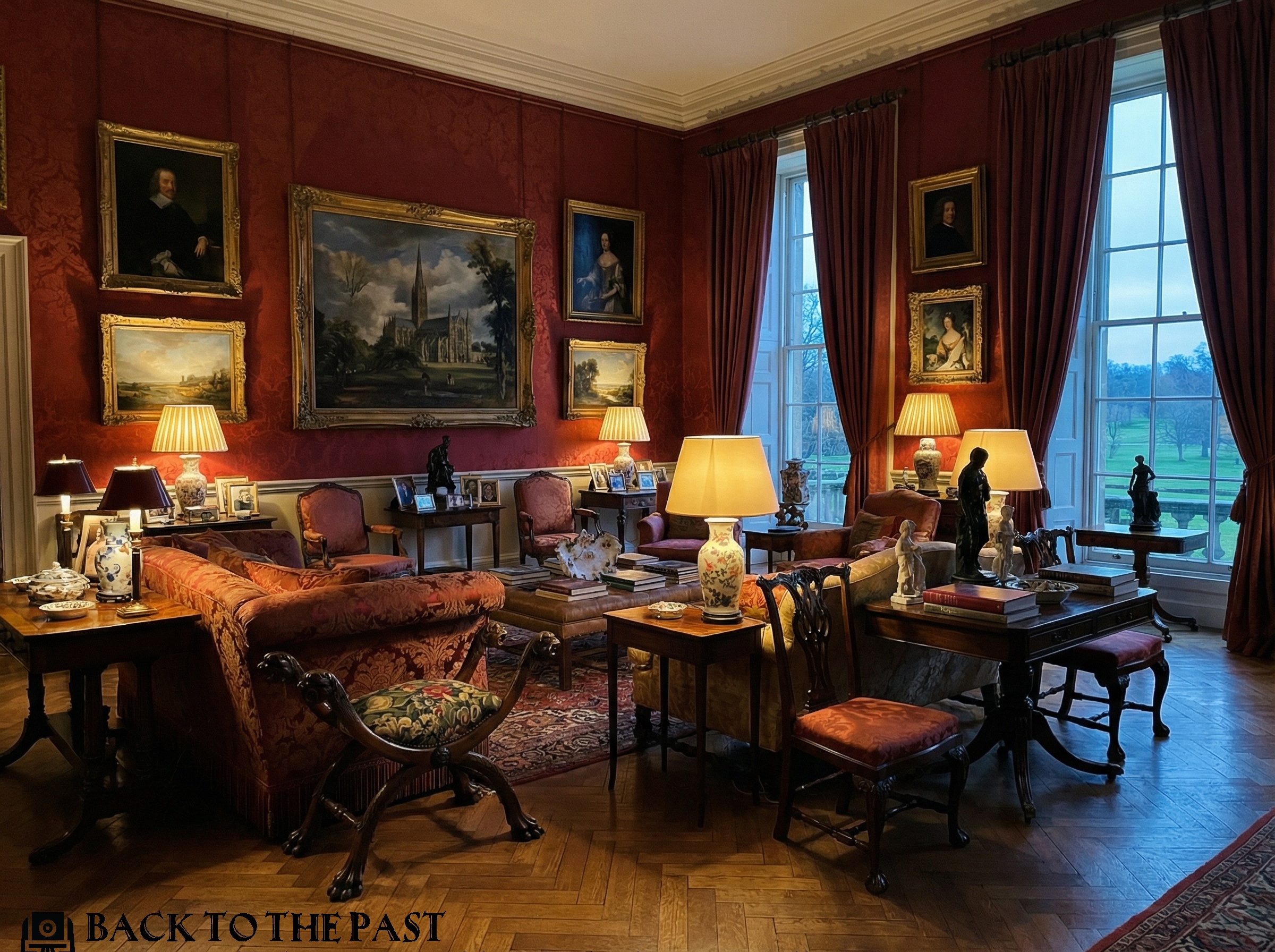
Carved X Frame Stool
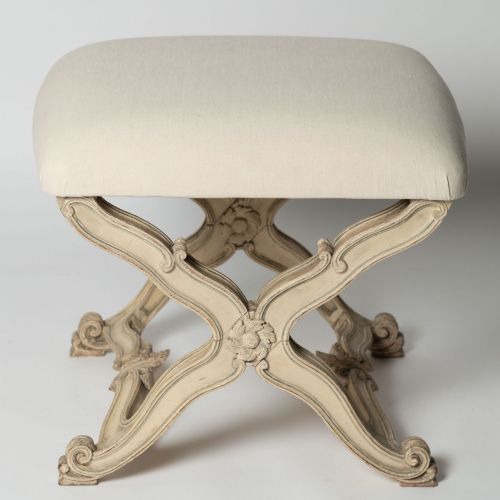
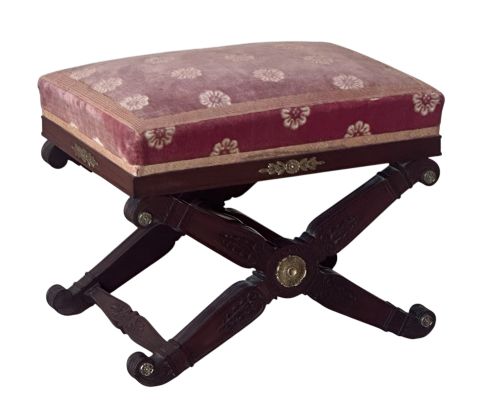
A carved x frame stool is a sturdy and portable seat designed with crossing supports, drawing directly upon ancient Roman curule forms. These pieces appear most frequently in Victorian and nineteenth-century iterations, alongside Regency and William IV examples.
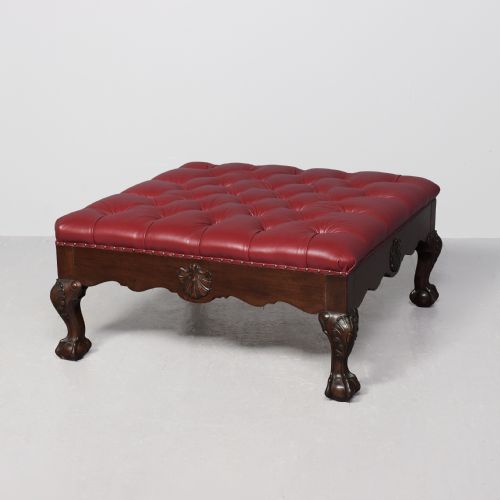
The form spans various functions, serving as dressing stools, window seats, and footstools. Walnut, mahogany, and rosewood form the primary timber framework, often paired with needlework, leather, or textile upholstery.
How they were made
Cabinetmakers shaped dense hardwoods such as mahogany, walnut, and rosewood using hand chisels to produce crisp structural frames and detailed relief carving. Joints relied on traditional mortise and tenon construction to withstand the downward pressure inherent in the crossing leg design.
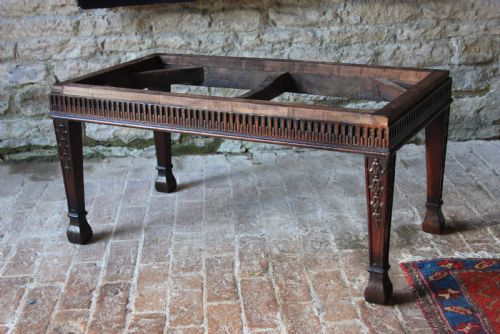
Upholstery techniques involved webbing and horsehair stuffing secured over wooden rails, finished with buttoning, gimp braid, or brass nailing. Giltwood and gesso variants received layers of gold leaf applied over a prepared plaster base.
Listings feature mahogany, walnut, rosewood, and oak, alongside giltwood and ebonised finishes spanning the nineteenth century.
What varies in quality
The depth and crispness of the timber carving separate standard production from superior examples, particularly where floral motifs or animal heads appear on the cross members. Dense hardwoods with rich natural grain command attention through solid weight and minimal reliance on applied composition ornaments.
Original upholstery methods and period textiles elevate a piece, whereas inappropriate modern webbing or unsympathetic fabric replacement alters the structural integrity and historical balance of the frame.
Miles & Edwards
The Carved X Frame Stool Glossary
- Curule stool
- An ancient Roman magistrate's seat formed by crossing legs, which inspired later neoclassical and nineteenth-century revival seating forms. This shape creates a distinct folding silhouette even when built as a rigid frame.
- X frame
- A structural design where two legs cross in the middle to form an intersection resembling the letter X. It provides inherent strength while offering a balanced architectural profile.
- Giltwood
- Timber coated with a thin layer of gold leaf over a prepared base. This decorative finish appears frequently on neoclassical and nineteenth-century French revival frames.
- Regency
- A British design period spanning the early nineteenth century defined by classical archaeological revival styles. Furniture from this era often incorporates bold mahogany frames and curule supports.
Carved X Frame Stool: Frequently Asked Questions
Where should I place a carved x frame stool?
These pieces fit naturally at the foot of a bed, beneath a dressing table, or placed near a window as an occasional seat. Their compact footprint allows them to move easily about a room.
Because the intersecting frame creates interest from every angle, they work well away from walls where the wooden structure remains fully visible.
How do I identify a nineteenth-century example?
Look for dense timber species like rosewood and walnut, combined with hand-cut joints and traditional upholstery materials underneath the top cover. Nineteenth-century makers frequently drew upon earlier Regency or William IV design vocabulary.
Weight and timber patination also offer strong clues to age, as older hardwoods develop a deep lustre that modern reproductions rarely replicate.
Are these stools comfortable for daily sitting?
Most variants offer firm support due to traditional horsehair stuffing and tight springing or webbing beneath the textile or leather top. Dressing stools and window seats provide stable seating for short periods.
Footstools are designed primarily to support legs rather than bear full adult weight as a primary chair, though sturdy frames handle occasional use well.
What maintenance do antique wooden frames require?
Keep timber surfaces nourished with a traditional beeswax polish applied sparingly and buffed with a soft cloth. Avoid placing these pieces near direct heat sources or strong sunlight to protect the polish and prevent wood splitting.
Upholstery benefits from gentle surface brushing and professional cleaning when needed to preserve delicate textiles or leather hide.