



Carved Wooden Wall Console
These carved wooden wall console pieces bring architectural presence to a room, offering functional ledges and display surfaces shaped by centuries of craftsmanship.
Carved Wooden Wall Console
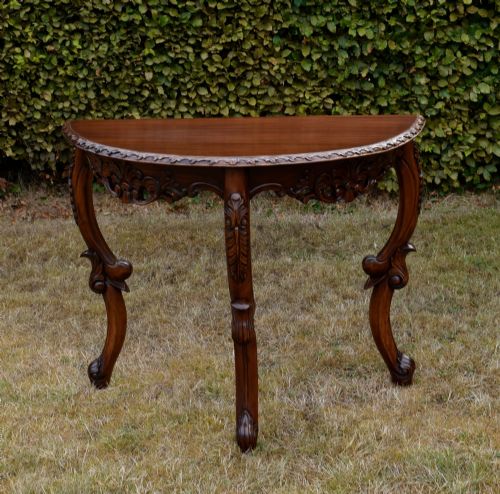
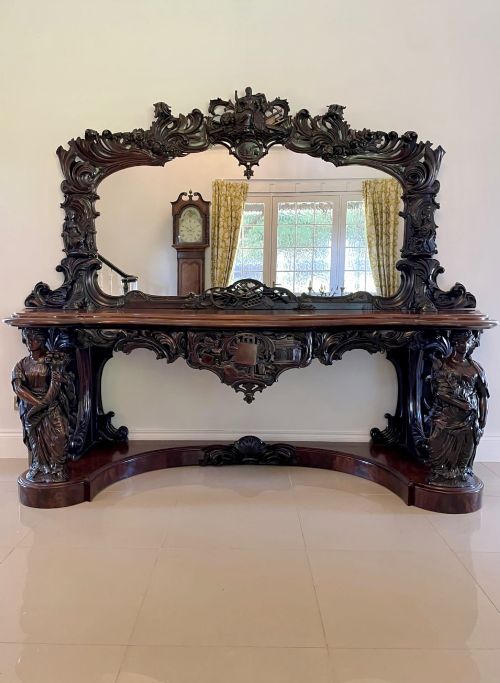
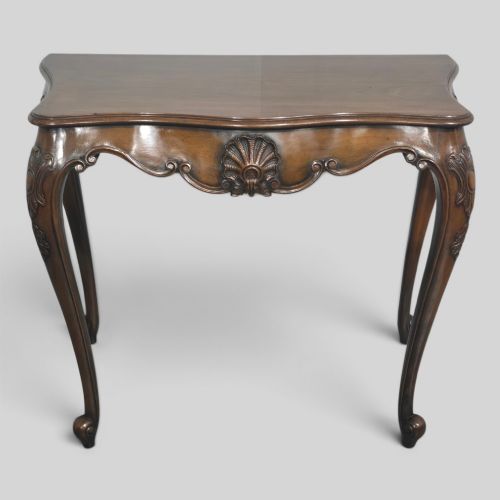
When searching for a carved wooden wall console, buyers encounter a mix of console tables, wall brackets and wall shelves designed to mount against vertical surfaces or stand upon slender legs. The selection spans the eighteenth, nineteenth and early twentieth centuries, encompassing styles from Baroque and Regency to Victorian and Neoclassical iterations.
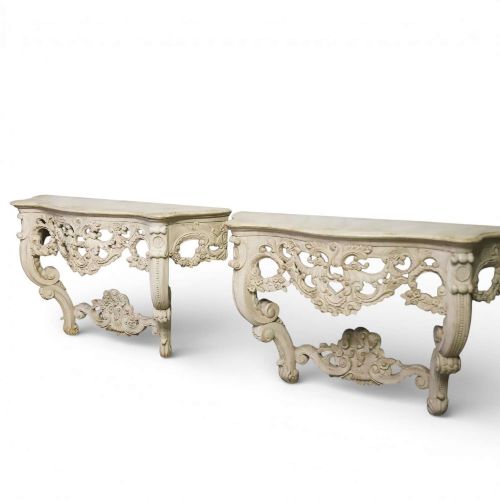
The most common forms on this page include console tables with half-moon or rectangular tops, alongside smaller architectural wall brackets and bracket shelves. These items originate from English, French, Italian, Spanish and Anglo-Indian workshops, reflecting diverse regional tastes in decorative woodwork.
Examples range from restrained mahogany side tables to elaborate giltwood brackets adorned with cherubs or eagles. Buyers select these objects to anchor hallways, living rooms and dining spaces with period character and practical display ledges.
Materials and construction methods
Cabinetmakers and carvers utilised solid hardwoods such as mahogany, walnut, rosewood, oak and red walnut for structural stability and fine detail. Many surfaces received applied finishes including gold leaf, giltwood, paint and antique white coatings to enhance the carved ornamentation.
Carving techniques required skilled hand work to execute deep relief motifs, acanthus leaves, architectural corbels and figurative elements. Marble tops frequently accompany console tables, fitted directly onto carved wooden frames.
A nineteenth century Black Forest bracket shelf emerges carved with woodland creatures watching quietly from the timber.
Distinguishing quality in carved consoles
The depth and crispness of the hand carving separate standard items from superior examples. Master carvers achieved remarkable precision in anatomical details, feathered wings and intricate foliage, whereas lesser pieces display softer, shallower incisions.
Material selection and the integration of secondary elements such as inset marble tops or original gilding define the upper tiers of the market. Proportion and balance in the structural frame further distinguish disciplined academic design from routine workshop production.
Luigi Frullini
The Carved Wooden Wall Console Glossary
- Console table
- A table designed to stand against a wall, traditionally supported by wall-mounted brackets or front legs. These pieces often feature shallow depths to suit narrow hallways and reception rooms.
- Wall bracket
- A projecting support fixed to a wall to hold an ornament, bust or lamp. They are frequently carved from wood and finished with gilding or paint.
- Giltwood
- Wood that has been coated with gold leaf or metal powder. This finish reflects candlelight and daylight in formal period interiors.
- Demi lune
- A half-moon shape used for the tops and frames of console tables. This form allows the furniture to sit flush against a wall while occupying minimal floor space.
- Corbel
- A structural piece of stone or wood jutting from a wall to carry a weight. In decorative consoles, they often appear as carved aesthetic brackets.
Carved Wooden Wall Console: Frequently Asked Questions
What is a carved wooden wall console used for?
These items serve as decorative ledges or narrow display tables in entrance halls, drawing rooms and dining spaces. They hold mirrors, ceramics, clocks and lighting.
Their compact footprints make them practical for narrow circulation areas where standard furniture blocks passage.
How do I distinguish between a console table and a wall bracket?
A console table possesses legs that reach the floor, even if the rear portion secures to the wall for stability. A wall bracket fastens entirely to the vertical surface without floor supports.
Both categories fall under the broader description of wall-mounted display furniture.
Where were these console tables originally placed in a home?
Historically, homeowners positioned console tables between windows or beneath large overmantel mirrors in formal reception rooms. They anchored symmetrical interior schemes.
Wall brackets occupied corners, piers and spaces above doorways to display sculptures and porcelain collections.
How do I identify the period of a carved wooden console?
Stylistic markers reveal the era of manufacture, such as neoclassical symmetry, baroque exuberance or Victorian eclecticism. Wood species and finishing techniques also indicate age.
Examining the construction joints and tool marks on the reverse provides further clues to dating.