

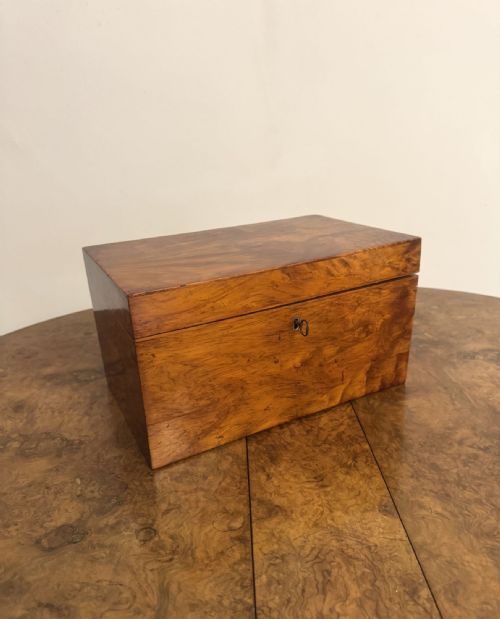

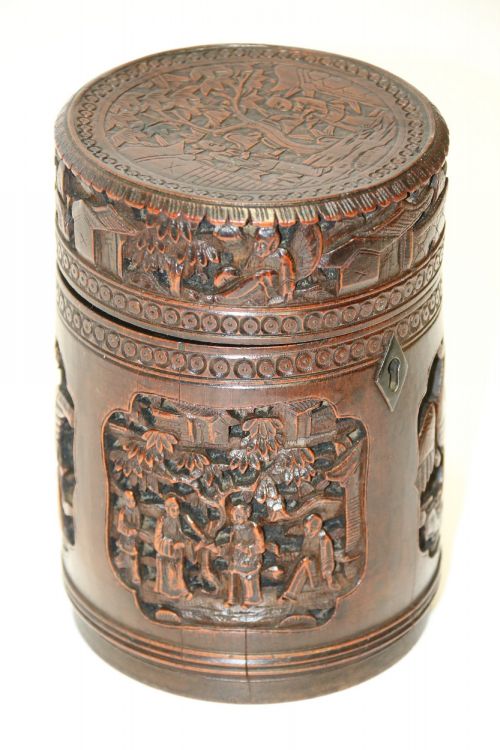


Carved Wooden Tea Caddy
A carved wooden tea caddy is a small storage box for loose leaf tea, prized for intricate woodwork and historical craftsmanship.
Carved Wooden Tea Caddy
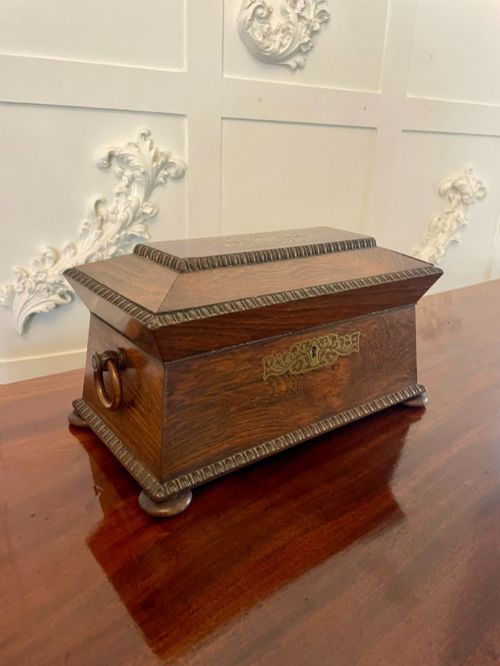
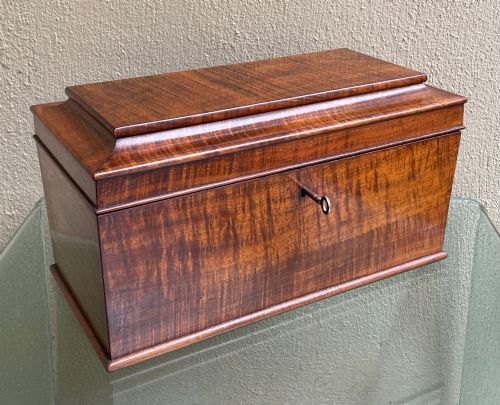
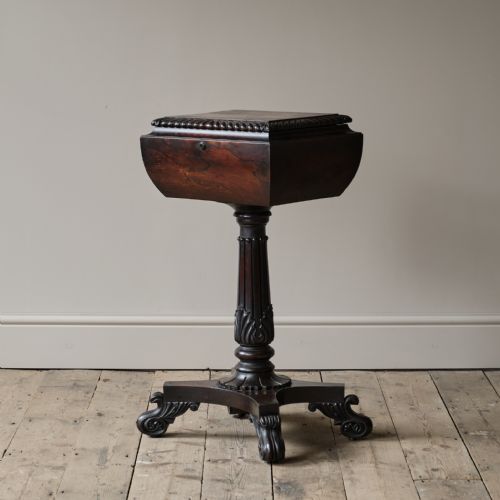
A carved wooden tea caddy is a domestic container designed to store and preserve dry tea leaves in eras when tea was a costly luxury commodity. Buyers exploring this category encounter a variety of forms, most notably sarcophagus shapes, rectangular boxes, and elevated tea poys on stands.
The material selection spans dense tropical hardwoods and native timbers, with rosewood, mahogany, walnut, and padouk appearing frequently across the selection. Examples range from early eighteenth-century specimens to late nineteenth-century productions, incorporating styles from Georgian, Regency, and Victorian periods.
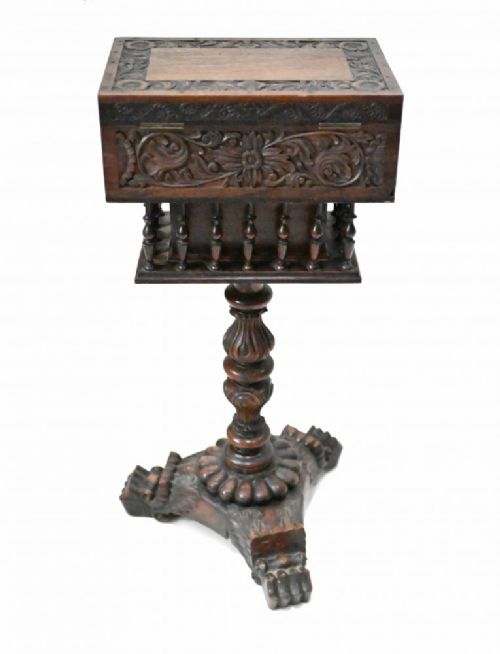
Many of these boxes feature hinged lids opening to interior compartments alongside distinct decorative treatments such as brass mounts, bone details, and intricate surface carving. Pieces originating from Anglo-Indian and Chinese workshops introduce bamboo and exotic woods alongside traditional British cabinet forms.
How they were made
Cabinet makers utilised dense hardwoods like mahogany, rosewood, and walnut, sawing and planing timber to construct stable box frames that resisted warping. Surfaces received deep relief carving, hand-turned elements, or fine veneer work using burr walnut and flame mahogany.
Internal partitions and foil linings were fitted to separate different tea varieties, sometimes paired with cut glass mixing bowls. Secondary woods like oak or pine formed internal elements, whilst brass hinges, locks, and handles secured the lids and added metallic contrast.
Carved Wooden Tea Caddy Retail Price Guide 2026
Typical asking prices for carved wooden tea caddy among the pieces listed under this phrase on Sellingantiques today, from the lower quarter to the upper quarter. They describe what is for sale here now, not the wider market.
Some nineteenth-century tea caddies doubled as miniature sideboards, complete with tiny turned feet and tiny decorative drawers.
What varies in quality
The crispness of the hand-carved ornament separates standard commercial boxes from exceptional pieces produced by recognised makers. Sharp undercutting in foliage and floral motifs denotes skilled execution by experienced carvers.
Selection of timber grain dictates visual appeal, with book-matched veneers and burr walnut surfaces achieving greater presence than plain or uniform boards. Robust structural joinery and original internal fittings maintain the integrity of the piece over centuries.
Gillows·Tahan of Paris
The Carved Wooden Tea Caddy Glossary
- Teapoy
- A small stand or table designed to support a tea caddy, or a large caddy fitted with its own legs. These elevated pieces often served as central furnishings in nineteenth-century reception rooms.
- Sarcophagus
- A box shape featuring a domed or peaked lid sloping on four sides, resembling ancient stone coffins. This silhouette proved popular during the Regency and Victorian periods for larger tea caddies.
- Padouk
- A heavy tropical hardwood exhibiting reddish-brown colouration, utilised in Anglo-Indian and Georgian furniture production. It accepts fine carving details and patinates richly over time.
- Parquetry
- A geometric mosaic of wood veneer arranged in repeating patterns across the exterior surface of a box. Cabinet makers employed contrasting timber tones to create optical depth.
- Veneer
- A thin layer of decorative wood applied over a secondary timber base to create patterned surfaces without heavy structural cost. Figured grains like flame mahogany and burr walnut were sliced for this purpose.
Carved Wooden Tea Caddy: Frequently Asked Questions
What was a tea caddy used for?
Tea caddies stored precious loose leaf tea under lock and key in domestic households during the eighteenth and nineteenth centuries.
Servants or the master of the house kept the leaves secure to ration consumption and protect expensive stock from dampness.
How do I tell Regency from Victorian pieces?
Regency caddies often display classical architectural proportions, brass inlay, and sharp sarcophagus lines dating from the early nineteenth century.
Victorian examples tend towards heavier carving, robust rosewood or walnut timbers, and ornate surface decoration typical of later decades.
What is the difference between a caddy and a teapoy?
A tea caddy is a tabletop box designed to hold tea leaves inside compartments with fitted lids.
A teapoy is either a substantial caddy mounted upon a central pedestal or a small occasional table built specifically for tea service.
How should I care for wooden tea caddies?
Keep wooden tea caddies away from direct sunlight and steady heat sources to prevent the timber and delicate veneers from splitting.
Apply a microcrystalline wax occasionally to nourish dry wood surfaces and preserve the historic finish.