

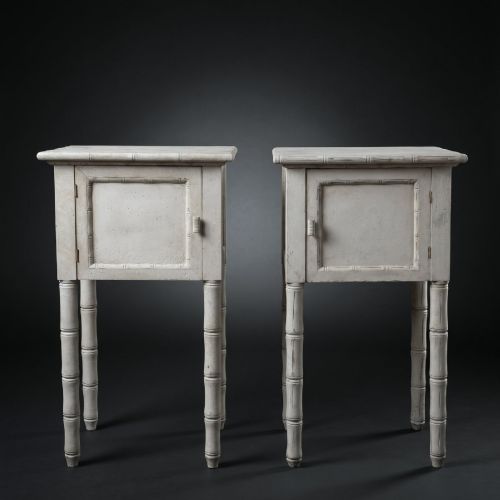
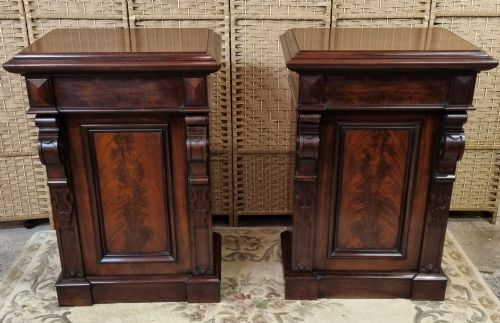
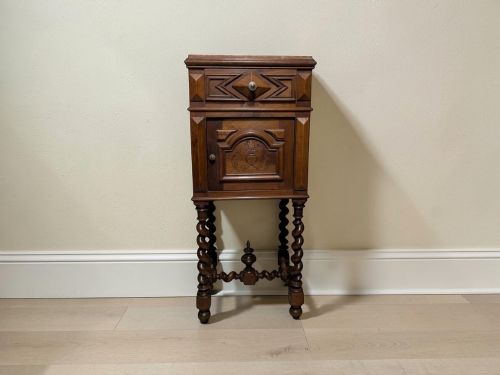
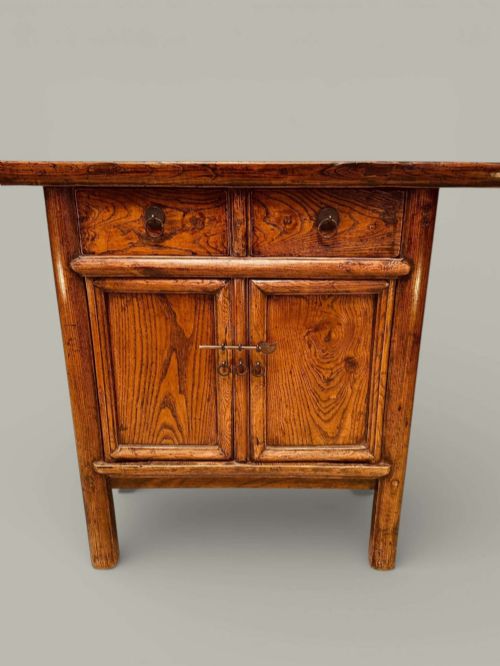
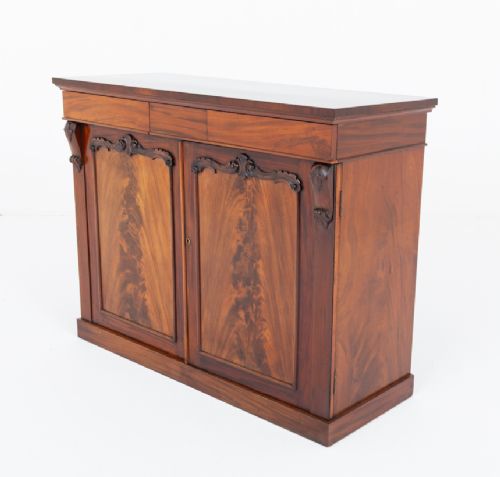
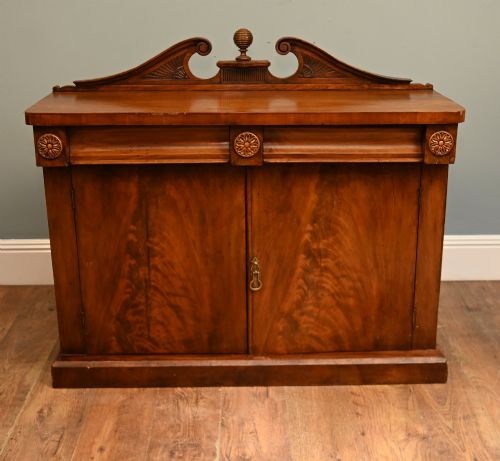
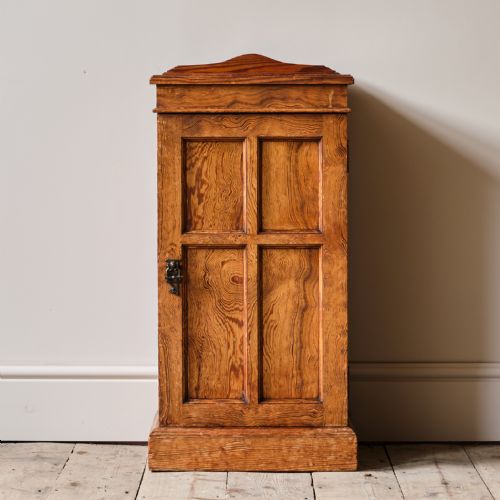
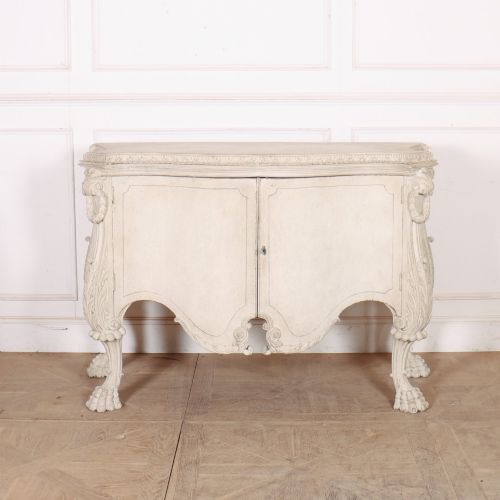
Carved Wooden Side Cupboards
These carved wooden side cupboards offer practical storage with distinct period character, making them a worthwhile addition to any room.
Carved Wooden Side Cupboards
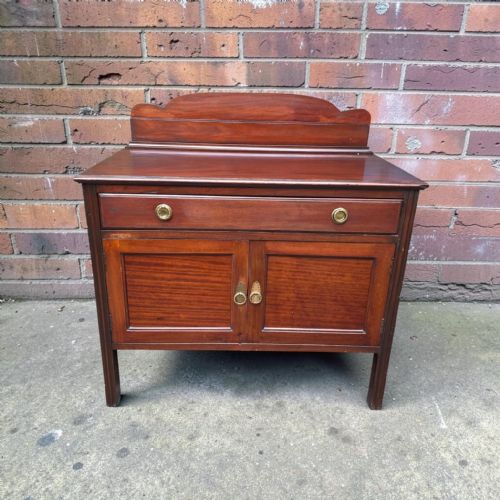
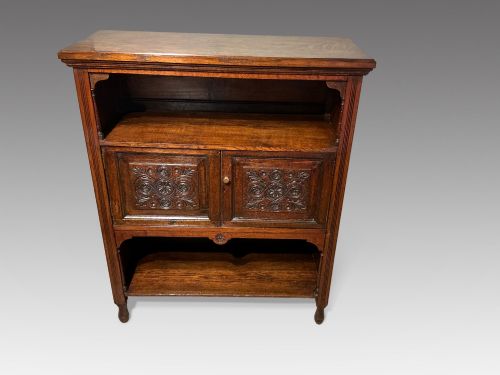
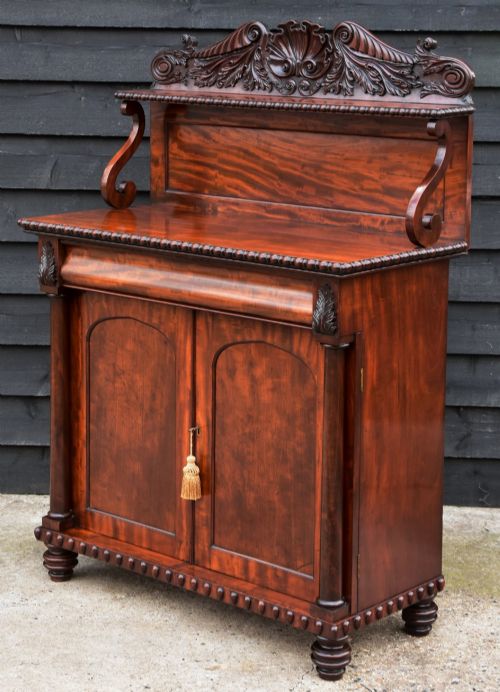
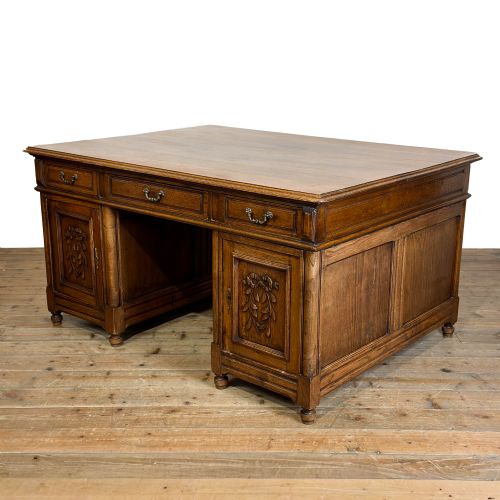
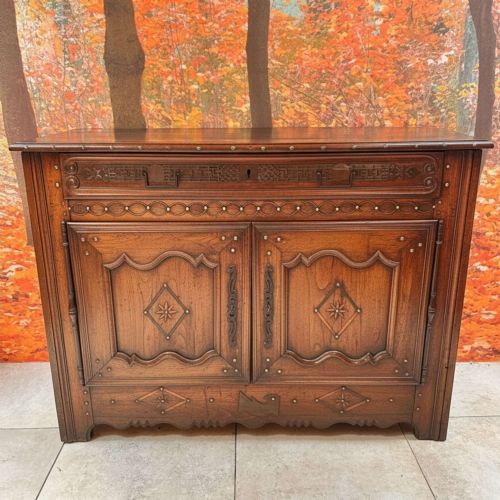
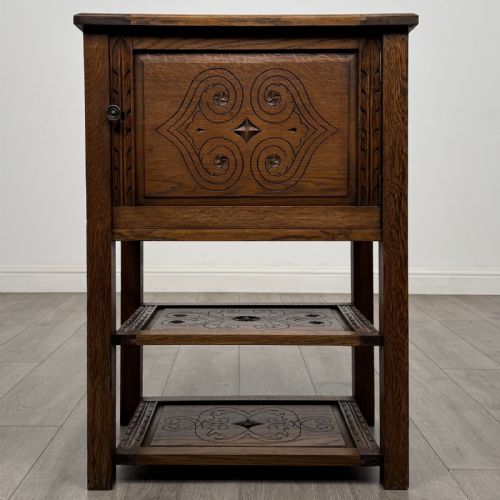
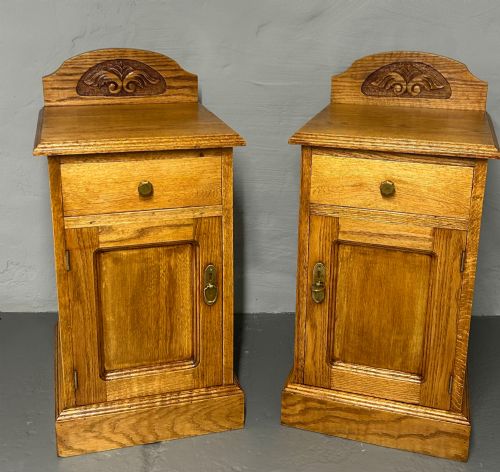
Carved wooden side cupboards encompass a diverse group of storage furniture designed to sit against a wall in domestic spaces. The selection ranges from compact bedside cabinets and pot cupboards to larger sideboards, chiffoniers, and open-shelf units.
Nineteenth-century examples dominate the offerings, spanning Victorian, Regency, and Gothic Revival styles alongside regional European and Anglo-Indian designs. Buyers frequently encounter pieces executed in oak or mahogany, often featuring carved ornamentation characteristic of their period.
The form adapts to various domestic functions, appearing as pedestals, low cabinets, or dual-purpose pieces incorporating bookshelves and linen storage. Each variant reflects the prevailing aesthetic of its origin, from French provincial rustic work to refined English cabinet-making.
Materials and construction
Makers utilised a variety of solid timbers and veneers, predominantly mahogany, oak, and walnut, often accentuating the grain with flame mahogany veneer or burr walnut. Hardwoods such as teak, padauk, and satinwood appear in imported Anglo-Indian and colonial pieces.
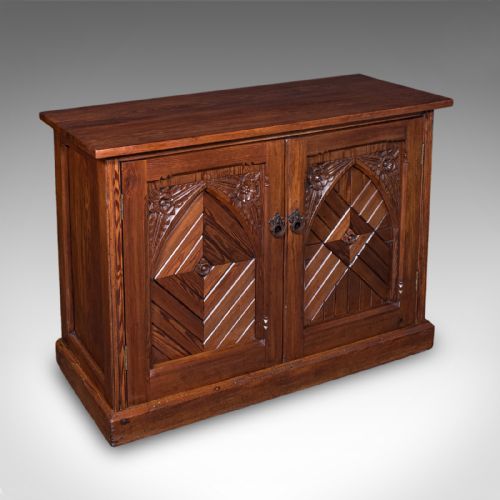
Joinery techniques combined traditional panel construction with carved surface ornamentation, ranging from crisp Gothic tracery to dense foliate relief. Brass fittings, marble tops, and iron hardware provide functional contrast to the wooden structures.
Carved Wooden Side Cupboards Retail Price Guide 2026
Typical asking prices for carved wooden side cupboards among the pieces listed under this phrase on Sellingantiques today, from the lower quarter to the upper quarter. They describe what is for sale here now, not the wider market.
The listings feature pieces constructed from mahogany, oak, walnut, and pine, alongside exotic hardwoods like padauk and satinwood.
Assessing quality
Quality rests upon the crispness of the carving and the selection of timber figures, where matched burr walnut or figured mahogany elevates a standard form. The integration of decorative elements, such as applied ebony or intricate mouldings, demonstrates the maker's hand.
Structural integrity and the retention of original hardware, including brass hinges and locks, separate standard utility pieces from exhibition-grade examples. The harmony between the structural carcase and the decorative surface carving dictates the overall merit of the piece.
The Carved Wooden Side Cupboards Glossary
- Chiffonier
- A low sideboard or cabinet featuring enclosed shelving below, typically surmounted by a small shelf or tier.
- Pot Cupboard
- A small bedside cabinet originally designed to enclose a chamber pot, often fitted with a single door and marble top.
- Burr Walnut
- Timber taken from the warted growth of a walnut tree, highly prized for its swirling, intricate grain pattern used in decorative veneers.
- Gothic Revival
- An architectural and decorative style popular in the nineteenth century, characterised by pointed arches, quatrefoils, and heavy tracery.
- Padauk
- A dense tropical hardwood displaying a rich reddish-brown colour, frequently utilised in intricate Anglo-Indian carving.
Carved Wooden Side Cupboards: Frequently Asked Questions
Where should I place a side cupboard?
These cabinets suit hallways, living rooms, and bedrooms where surface space and enclosed storage are both required. Their compact footprint allows them to sit neatly against unused wall space.
Larger sideboard variants function well in dining areas, while bedside versions fit narrow spaces beside a bed frame.
How do I identify a Victorian piece?
Victorian examples often employ dense timbers like mahogany and walnut, frequently displaying robust proportions and machine-assisted or hand-carved ornamentation. Look for characteristic details such as burr veneers and brass hardware.
Stylistic cues range from heavy classical revival motifs to lighter aesthetic movement or Gothic revival forms popular during the reign.
What is an Anglo-Indian cabinet?
Anglo-Indian furniture refers to pieces made in India during the colonial period, frequently combining British cabinet forms with traditional local carving techniques. They often utilise exotic dense hardwoods.
The carving is typically deep and intricate, featuring floral or geometric motifs executed across satinwood, padauk, or teak.
Are these cabinets suitable for modern homes?
Their modest scale and enclosed storage make them practical for contemporary interiors requiring characterful storage solutions. They integrate easily alongside modern furnishings.
The variety of woods and finishes allows them to complement neutral or traditional colour schemes without overwhelming a room.