


Carved Wooden Shoe Novelty
These carved wooden shoe novelty pieces are pocket-sized treen containers shaped like footwear, offering clever utilitarian design with folk art charm.
Carved Wooden Shoe Novelty
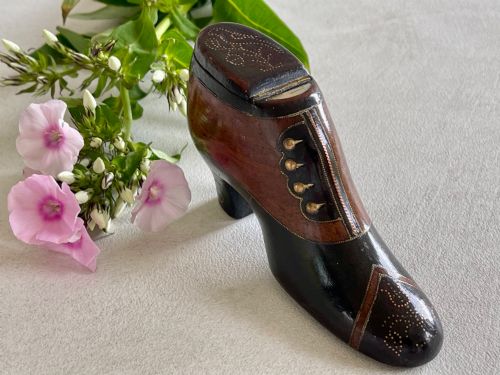
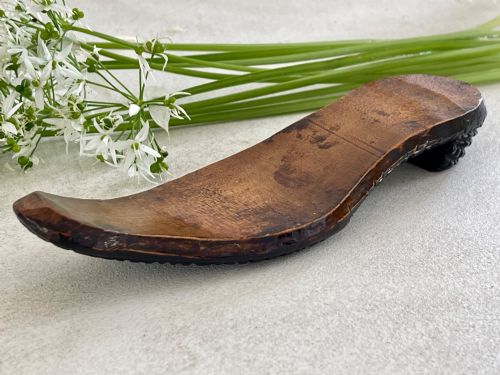
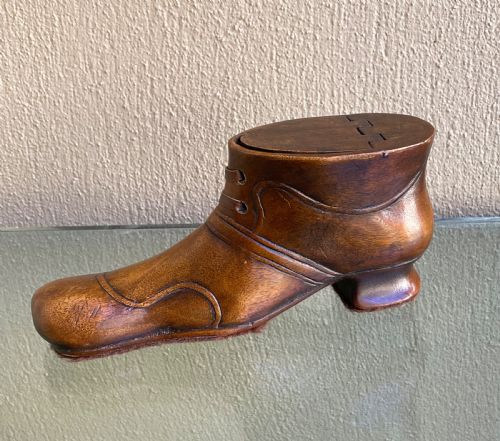
A carved wooden shoe novelty takes the form of a miniature shoe, slipper or foot, most frequently appearing as a snuff box with a sliding or double opening lid. You will also encounter items like knitting sheaths fashioned in the same shoe shape.
The selections span the Georgian, Victorian and Edwardian eras, with nineteenth-century examples appearing frequently alongside earlier eighteenth-century pieces. These items originate firmly within British folk art traditions.
Makers shaped these functional objects from various timbers, sometimes carving them as ladies' feet in open-toed shoes or incorporating double compartments for tobacco storage.
Materials and construction
Craftsmen utilised various woods including fruitwood, mahogany and other dense hardwoods to carve these pocket-sized items by hand. The reliance on timber allowed artisans to shape curves and hollow out interior compartments for snuff.
Decoration often involved intricate surface work such as brass wire inlay, pique work foliage and flowers, inlaid bone or metal details, and engraved pictures of ladies.
One double opening snuff shoe includes a tiny picture of a lady peeking out from the timber.
Judging quality and character
Superior examples display crisp carving detail in the footwear shape, particularly where the maker has rendered toes, heels or open-toed shoes with precision. The presence of delicate decorative embellishments like brass pique work or inlaid diamonds elevates a piece.
The depth and richness of the surface patina distinguish finer items, showing the warm glow accumulated from handling and age. Ingenuity in the mechanism, such as a smoothly operating double opening lid, marks out the more accomplished work.
The Carved Wooden Shoe Novelty Glossary
- Treen
- Small handmade wooden domestic objects. These items showcase domestic woodworking skills from past centuries.
- Snuff box
- A small container for holding ground tobacco. These boxes often feature tight-fitting sliding lids to keep the contents dry.
- Pique work
- A decorative technique using tiny pins or wire inlaid into the surface. This method creates patterns of foliage and flowers on the wood.
- Knitting sheath
- A device tucked into a belt to hold a knitting needle steady. They were frequently carved in playful shapes like shoes.
Carved Wooden Shoe Novelty: Frequently Asked Questions
What were carved wooden shoes used for?
These items served primarily as pocket containers for holding snuff, with compartments accessed via sliding or double-opening lids. Some examples functioned as knitting sheaths to support needlework.
Their small scale allowed owners to carry them easily in a pocket or waistcoat. They combined everyday utility with amusing decorative forms.
How old are these wooden shoe items?
The available pieces date from the eighteenth, nineteenth and early twentieth centuries, spanning the Georgian, Victorian and Edwardian periods. Nineteenth-century examples appear most frequently in this grouping.
Stylistic details and materials help indicate the general period of manufacture. Folk art traditions remained consistent across these decades.
What materials were used to make them?
Carvers used hardwoods, mahogany and fruitwood as the primary structural materials for these pieces. The natural grain of the wood contributed to the tactile quality of the objects.
Decoration often incorporated brass wire, metal, bone, and glass inlay. These contrasting materials highlighted the decorative motifs on the wooden surface.
How do I care for antique treen?
Keep wooden objects away from direct heat sources and extreme humidity fluctuations to prevent the timber from splitting. Gentle handling preserves the historic surface finish.
Avoid using modern polishes or harsh cleaning agents on the wood. A soft, dry cloth is sufficient for dusting.