

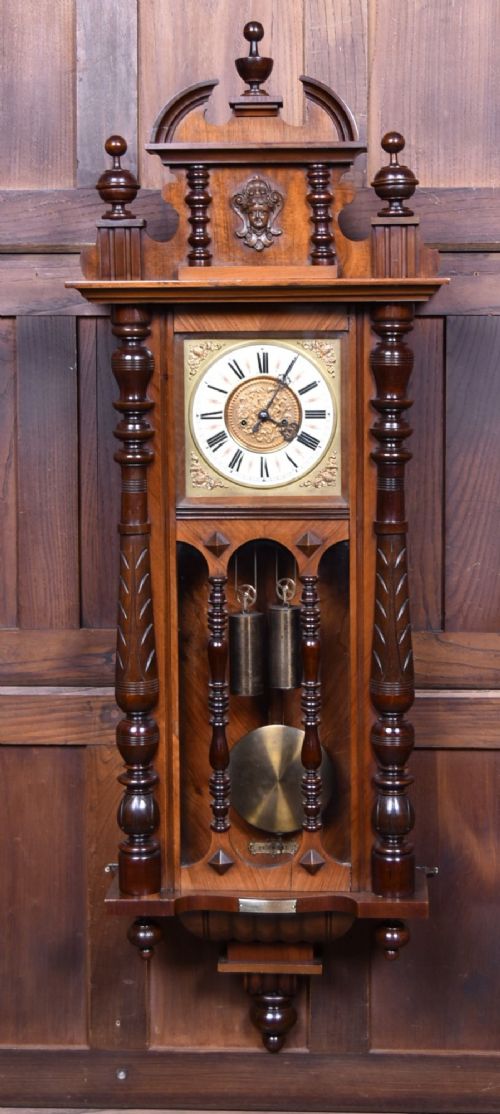
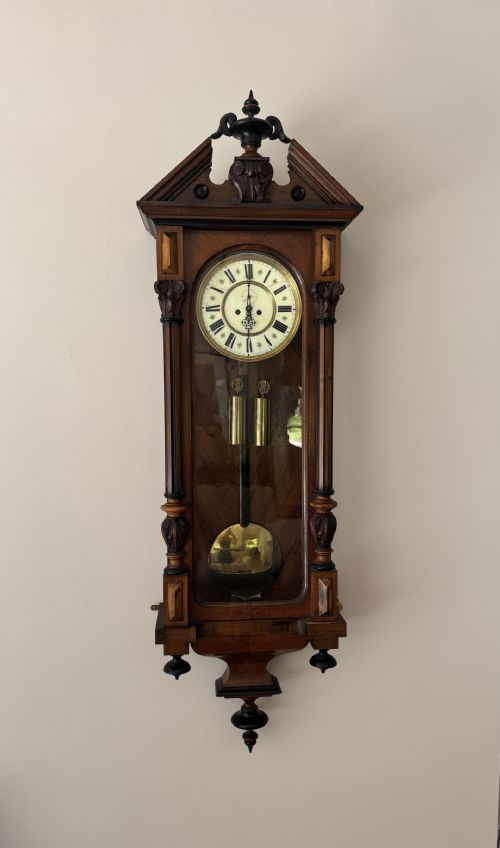
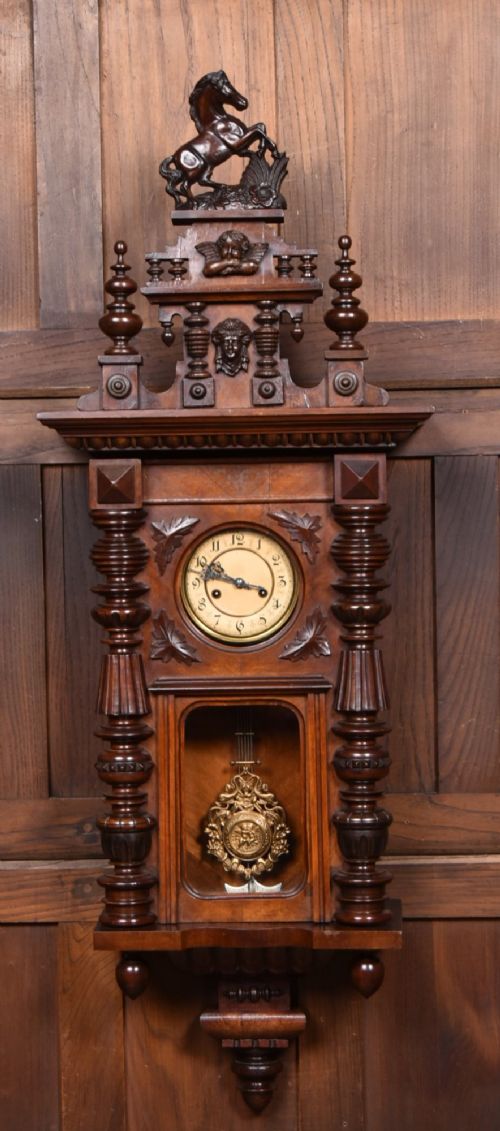
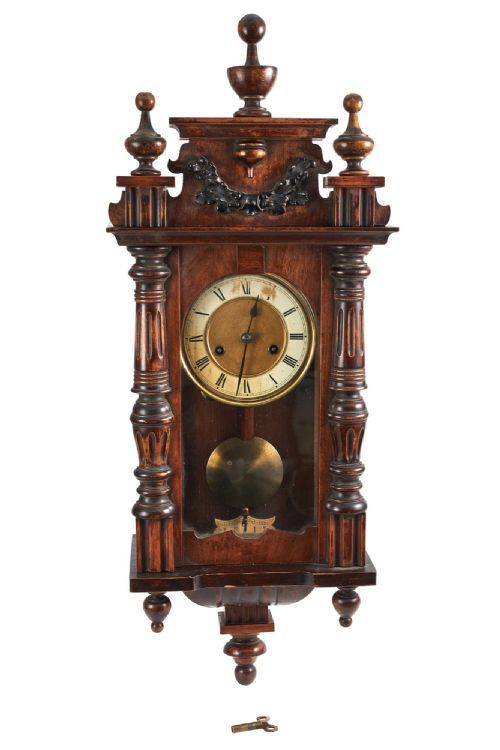

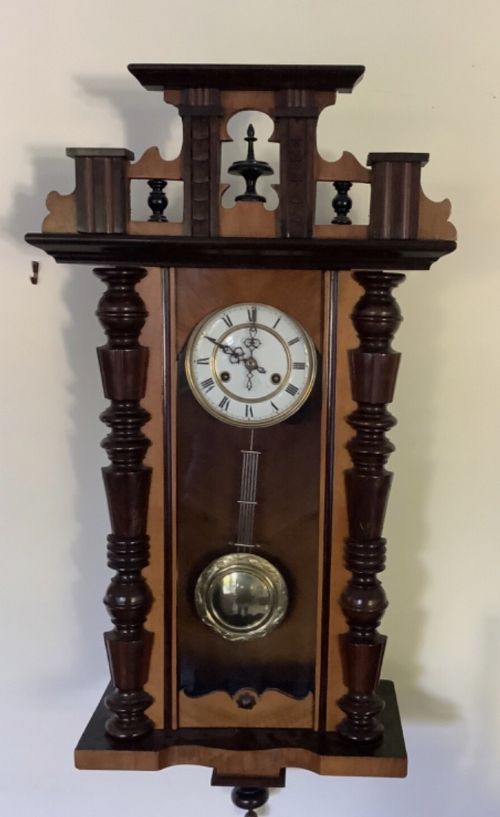


Carved Wooden Regulator
These carved wooden regulator wall clocks keep time with precision while displaying the rich grain of walnut, mahogany, and oak.
Carved Wooden Regulator
A carved wooden regulator clock serves as both an accurate timekeeper and a striking wall hanging, originating predominantly from the Victorian era and later periods. When exploring this selection, buyers encounter wall clocks housed in walnut, mahogany, and oak cases.
The most common examples on this page are Vienna-style wall clocks and German or Austrian pieces featuring glass panels and brass details. These clocks often incorporate weights and pendulums to drive their movements.
Beyond the standard Vienna models, variations include French Art Deco oak designs and Venetian automation wall clocks. Each piece reflects the dominant style of its period, ranging from Victorian and Gothic influences to Edwardian simplicity.
Assessing quality in construction
The distinction between standard examples and the finest pieces lies in the crispness of the timber carving and the complexity of the movement. Double-weight and triple-weight systems, such as those by recognised makers, demonstrate superior mechanical ambition.
Timber selection and case preservation also divide the range, with well-figured walnut and deeply carved oak cases commanding attention. The integration of brass fittings and enamel dials completes the standard of finish.
The listings feature wall clocks spanning from the Regency period through to the mid-twentieth century, constructed primarily in walnut, oak, and mahogany.
Gustav Becker·Johann Baptist Beha
The Carved Wooden Regulator Glossary
- Regulator
- A precision pendulum clock designed to keep accurate time. These movements were often used as reference clocks in offices and railway stations.
- Vienna regulator
- A specific style of wall clock originating from the Austrian capital during the nineteenth century. They are characterised by long glass-fronted cases and weight-driven movements.
- Fusee
- A conical pulley used in clock movements to maintain even force on the gear train as the mainspring unwinds. This mechanism improves the timekeeping accuracy of the clock.
- Grande sonnerie
- A complex striking mechanism that chimes the hours and quarters automatically. It represents a higher level of clockmaking skill.
- Ebonised wood
- Timber treated to imitate ebony, providing a deep black finish. This technique was popular in Victorian casework for contrast.
Carved Wooden Regulator: Frequently Asked Questions
What is a Vienna regulator?
A Vienna regulator is a weight-driven wall clock known for its accuracy and long glass-fronted case displaying a swinging pendulum.
These clocks were produced in large numbers during the nineteenth century in Austria and Germany, evolving from earlier precision workshop timepieces.
How do double weight clocks work?
Double weight clocks use two hanging weights suspended by cords or chains to power the timekeeping and striking trains.
Gravity pulls the weights down slowly over several days, turning the internal brass gears without needing a mainspring.
Where should I hang a wall clock?
Wall clocks need a sturdy wall and a secure fixing that can support the weight of the timber case and heavy metal components.
It is essential to mount the clock plumb so the pendulum swings evenly and the movement keeps accurate time.
How do I date a wooden clock?
Dating a wooden clock involves examining the style of the carved case, the materials used, and any signatures on the movement or dial.
Victorian and Edwardian pieces often display distinct architectural motifs that align with specific decades of production.