

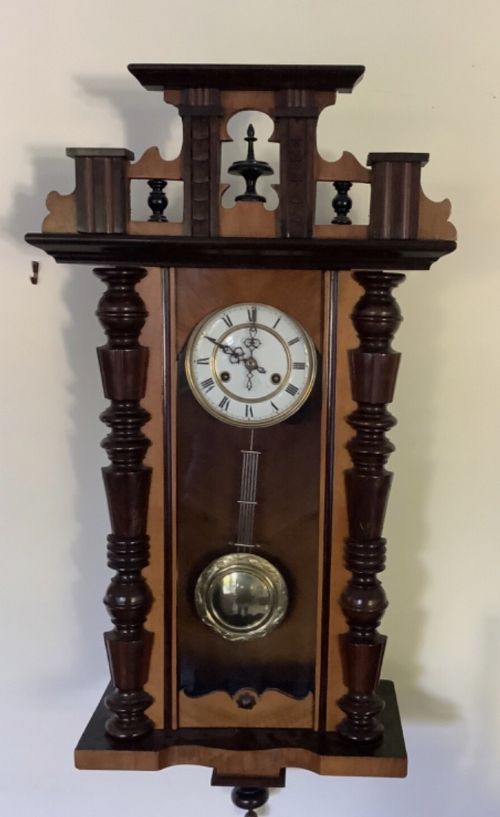


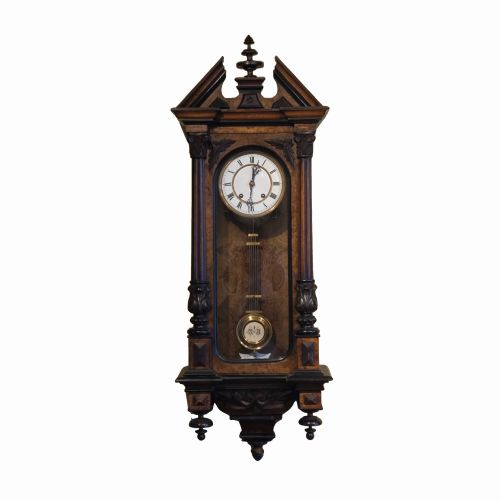


German Regulator Wall Clock
A german regulator wall clock brings precision timekeeping and architectural presence into a room, offering mechanical reliability housed in polished timber cases.
German Regulator Wall Clock
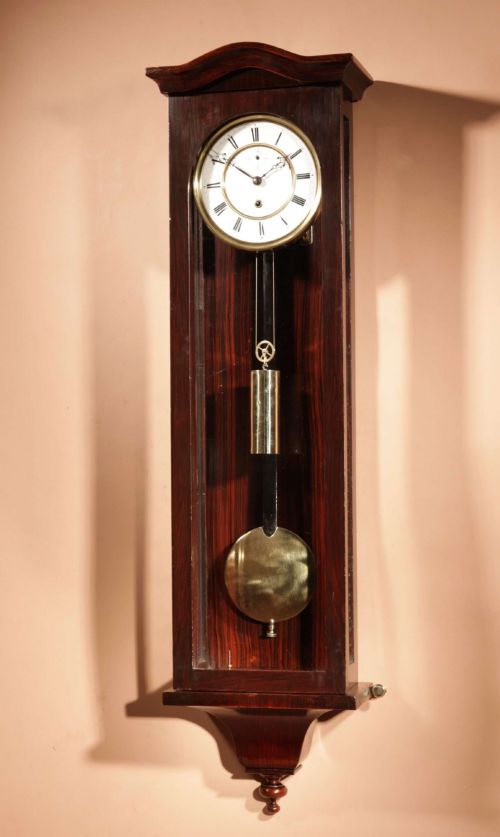
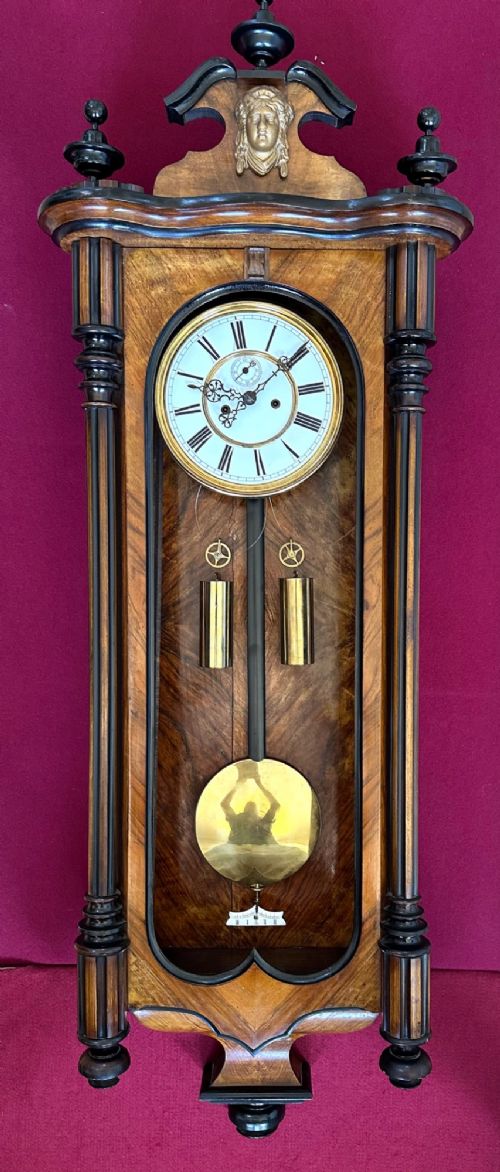
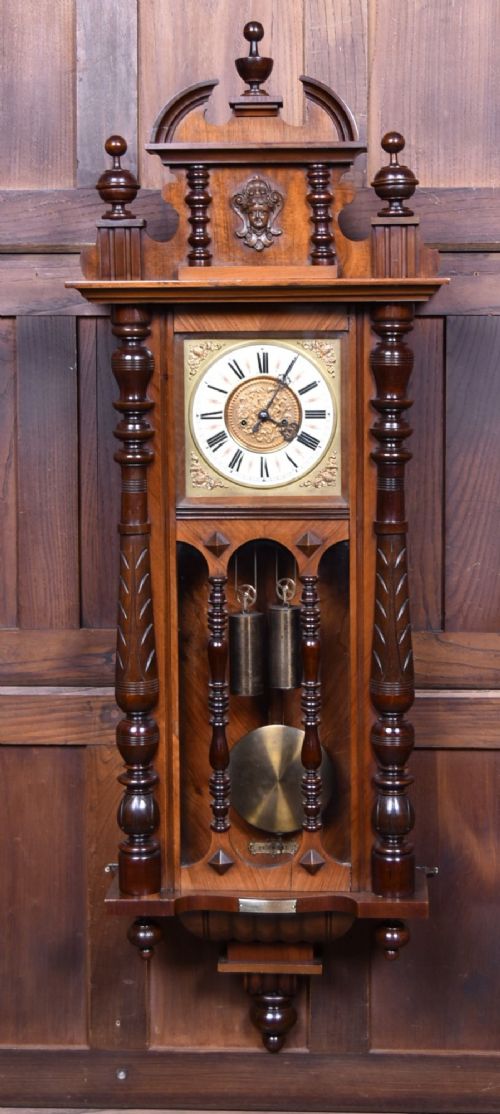
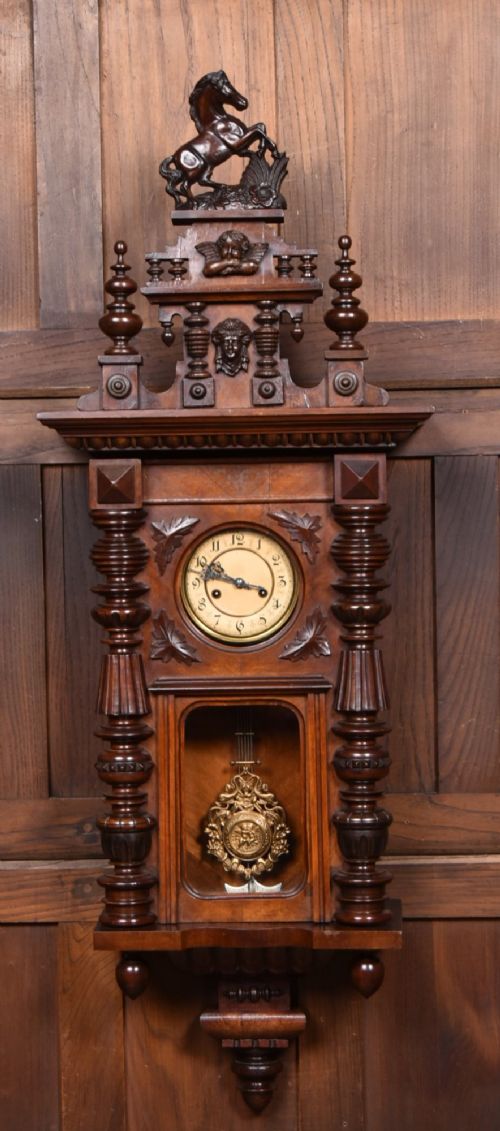
A german regulator wall clock represents the pinnacle of nineteenth-century domestic horology, combining accurate weight-driven or spring movements with striking timber cases. When you search for a german regulator wall clock, you encounter timepieces predominantly styled in the Vienna tradition, reflecting the rigorous standards of German and Austrian workshops.
The pieces appearing on this page span several decades of the nineteenth century, including the Victorian era and the turn of the twentieth century. Walnut and ebonised wood form the primary housing materials, frequently accompanied by glazed doors that display the rhythmic swing of the pendulum.
Forms range from single weight timepieces to double and triple weight variations offering complex striking capabilities. Gustav Becker and other notable makers feature prominently, alongside Black Forest examples and unmarked regional pieces adhering to the Vienna style.
Materials and construction methods
Cabinetmakers utilised walnut, mahogany, and ebonised wood to build the architectural cases, pairing rich timber grains with glass door panels that protect the dial and pendulum. Brass components form the intricate gear trains within the movements, designed to operate with minimal friction over extended periods.
Dials comprise enamel or porcelain surfaces marked with clear numerals, often secured behind brass bezels. Weight-driven mechanisms utilise suspended brass weights and long pendulums to maintain steady timekeeping, while spring-driven alternatives offer compact configurations.
Johann Baptist Beha began his career carving cuckoo clocks in the Black Forest before producing regulated movements.
Assessing quality in movement and case
Quality reveals itself in the complexity of the movement, where triple weight systems with Grande Sonnerie striking capabilities sit above basic time-only or simple striking mechanisms. The precision cut of the brass gears and the reputation of the maker determine the mechanical standard of the clock.
Case construction separates ordinary production from superior examples, observed in the depth of the walnut veneer, the crispness of applied architectural mouldings, and the original condition of the glass and dial components.
AG Lenzkirch·Gustav Becker·Johann Baptist Beha
The German Regulator Wall Clock Glossary
- Regulator
- A precision timekeeper designed to keep accurate time and often used as a standard against which other clocks were set. These movements prioritise exactness over decorative complexity.
- Grande Sonnerie
- A striking mechanism that sounds both the hours and the quarters on every quarter hour. This complex arrangement demands sophisticated gear trains.
- Ebonised Wood
- Timber treated with a chemical finish or stain to imitate ebony. This dark surface treatment creates high contrast against brass dials and pendulum bobs.
- Anchor Escapement
- The mechanical linkage between the gear train and the pendulum that controls the release of power. It ensures the even tick characteristic of traditional clocks.
German Regulator Wall Clock: Frequently Asked Questions
How do weight-driven clocks operate?
Weight-driven movements rely on descending brass weights suspended by cords or chains to supply the mechanical energy needed to turn the gear train. Gravity pulls the weight downward, driving the movement until the line is fully unwound.
Rewinding involves pulling the chains or winding the barrels to draw the weights back to the top of the case, a task required at regular intervals depending on the movement duration.
Where should I hang a wall clock?
Wall clocks require a sturdy, stable partition capable of supporting the substantial combined weight of the timber case, movement, and heavy brass weights. Interior walls free from excessive vibration and dampness provide the most secure environment.
Mounting the case firmly ensures the pendulum hangs plumb, which is essential for the escapement to maintain an even beat and keep accurate time.
How do I set the correct time?
Setting the time on a striking clock requires moving the minute hand forward slowly, pausing at each hour or quarter-hour to let the strike sequence finish completely. Moving the hands backward can damage the delicate striking levers inside the movement.
Allowing the pendulum to settle into a uniform swing after setting ensures the beat remains even and the clock continues to run reliably.
What maintenance do these movements need?
Mechanical clocks benefit from professional cleaning and lubrication every few years to remove accumulated dust and prevent wear on the brass pivots and gears. Keeping the case closed protects the movement from airborne debris.
Ensuring the weights hang freely without catching on the case interior prevents stoppages and maintains consistent power delivery to the escapement.