
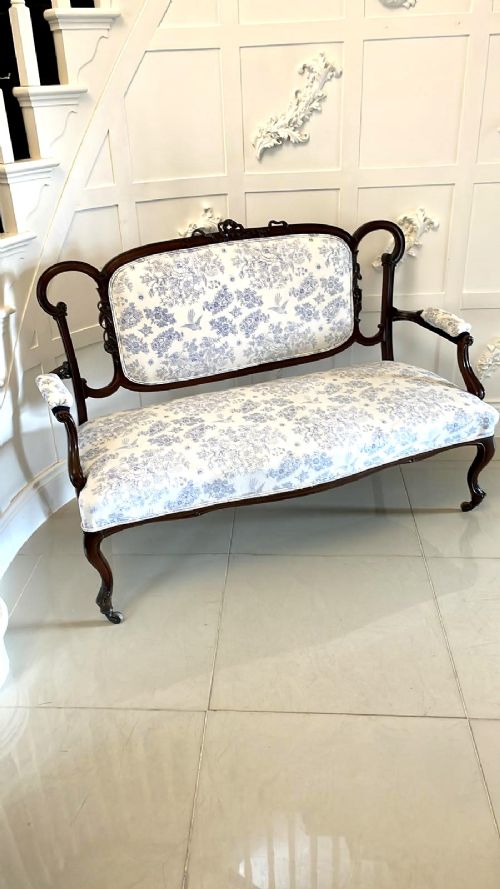
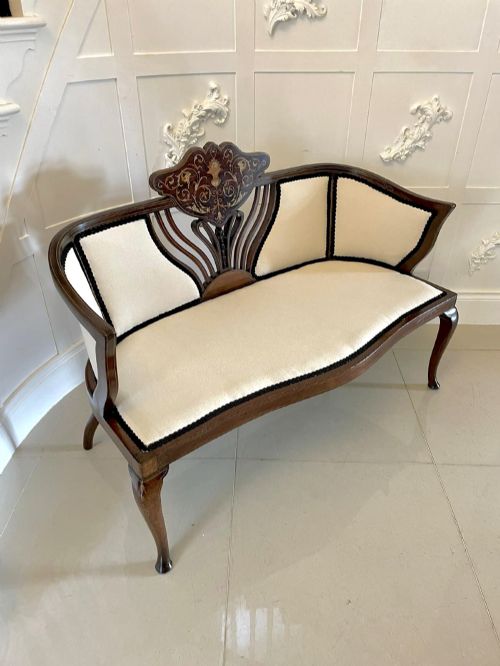


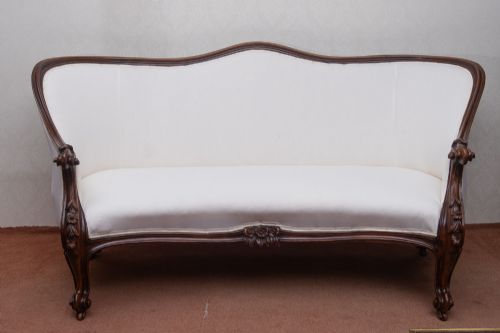


Carved Wooden Parlour Settee
A carved wooden parlour settee brings warmth and seating presence to a room, drawing the eye with rich timber frames and detailed ornament.
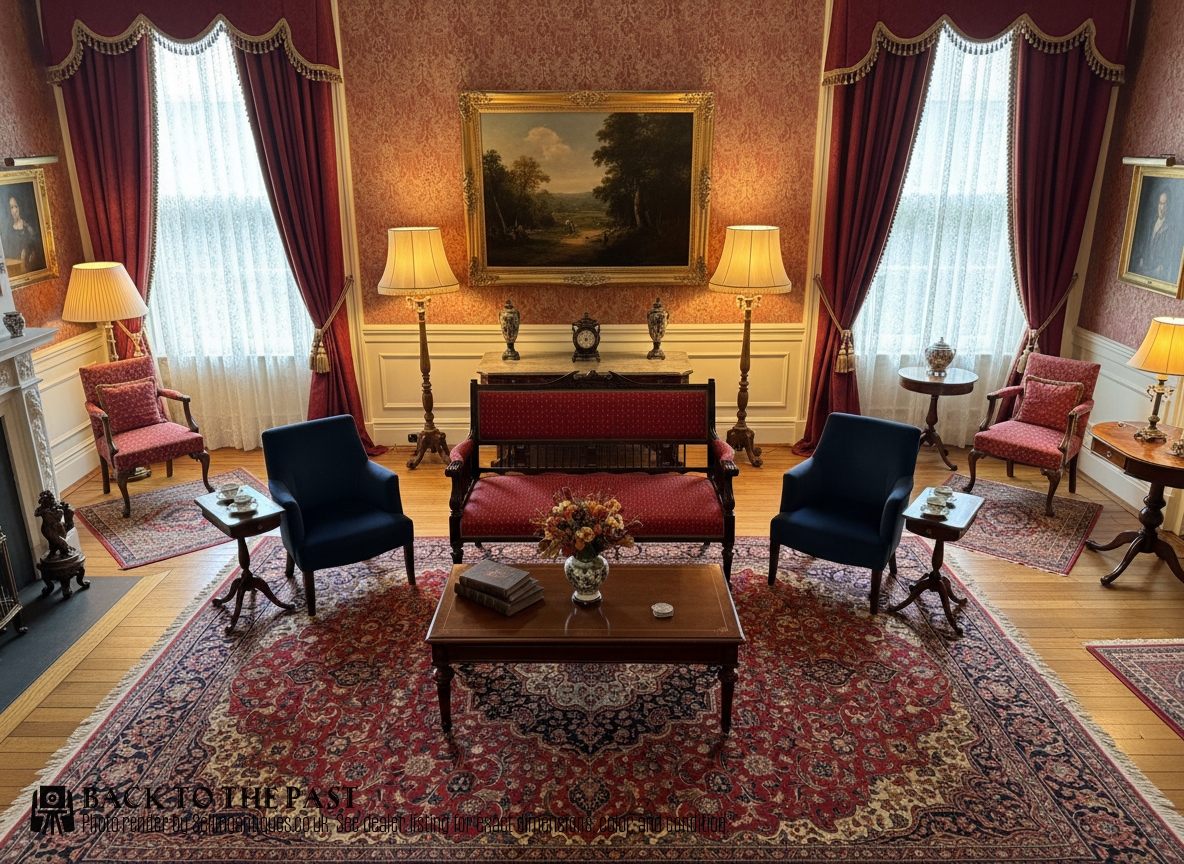
Carved Wooden Parlour Settee
When you search for a carved wooden parlour settee, you are looking at upholstered seating designed for formal reception rooms, spanning from the Regency and Victorian eras into the Edwardian period. These pieces combine timber frames with textile upholstery to create functional and decorative furniture for the home.
The versions you are most likely to meet on this page date predominantly from the Victorian and Edwardian periods, alongside pieces influenced by French Louis XVI and Empire styles. They appear in forms ranging from two-seater settees and salon sofas to larger multi-piece parlour suites.
Makers shaped these settees from woods such as mahogany and walnut, often enriching the surface with boxwood and satinwood inlay, carved woodwork, and turned components. The upholstery varies from completed fabric coverings to frames awaiting restoration.
Materials and construction
Cabinetmakers constructed the foundational frames of these settees using dense hardwoods, primarily mahogany and walnut, which provided the structural strength needed for carved and turned details. These timbers were selected for their grain and ability to hold crisp ornamentation.
Decoration relied on contrasting details, including boxwood and satinwood inlay, alongside applied brass accents and painted finishes on select continental models. Skilled artisans carved motifs directly into the wooden framework or turned supports to achieve the desired stylistic effect.
Upholstery completed the piece, incorporating supportive textile coverings and internal stuffing secured to wooden rails. Frames were built to accommodate both traditional sprung upholstery and simpler pad seats depending on the period.
Some Edwardian settees wait patiently in bare frames, simply longing for someone to choose their next outfit.
Assessing quality and execution
Quality in a carved wooden parlour settee rests on the crispness of the timber carving and the selection of the wood itself. Denser grains and deeply defined woodwork indicate superior craftsmanship compared to softer mouldings.
The precision of the inlay work marks the difference between standard production and finer pieces. Cleanly fitted satinwood and boxwood details integrated flush into the mahogany or walnut body demonstrate greater skill from the maker.
Structural integrity of the turned legs and joined frames dictates longevity. Tighter joinery and robust timber thickness ensure the settee withstands daily use while maintaining its decorative form.
The Carved Wooden Parlour Settee Glossary
- Inlay
- A decorative technique where contrasting woods like satinwood or boxwood are inserted into recesses within the primary timber surface to create patterns.
- Turned
- Shaped on a lathe to create rounded, cylindrical, or spindle components on legs and structural supports. This method added symmetrical ornament to the wooden frame.
- Canapé
- An ornate, upholstered sofa originating in France, often featuring an exposed carved wooden frame and stylistic influences from Louis XVI or Empire periods.
- Parlour suite
- A matching set of seating furniture, including settees and chairs, designed to furnish a formal reception room in a unified style.
Carved Wooden Parlour Settee: Frequently Asked Questions
What is a parlour settee?
A parlour settee is a decorative upholstered wooden seat designed for formal reception rooms in period homes. These pieces provide comfortable two-seater accommodation while serving as a focal point in a sitting space.
They emerged strongly during the Victorian and Edwardian eras, reflecting the tastes of the time through carved wooden frames and inlaid details. Many incorporate styles drawn from French design traditions.
How do I date a wooden settee?
Dating relies on examining the timber species, inlay styles, and overall structural characteristics of the frame. Victorian examples often display heavier carved mahogany or walnut, whereas Edwardian pieces lean towards lighter inlaid satinwood motifs.
Reference points such as Regency French Empire forms or later painted triple-back designs help narrow down the period. Hardware and upholstery remnants also offer clues to the exact decade of manufacture.
Are these settees comfortable for daily use?
These settees were originally built for formal sitting rooms rather than lounging, meaning their proportions are upright and supportive. The comfort level depends heavily on the internal webbing and padding used in the upholstery.
Many surviving pieces retain period upholstery, while others are sold ready for re-upholstery. Restoring the interior padding allows buyers to tailor the seating comfort to modern preferences.
How do I care for antique wood and fabric?
Maintenance involves keeping wooden frames clean with a soft cloth and avoiding direct sunlight to protect the polish and natural grain. Regular dusting prevents particle buildup in carved crevices and inlay work.
Upholstered sections require gentle vacuuming with a brush attachment or professional cleaning depending on the textile type. Protecting the fabric from moisture ensures both the wood and the covering age gracefully.